---
title: "George Cayley: biography and aviation achievements — OnlyPlanes"
description: "George Cayley: He shared the engineering challenges of lift, thrust, and control. Planes, events and biographical facts."
canonical_url: "https://onlyplanes.ru/en/people-in-aviation/george-cayley"
locale: en
meta:
keywords: "George Cayley, George Cayley biographies, George Cayley achievements, Aviation pioneers, people in aviation, Kayley experimental gliders, Flight studies in the early 19th century, Full-size glider flight in 1853"
"og:description": "George Cayley: He shared the engineering challenges of lift, thrust, and control. Planes, events and biographical facts."
"og:image": "https://onlyplanes.ru/images/aviation-people/george-cayley.webp"
"og:image:alt": "George Cayley — historical painted portrait."
"og:title": "George Cayley: biography and aviation achievements — OnlyPlanes"
---
> Index of every page on this site: [llms.txt](https://onlyplanes.ru/llms.txt)
Aviation pioneers · United Kingdom
# George Cayley — biography and achievementsGeorge Cayley — biography and achievements
George Cayley (1773–1857) was a British researcher who explained flight through measurable forces rather than mechanically imitating birds. His work preceded the powered aeroplane by nearly a century. He separated the tasks of wing, propulsion and control: producing lift, overcoming drag and maintaining attitude. This formulation became an important foundation of aircraft design.
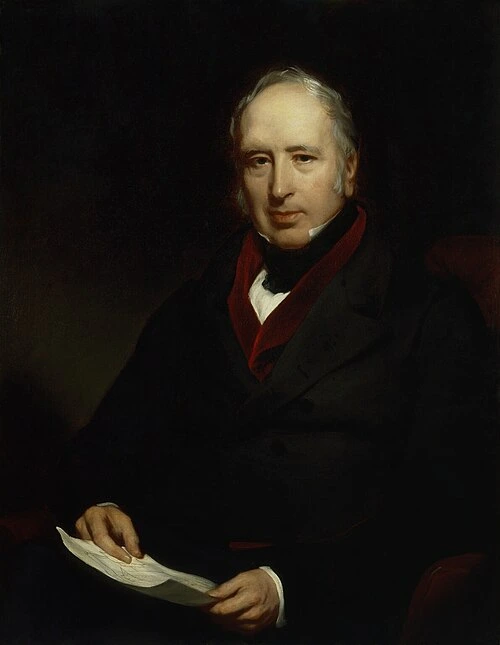
*George Cayley — historical painted portrait.*
## Life and work in aviation
George Cayley (1773–1857) was a British researcher who explained flight through measurable forces rather than mechanically imitating birds. His work preceded the powered aeroplane by nearly a century. He separated the tasks of wing, propulsion and control: producing lift, overcoming drag and maintaining attitude. This formulation became an important foundation of aircraft design.
## From bird observation to the engineering model
In the early 19th century, Cayley explored surfaces that interacted with airflow and built glider models. Instead of the only spectacular experience, he studied how the shape and position of the wing are associated with uplift and resistance. This approach made it possible to consider flight as a combination of separate technical tasks, each of which can be tested experimentally and improved independently of the others.
## Wing, tail and stability
In his projects, you can see the recognizable separation of the carrier surface and the tail. The tail helped to solve the problem of stability, while the main wing perceived the weight of the device. For early aviation, this was fundamental: the ability to rise above the ground did not mean the ability to stay in flight and return safely. Cayley was interested in the interconnected working conditions of the machine.
## Full-size glider 1853
In 1853, the built Cayley glider carried an adult through a small valley. The British Science Museum links this experience with its coachman. It was a planned flight without its own engine, so it cannot be declared the first flight of a motor aircraft. The value of the experience lies in the transition from a small model to an apparatus capable of carrying a person and withstanding the corresponding loads.
## Legacy before the engine
Cayley did not create a ready transport aircraft, but formulated the tasks with which Lilienthal and the Wright brothers later worked. His legacy is conveniently studied through the question: what functions should each part of the aircraft perform? Lifting power, thrust, resistance and stability remain important concepts for modern machines, although materials, calculation methods and power plants have radically changed.
## How the wing, stability and design are related
The aircraft must simultaneously create lift, overcome resistance and maintain control. A good wing does not solve all problems by itself. Suitable controls are required, and the structure and distribution of the mass is strong enough. Therefore, the history of the aviation project is useful to consider as the coordination of several functions. Changing one element affects the rest: a heavier vehicle requires different flight conditions, and a new engine can change the layout and behavior of the machine.
The glider helps to explore the flight without its own power plant. It uses altitude stock and movement relative to air; duration depends on design and atmospheric conditions. Early experiments allowed us to study the stability and actions of the pilot before the advent of a suitable engine. At the same time, a small model does not automatically confirm the behavior of a full-size machine. To go to the apparatus with a person, separate strength calculations, manufacturing and practical verification under the appropriate load are needed.
The material is selected taking into account the mass, strength, manufacture and maintenance. Wood, metal alloys and composites have different joining properties and technologies. The new design may be promising, but its advantages need to be confirmed by tests. The name of the material is not a guarantee of safety or economy. Important are the power kit layout, the quality of the parts and how the body perceives real loads during operation, including repeated takeoffs and landings.
The design result consists of calculations, manufacture, ground inspection and flight observations. The engineering school passes on ways to solve problems to the next generation, not just the appearance of the aircraft. When studying the biography, it is useful to associate projects with their purpose: the training machine, transport and experimental glider require different compromises. So it is clearer why two apparently similar designs can have a completely different operational role and history of development.
## Major achievements
- Divided engineering tasks of lift, thrust and control
- Developed experimental models and full-size gliders
- In 1853, he demonstrated a glider carrying an adult
## Aircraft and flying machines
- Kaylee's experimental gliders
## Organisations and events
British engineering and scientific environment of the 19th century
- Flight studies in the early 19th century
- Flight of a full-size glider in 1853
## Questions about this biography
Why is George Cayley in the history of aviation?
He shared the engineering tasks of lift, thrust, and control. He developed experimental models and full-size gliders. In 1853, he demonstrated a glider carrying an adult.
With what field of aviation is this biography connected?
George Cayley (1773-1857) was a British explorer who explained flight through measurable forces, rather than through an attempt to mechanically repeat a bird's movements.
What aircraft are involved in this work?
Associated with biography: Kaylee's Experimental Planners. Their role and period are described in the main sections.
What events help to understand the professional path?
Major historical episodes: Flight studies in the early 19th century; Flight of a full-size glider in 1853.
What organizations are mentioned in the biography?
The Professional Path Linked to Organizations and Communities: The 19th Century British Engineering and Science Environment.
Did Cayley build a motor plane?
Oh, no. His most famous machines were the gliders. The contribution of the researcher is associated with the principles of aircraft design and practical experiments with the wing, and not with the creation of an operating engine.
What is the technical context of this story?
The aircraft must simultaneously create lift, overcome resistance and maintain control. A good wing does not solve all problems by itself. Suitable controls are required, and the structure and distribution of the mass is strong enough. Therefore, the history of the aviation project is useful to consider as the coordination of several functions. Changing one element affects the rest: a heavier vehicle requires different flight conditions, and a new engine can change the layout and behavior of the machine.
## Keep reading
[Wilbur Wright](https://onlyplanes.ru/en/people-in-aviation/wilbur-wright)
[Otto Lilienthal](https://onlyplanes.ru/en/people-in-aviation/otto-lilienthal)
[Aviation calendar — events and historical dates](https://onlyplanes.ru/en/aviation-calendar)
```json
{"@context":"https://schema.org","@graph":[{"@type":"Person","@id":"https://onlyplanes.ru/en/people-in-aviation/george-cayley#person","name":"George Cayley","alternateName":"George Cayley","description":"George Cayley (1773–1857) was a British researcher who explained flight through measurable forces rather than mechanically imitating birds. His work preceded the powered aeroplane by nearly a century. He separated the tasks of wing, propulsion and control: producing lift, overcoming drag and maintaining attitude. This formulation became an important foundation of aircraft design.","image":"https://onlyplanes.ru/images/aviation-people/george-cayley.webp","url":"https://onlyplanes.ru/en/people-in-aviation/george-cayley","hasOccupation":{"@type":"Occupation","name":"Aviation pioneers"}},{"@type":"FAQPage","mainEntity":[{"@type":"Question","name":"Why is George Cayley in the history of aviation?","acceptedAnswer":{"@type":"Answer","text":"He shared the engineering tasks of lift, thrust, and control. He developed experimental models and full-size gliders. In 1853, he demonstrated a glider carrying an adult."}},{"@type":"Question","name":"With what field of aviation is this biography connected?","acceptedAnswer":{"@type":"Answer","text":"George Cayley (1773-1857) was a British explorer who explained flight through measurable forces, rather than through an attempt to mechanically repeat a bird's movements."}},{"@type":"Question","name":"What aircraft are involved in this work?","acceptedAnswer":{"@type":"Answer","text":"Associated with biography: Kaylee's Experimental Planners. Their role and period are described in the main sections."}},{"@type":"Question","name":"What events help to understand the professional path?","acceptedAnswer":{"@type":"Answer","text":"Major historical episodes: Flight studies in the early 19th century; Flight of a full-size glider in 1853."}},{"@type":"Question","name":"What organizations are mentioned in the biography?","acceptedAnswer":{"@type":"Answer","text":"The Professional Path Linked to Organizations and Communities: The 19th Century British Engineering and Science Environment."}},{"@type":"Question","name":"Did Cayley build a motor plane?","acceptedAnswer":{"@type":"Answer","text":"Oh, no. His most famous machines were the gliders. The contribution of the researcher is associated with the principles of aircraft design and practical experiments with the wing, and not with the creation of an operating engine."}},{"@type":"Question","name":"What is the technical context of this story?","acceptedAnswer":{"@type":"Answer","text":"The aircraft must simultaneously create lift, overcome resistance and maintain control. A good wing does not solve all problems by itself. Suitable controls are required, and the structure and distribution of the mass is strong enough. Therefore, the history of the aviation project is useful to consider as the coordination of several functions. Changing one element affects the rest: a heavier vehicle requires different flight conditions, and a new engine can change the layout and behavior of the machine."}}]}]}
```
```json
{"@context":"https://schema.org","@graph":[{"@id":"https://onlyplanes.ru/en#website","@type":"WebSite","description":"News, stories and rare images from the world of aviation","inLanguage":"en-GB","name":"OnlyPlanes","url":"https://onlyplanes.ru/en","publisher":{"@id":"https://onlyplanes.ru/en#identity"},"translationOfWork":{"@id":"https://onlyplanes.ru/en#website"}},{"@id":"https://onlyplanes.ru/en/people-in-aviation/george-cayley#webpage","@type":"WebPage","description":"George Cayley: He shared the engineering challenges of lift, thrust, and control. Planes, events and biographical facts.","name":"George Cayley: biography and aviation achievements","url":"https://onlyplanes.ru/en/people-in-aviation/george-cayley","isPartOf":{"@id":"https://onlyplanes.ru/en#website"},"potentialAction":[{"@type":"ReadAction","target":["https://onlyplanes.ru/people-in-aviation/george-cayley"]}],"primaryImageOfPage":{"@id":"https://onlyplanes.ru/en#logo"}},{"@id":"https://onlyplanes.ru/en#identity","@type":"Organization","name":"OnlyPlanes","url":"https://onlyplanes.ru/en","logo":{"@id":"https://onlyplanes.ru/en#logo"},"sameAs":["https://t.me/legkoenebo"]},{"@id":"https://onlyplanes.ru/en#logo","@type":"ImageObject","caption":"OnlyPlanes","contentUrl":"https://onlyplanes.ru/search-logo.png","inLanguage":"en-GB","url":"https://onlyplanes.ru/search-logo.png"}]}
```
## Sitemap
See the full [sitemap](https://onlyplanes.ru/sitemap.md) for all pages.