---
title: "Samuel Langley: biography and aviation achievements — OnlyPlanes"
description: "Samuel Langley: He studied aerodynamics and mechanical flight. Planes, events and biographical facts."
canonical_url: "https://onlyplanes.ru/en/people-in-aviation/samuel-langley"
locale: en
meta:
keywords: "Samuel Langley, Samuel Langley Achievements, Samuel Langley, Aviation Pioneers, People in Aviation, Aerodrome Models Nos. 5 and 6, Langley Aerodrome A, Model Flights in 1896, Failed Aerodrome A launches in 1903"
"og:description": "Samuel Langley: He studied aerodynamics and mechanical flight. Planes, events and biographical facts."
"og:image": "https://onlyplanes.ru/images/aviation-people/samuel-langley.webp"
"og:image:alt": "Samuel Langley — archive photograph."
"og:title": "Samuel Langley: biography and aviation achievements — OnlyPlanes"
---
> Index of every page on this site: [llms.txt](https://onlyplanes.ru/llms.txt)
Aviation pioneers · United States
# Samuel Langley — biography and achievementsSamuel Langley — biography and achievements
Samuel Pierpont Langley (1834–1906) was an American scientist and Smithsonian leader who studied mechanical flight. His uncrewed Aerodrome models flew successfully in 1896, but attempts to launch a full-size crewed aircraft failed in 1903. His biography reveals early aviation’s difficulties: model success does not guarantee a larger aircraft will work, and scientific standing cannot replace a complete testing programme.
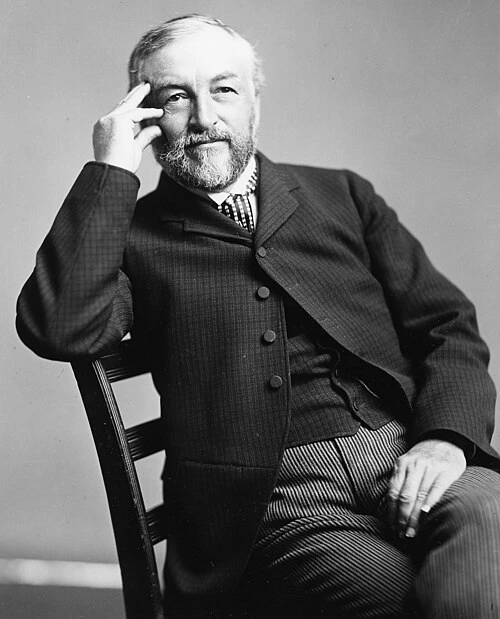
*Samuel Langley — archive photograph.*
## Life and work in aviation
Samuel Pierpont Langley (1834–1906) was an American scientist and Smithsonian leader who studied mechanical flight. His uncrewed Aerodrome models flew successfully in 1896, but attempts to launch a full-size crewed aircraft failed in 1903. His biography reveals early aviation’s difficulties: model success does not guarantee a larger aircraft will work, and scientific standing cannot replace a complete testing programme.
## Measurements and small models
Langley investigated the movement of surfaces in the air and moved from theory to current models. In 1896, his apparatus with steam engines performed unmanned flights over the Potomac River. Such results showed the possibility of mechanical traction for the heavier-than-air apparatus. However, the model did not have to solve the whole complex of issues related to the placement of the pilot, control and safe completion of the flight.
## Full-size Aerodrome
Work on a large machine was carried out with the participation of engineer Charles Manley, who created the engine and had to pilot the machine. In 1903, two attempts to launch from a platform on the water were unsuccessful. In Langley’s biography, it is important to describe the results of these attempts, without turning the intention to create an aircraft into evidence of a controlled flight. The device and the way it was launched remained part of an unsolved technical problem.
## Why the scale changes the design
Increasing the model is not simply increasing all the details in the same number of times. Weight, strength, aerodynamic loads and control capabilities must be re-aligned. The history of Aerodrome shows this problem especially clearly. Early researchers gradually discovered that a successful flight requires a whole system: suitable design, propulsion, stability, pilot actions, and a way to start that does not damage the machine.
## A place in the history of the first aircraft
After Langley's death, the fate of Aerodrome became part of a dispute over the Wright brothers' recognition. Later flights of the modified machine do not confirm the capabilities of the original 1903 apparatus. Therefore, the museum description should distinguish between the original project and subsequent alterations. Langley's contributions remain significant as research and model work, even if his full-length program has not achieved the intended result.
## How the wing, stability and design are related
The aircraft must simultaneously create lift, overcome resistance and maintain control. A good wing does not solve all problems by itself. Suitable controls are required, and the structure and distribution of the mass is strong enough. Therefore, the history of the aviation project is useful to consider as the coordination of several functions. Changing one element affects the rest: a heavier vehicle requires different flight conditions, and a new engine can change the layout and behavior of the machine.
The glider helps to explore the flight without its own power plant. It uses altitude stock and movement relative to air; duration depends on design and atmospheric conditions. Early experiments allowed us to study the stability and actions of the pilot before the advent of a suitable engine. At the same time, a small model does not automatically confirm the behavior of a full-size machine. To go to the apparatus with a person, separate strength calculations, manufacturing and practical verification under the appropriate load are needed.
The material is selected taking into account the mass, strength, manufacture and maintenance. Wood, metal alloys and composites have different joining properties and technologies. The new design may be promising, but its advantages need to be confirmed by tests. The name of the material is not a guarantee of safety or economy. Important are the power kit layout, the quality of the parts and how the body perceives real loads during operation, including repeated takeoffs and landings.
The design result consists of calculations, manufacture, ground inspection and flight observations. The engineering school passes on ways to solve problems to the next generation, not just the appearance of the aircraft. When studying the biography, it is useful to associate projects with their purpose: the training machine, transport and experimental glider require different compromises. So it is clearer why two apparently similar designs can have a completely different operational role and history of development.
## Major achievements
- He studied aerodynamics and mechanical flight
- In 1896 he achieved flights of unmanned Aerodrome models.
- Organized a program to create a full-size heavier-than-air device
## Aircraft and flying machines
- Aerodrome No 5 and No 6
- Langley Aerodrome A
## Organisations and events
Smithsonian Institution
- Model flights in 1896
- Failed Aerodrome A launches in 1903
## Questions about this biography
Why is Samuel Langley in the history of aviation?
He studied aerodynamics and mechanical flight. In 1896, he achieved flights of unmanned Aerodrome models. He organized a program to create a full-size heavier-than-air apparatus.
With what field of aviation is this biography connected?
Samuel Pierpont Langley (1834-1906) was an American scientist and director of the Smithsonian Institution who studied mechanical flight.
What aircraft are involved in this work?
Related: Aerodrome No. 5 and No. 6, Langley Aerodrome A. Their role and period are described in the main sections.
What events help to understand the professional path?
Main historical episodes: Model flights in 1896; unsuccessful launches of Aerodrome A in 1903.
What organizations are mentioned in the biography?
The professional path is related to organizations and communities: Smithsonian Institution.
Did Aerodrome A successfully fly in 1903?
Oh, no. Both well-known attempts to launch a full-size manned vehicle ended in failure. Successful unmanned models of 1896 and subsequent alterations of the large apparatus are separate stages.
What is the technical context of this story?
The aircraft must simultaneously create lift, overcome resistance and maintain control. A good wing does not solve all problems by itself. Suitable controls are required, and the structure and distribution of the mass is strong enough. Therefore, the history of the aviation project is useful to consider as the coordination of several functions. Changing one element affects the rest: a heavier vehicle requires different flight conditions, and a new engine can change the layout and behavior of the machine.
## Keep reading
[Wilbur Wright](https://onlyplanes.ru/en/people-in-aviation/wilbur-wright)
[Otto Lilienthal](https://onlyplanes.ru/en/people-in-aviation/otto-lilienthal)
[Aviation calendar — events and historical dates](https://onlyplanes.ru/en/aviation-calendar)
```json
{"@context":"https://schema.org","@graph":[{"@type":"Person","@id":"https://onlyplanes.ru/en/people-in-aviation/samuel-langley#person","name":"Samuel Langley","alternateName":"Samuel Langley","description":"Samuel Pierpont Langley (1834–1906) was an American scientist and Smithsonian leader who studied mechanical flight. His uncrewed Aerodrome models flew successfully in 1896, but attempts to launch a full-size crewed aircraft failed in 1903. His biography reveals early aviation’s difficulties: model success does not guarantee a larger aircraft will work, and scientific standing cannot replace a complete testing programme.","image":"https://onlyplanes.ru/images/aviation-people/samuel-langley.webp","url":"https://onlyplanes.ru/en/people-in-aviation/samuel-langley","hasOccupation":{"@type":"Occupation","name":"Aviation pioneers"}},{"@type":"FAQPage","mainEntity":[{"@type":"Question","name":"Why is Samuel Langley in the history of aviation?","acceptedAnswer":{"@type":"Answer","text":"He studied aerodynamics and mechanical flight. In 1896, he achieved flights of unmanned Aerodrome models. He organized a program to create a full-size heavier-than-air apparatus."}},{"@type":"Question","name":"With what field of aviation is this biography connected?","acceptedAnswer":{"@type":"Answer","text":"Samuel Pierpont Langley (1834-1906) was an American scientist and director of the Smithsonian Institution who studied mechanical flight."}},{"@type":"Question","name":"What aircraft are involved in this work?","acceptedAnswer":{"@type":"Answer","text":"Related: Aerodrome No. 5 and No. 6, Langley Aerodrome A. Their role and period are described in the main sections."}},{"@type":"Question","name":"What events help to understand the professional path?","acceptedAnswer":{"@type":"Answer","text":"Main historical episodes: Model flights in 1896; unsuccessful launches of Aerodrome A in 1903."}},{"@type":"Question","name":"What organizations are mentioned in the biography?","acceptedAnswer":{"@type":"Answer","text":"The professional path is related to organizations and communities: Smithsonian Institution."}},{"@type":"Question","name":"Did Aerodrome A successfully fly in 1903?","acceptedAnswer":{"@type":"Answer","text":"Oh, no. Both well-known attempts to launch a full-size manned vehicle ended in failure. Successful unmanned models of 1896 and subsequent alterations of the large apparatus are separate stages."}},{"@type":"Question","name":"What is the technical context of this story?","acceptedAnswer":{"@type":"Answer","text":"The aircraft must simultaneously create lift, overcome resistance and maintain control. A good wing does not solve all problems by itself. Suitable controls are required, and the structure and distribution of the mass is strong enough. Therefore, the history of the aviation project is useful to consider as the coordination of several functions. Changing one element affects the rest: a heavier vehicle requires different flight conditions, and a new engine can change the layout and behavior of the machine."}}]}]}
```
```json
{"@context":"https://schema.org","@graph":[{"@id":"https://onlyplanes.ru/en#website","@type":"WebSite","description":"News, stories and rare images from the world of aviation","inLanguage":"en-GB","name":"OnlyPlanes","url":"https://onlyplanes.ru/en","publisher":{"@id":"https://onlyplanes.ru/en#identity"},"translationOfWork":{"@id":"https://onlyplanes.ru/en#website"}},{"@id":"https://onlyplanes.ru/en/people-in-aviation/samuel-langley#webpage","@type":"WebPage","description":"Samuel Langley: He studied aerodynamics and mechanical flight. Planes, events and biographical facts.","name":"Samuel Langley: biography and aviation achievements","url":"https://onlyplanes.ru/en/people-in-aviation/samuel-langley","isPartOf":{"@id":"https://onlyplanes.ru/en#website"},"potentialAction":[{"@type":"ReadAction","target":["https://onlyplanes.ru/people-in-aviation/samuel-langley"]}],"primaryImageOfPage":{"@id":"https://onlyplanes.ru/en#logo"}},{"@id":"https://onlyplanes.ru/en#identity","@type":"Organization","name":"OnlyPlanes","url":"https://onlyplanes.ru/en","logo":{"@id":"https://onlyplanes.ru/en#logo"},"sameAs":["https://t.me/legkoenebo"]},{"@id":"https://onlyplanes.ru/en#logo","@type":"ImageObject","caption":"OnlyPlanes","contentUrl":"https://onlyplanes.ru/search-logo.png","inLanguage":"en-GB","url":"https://onlyplanes.ru/search-logo.png"}]}
```
## Sitemap
See the full [sitemap](https://onlyplanes.ru/sitemap.md) for all pages.