
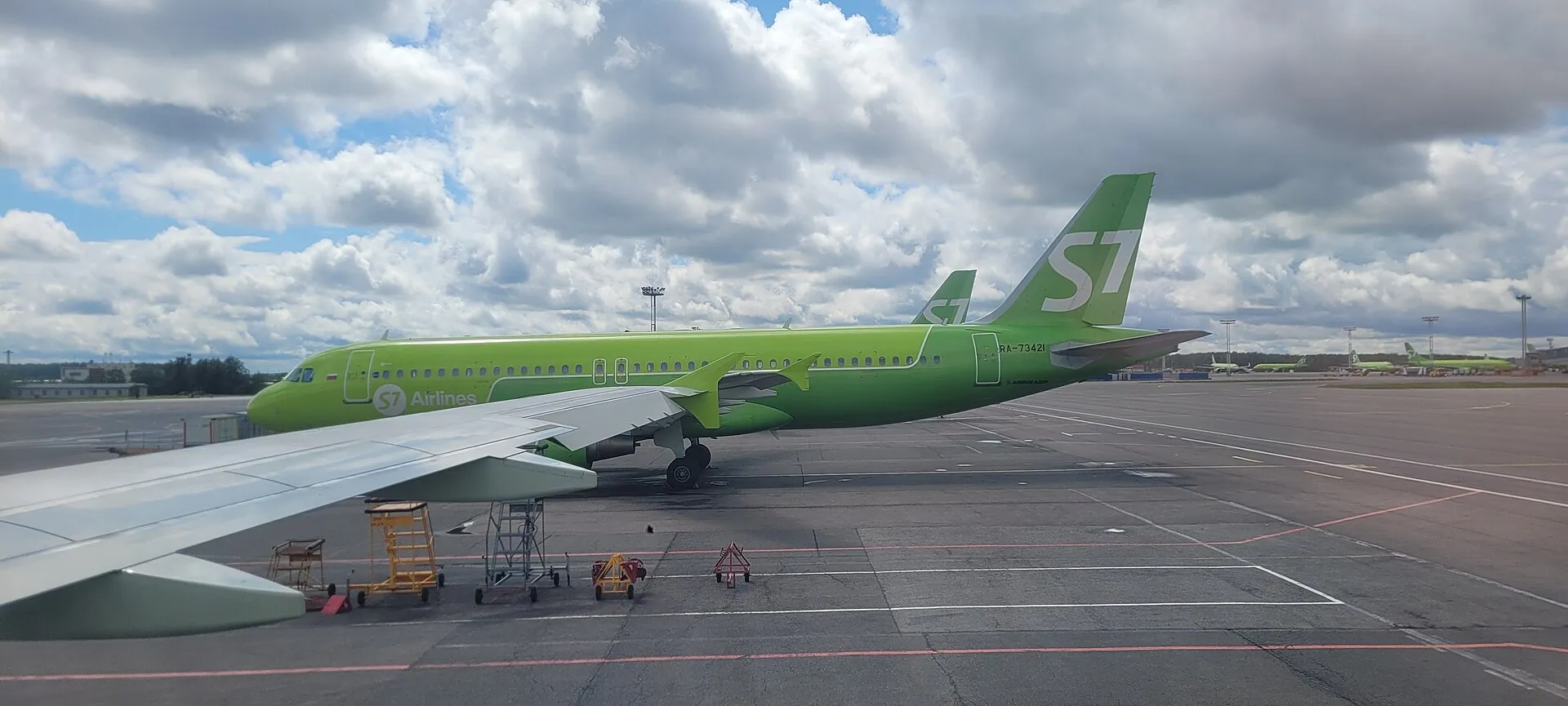
Specifications Airbus A320
The figures in this table refer to one specific variant — A320neo. This avoids combining the range, capacity and dimensions of different versions into an inaccurate set of figures.
- Variant shown in the table
- A320neo
- Type
- narrow-body passenger aircraft
- Family's first flight
- Year 1987
- Passenger capacity
- 150–180 seats in a typical two-class layout; maximum 194
- Flight range
- up to 6,300 km (3,400 nautical miles)
- Mach limit
- M 0,82
- Length
- 37,57 m
- Wingspan
- 35,80 m
How the aircraft came about
History Airbus A320
The A320 first flew in 1987 and became the first mass-produced passenger liner with a digital electric remote control system. The A320neo generation retained the fuselage and received new engines and aerodynamic improvements.
The A320 program was launched in 1984, and in 1988 Air France began commercial operation. For Airbus, this was an important transition to digital electric remote control on a mass passenger aircraft. Later, a single design line served as the basis for the shortened A319 and the elongated A321.
Milestones and decisions
Programme development
The launch of the A320 was a step for Airbus towards its own large-scale narrow-body family. After the basic model appeared shortened and elongated derivatives with a common cockpit. In the 2010s, the transition from the initial Ceo line to neo began: new engines and aerodynamic changes increased efficiency, but aircraft of different generations retained the general concept of control. The final assembly of the family was organized in several countries.
Model features
Design and variants
Instead of the traditional steering wheel, pilots control the aircraft with side handles, and commands handle the control system computers. One platform combines a two-membered crew cabin, one pass and six seats in a row. The commonality of cabin and procedures facilitates the work of airlines with several models of the family.
The name A320 combines the original ceo aircraft and the updated neo. Neo had CFM LEAP-1A or Pratt & Whitney PW1100G-JM engines and new wing tips. When comparing range and flow, you can not mix the data of these generations or transfer the A321 to the base A320.
Powerplant
Engines
Two CFM International LEAP-1A or Pratt & Whitney PW1100G-JM.
The engine variant fitted to an individual aircraft is recorded in its documentation. The powerplant affects thrust, fuel consumption, noise and maintenance requirements.
On board
Cabin and passenger capacity
Salon with one pass and a 3+3 scheme. Typical layout includes 150-180 seats, kitchens and toilets in the nose and tail parts.
Passenger capacity - 150-180 seats in a typical two-class layout; a maximum of 194. The exact number of seats is determined by the operator: business class, kitchens, toilets and recreation areas of the crew take place. Therefore, the layout of the cabin differs even with the same models.
In practice
Operations and uses
The A320 operates on short and medium-haul routes with network and low-cost carriers. The six-seat cabin in a row allows you to change the number of seats due to the step of the seats and the share of business class, so two A320 of the same version can carry a different number of people. The shared cabin with the A319 and A321 simplifies fleet planning, but the specific flight depends on the mass, fuel and airport conditions.
Technical analysis
How it works Airbus A320
In the 1980s, Airbus made digital remote control a central part of the A320 project. The movement of the pilot's side handle is first processed by computers and then converted into commands to the steering surfaces. This approach made it possible to introduce the protection of flight mode boundaries and unify the cabin of future family members. It does not remove responsibility from the crew: pilots still choose modes, control the trajectory and act according to procedures for failures. The A320 design was the starting point for the shortened A319 and the elongated A321.
The basic layout with one pass and six seats in a row is designed for mass short and medium transportation. But the layout of the cabin itself is not laid out once and for all: the number of rows, the step of seats, kitchens, toilets and the number of business class seats is determined by the airline within certified restrictions. Therefore, the declared 180 and, for example, 150 seats can refer to aircraft of close size. When assessing comfort, the passenger needs a specific flight scheme and type of seat, not just the A320 index.
The A320ceo was produced with CFM56 or IAE V2500 engines. The neo generation received a CFM LEAP-1A or Pratt & Whitney PW1100G-JM and wing improvements, including Sharklet finishes. This is a development on a common platform, not a replacement of all the details with a new glider. Changes in engine and mass affect the calculation of fuel and range; crews and engineering services must consider the exact version. Inside the A320neo, even aircraft of the same length can have different equipment depending on the year of production and order.
History and operations
Role Airbus A320 in airline service
The first commercial flight of the A320 was operated by Air France in 1988. The model then spread around the world to network companies and low-cost carriers, as one size suited most medium-haul routes. The distribution of production on several assembly lines helped to serve the demand of different regions. Individual airlines are building a fleet almost entirely around the A320 family to make it easier for pilots to train, plan parts, and change sides when the flight load changes.
On the A320 line, it can operate both on a short flight between neighboring cities and on a longer international route. The difference lies in the right fuel supply, luggage weight and schedule, and not in one universal passport figure. On frequent flights, the turnaround time of the aircraft at the exit to the landing also affects the economy. A denser interior brings more seats, but requires taking into account the landing, the number of exits and passenger service.
When comparing with the Boeing 737, it is important to specify the generation of both aircraft. The A320ceo and early 737 differ from the A320neo and 737 MAX in engine, aerodynamics and published range calculation conditions. Even within the same brand, the A321 variant adds seats at the cost of other route requirements, and the A319 reduces capacity. The history of the A320 shows the value not only of an individual liner, but also of a family of sizes from which the carrier can make a fleet for different flows.
For comparison
Location Airbus A320 among other aircraft
The Airbus line is useful to consider the task of the route, and not as a sequence of "better - worse". A319, A320 and A321 belong to the same single-pass family, but give different capacity and, in some versions, different range. The A330 and A350 are designed for double-passage and long international flights; the A380 solves the special problem of maximum flow between major airports. The carrier does not choose the largest aircraft at all, but the size that corresponds to the load and the desired frequency. If you send too large a car, empty seats can negate the benefits of its passport effectiveness. If it's too small, there won't be enough space or you'd have to limit your luggage. Therefore, one airline can simultaneously operate several types of Airbus on routes of different length and density.
The general school of cockpit and control systems is noticeable for many Airbus, but it does not make certificates, engines and gliders the same. Even the close A319 and A321 differ in mass, output and layout, and there are much more engineering differences between the A320 and A350. The words ceo, neo, LR, XLR, and ULR refer to specific generations or tasks. When reading the technical table, you should first find the full index of the modification, then check the range conditions: the number of passengers, cargo, cruising mode and fuel reserves. The declared maximum in capacity and the declared maximum in range often refer to different scenarios. This order allows you to compare aircraft on a real flight, rather than a combination of the two most attractive numbers from different advertising lines.
Where it flies
Airline operators
Examples of current or historically notable operators of the model and its variants:
Fleets change. Check the aircraft type and seat map on the airline's official website before your flight.
Updates
News Airbus A320 on Telegram
New deliveries, routes and events with the participation of Airbus A320 are published in the Telegram channel at legkoenebo.
Open the Telegram channel