Turboprop
from $4,000/h- Range
- up to 2,500 km
- Time in the air
- up to 4 hours
Short routes, small airfields and a reasonable hourly cost.

Business aviation catalogue
Models from eight brands and manufacturers, indicative charter costs and example routes. Explore an aircraft, compare models or estimate your flight time and cost.
Business aviation catalogue
Expand a manufacturer to explore its speciality, a photograph of an individual aircraft and all its models in the catalogue.
 CessnaUnited States · 26 models
About the manufacturer
Cessna is an aircraft brand within Textron Aviation. The Citation range spans compact jets for regional flights and aircraft with spacious cabins for longer journeys. This catalogue includes current models and earlier generations.
History and models Cessna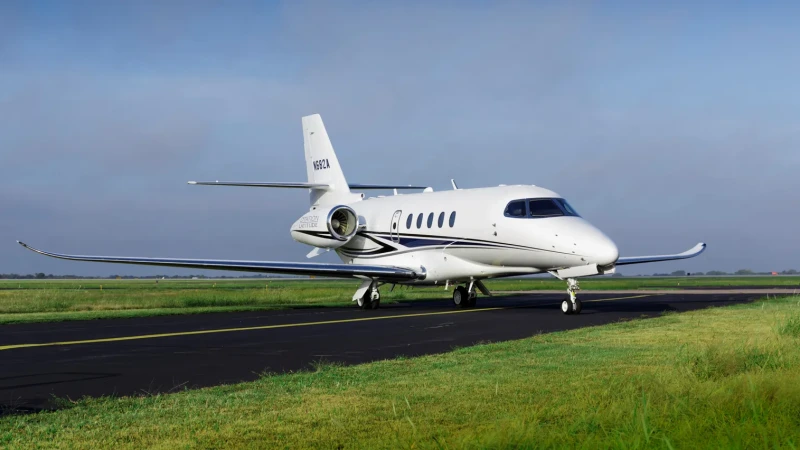
Cessna traces its history to 1927. Its jet programme began with the Fanjet 500: the prototype of the future Citation first flew on 15 September 1969. The company went on to develop several business aircraft families with different cabin sizes and ranges.
Cessna is part of Textron Aviation. The Citation name covers distinct platforms: the 525, 550, 560 and 650 models each have their own history and technical characteristics.
The Mustang, M2 and CitationJet suit small groups on regional flights. The XLS, Latitude and Longitude offer more space. High speed became the Citation X’s defining feature.
The exact variant, passenger numbers, baggage and airports all matter. Specifications from an earlier generation cannot be applied to a Gen2 or Gen3 simply because the names are similar.
Citation is a family of trade names, not one design with progressively increasing numbers. The compact CitationJet line, Excel/XLS aircraft and swept-wing Citation III/VII use different platforms. Start a comparison by identifying the exact model: Roman numerals, letters and “+” signs denote specific variants. This avoids taking the range or cabin dimensions of one aircraft and applying them to another with a similar name.
Earlier generations remain an important part of the operating fleet. An individual aircraft’s year of manufacture, upgrades and condition must be considered separately from the history of its type. An interior or avionics upgrade may improve comfort and equipment, but it does not turn the aircraft into a different platform. When choosing a charter, ask for the current layout and details of the actual aircraft being offered.
For a short flight with a small group, the airport, baggage and schedule matter. A compact Citation can meet those needs without the space of a large long-range aircraft. If passengers want to work at a table, move around the cabin or rest on a longer flight, the criteria change. Seat count does not tell you the aisle height, seat width or whether the whole group can travel comfortably.
The Latitude and Longitude offer a different scale of passenger space from compact CitationJets. However, the shared brand name does not guarantee the same layout or equipment. Check the galley, lavatory, connectivity and rest areas of the individual aircraft. Seating for daytime travel may also differ from sleeping accommodation, so specify both requirements in advance.
Published range is calculated under particular assumptions about passengers, speed and fuel reserves. A heavier load or headwind may change the result for a specific flight. Maximum capacity and maximum range are not necessarily available at the same time. Use comparable assumptions when comparing catalogue figures; for a trip, ask the operator to calculate performance for your actual party, baggage and suitable airports.
The Citation X is known for its focus on high speed, but time in the air is only part of the journey. Airport access, a possible stop and onward travel after landing also take time. The right model is not always the one with the highest figure in a table: it must fly the required route with the chosen load and provide the comfort passengers need.
Confirm the exact variant, current photographs and cabin plan. Then agree passenger numbers and baggage dimensions, particularly for sports equipment or unusual items. Compartment volume does not describe the shape of the loading opening. If another form of transport follows the jet flight, account for its capacity separately. This connects the choice of Citation to the group’s entire journey rather than simply the number of seats listed.
Assess airports against the actual conditions: available runway, weather and ground services. A model’s ability to use certain airfields does not replace planning for a specific operation. The return flight may require parking or separate aircraft positioning, as well as crew arrangements. A quote should cover the complete journey and included services so that different Citations can be compared clearly on time and cost.
The Citation Mustang is a Cessna business jet in the Cessna Citation family. The configuration listed here accommodates up to 5 passengers, with a maximum range of 1,783 km. A cabin height of 1.37 m and width of 1.4 m give an initial sense of the space on board before examining the layout.
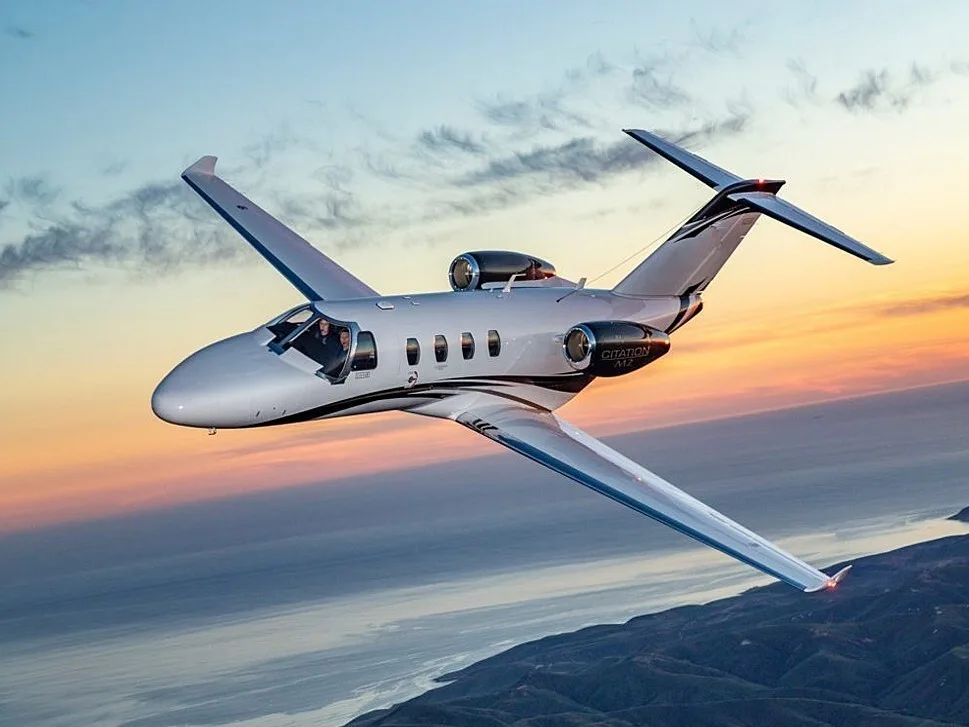
The Citation M2 is the entry-level light jet in the Cessna Citation range, designed for small groups and regional flights.
The Citation M2 Gen2 is an updated light Citation for small groups and regional routes.
The Citation CJ1 is a compact CitationJet for regional business travel. Its small cabin and passenger capacity place it in the light jet category.
The Citation CJ2 is a light CitationJet, designated Model 525A by the manufacturer.
The Citation CJ3 is a light CitationJet in the 525B series. The newer CJ3 Gen2 has a separate entry in this catalogue.
The Citation CJ3 Gen2 continues the light CJ family with an updated flight deck and improved cabin layout.
The Citation CJ4 is the largest model in the light CitationJet family, designated 525C.
The Citation CJ4 Gen2 is the most spacious model in the light CJ family and features an updated interior.
The Citation Bravo is a Cessna 550B, developed from the earlier Citation II line.
The Citation Encore is one of the earlier mid-range Citation models in the 560 series.
The Citation Encore+ is an upgraded Encore in the Cessna 560 family. Its main role remains carrying small groups on regional flights.
The Citation II is an earlier-generation light business jet with a straight wing. Its cabin is larger than that of the original Citation and accommodates small groups on regional routes.
The Citation III is a swept-wing business jet in the Cessna 650 family. It uses a different platform from the light Citation II and CitationJet.
The Citation V is a light business jet in the Cessna 560 family. Within the Citation range, it sits between the compact CitationJets and larger swept-wing aircraft.
The Citation VII develops the Cessna 650 business jet platform. Its swept wing and cabin layout distinguish it from the light CitationJets.
The Citation Excel is a 560XL-series aircraft that formed the basis for the later XLS and XLS+ variants.
The Citation XLS develops the 560XL platform, sitting between the original Excel and the later XLS+.
The Citation XLS+ is a later variant of the Citation 560XL family, which also includes the Excel and XLS.
The Citation Ascend is a Cessna business jet in the Cessna Citation family. The configuration listed here accommodates up to 9 passengers, with a maximum range of 3,593 km. A cabin height of 1.52 m and width of 1.68 m give an initial sense of the space on board before examining the layout.
The Citation Latitude is a Cessna business jet in the Cessna Citation family. The configuration listed here accommodates up to 9 passengers, with a maximum range of 5,000 km. A cabin height of 1.83 m and width of 1.96 m give an initial sense of the space on board before examining the layout.
The Citation Sovereign is a larger Citation in the 680 series, designed for longer flights than the light CJ models.
The Citation Sovereign+ is a further development of the 680-series Citation Sovereign.
The Citation X is a Cessna business jet in the Cessna Citation family. The configuration listed here accommodates up to 9 passengers, with a maximum range of 5,762 km. A cabin height of 1.73 m and width of 1.68 m give an initial sense of the space on board before examining the layout.
The Citation X+ is a later variant of the high-speed, 750-series Citation X.
The Citation Longitude is a Cessna business jet in the Cessna Citation family. The configuration listed here accommodates up to 12 passengers, with a maximum range of 6,482 km. A cabin height of 1.83 m and width of 1.96 m give an initial sense of the space on board before examining the layout.
 GulfstreamUnited States · 12 models
About the manufacturer
Large cabins and long non-stop routes: a choice for intercontinental travel.
History and models Gulfstream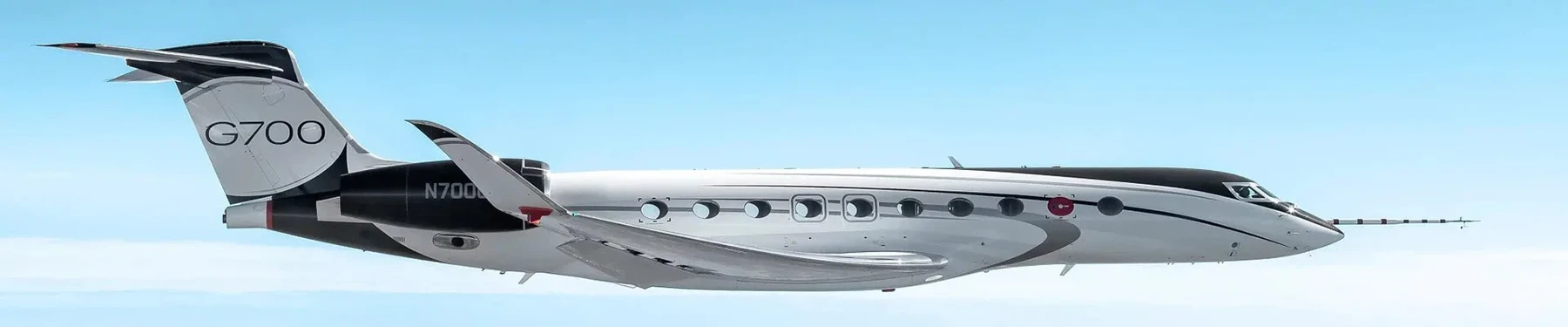
Gulfstream began within the American company Grumman. The Gulfstream I, a turboprop designed for business travel, first flew in 1958 and entered service in 1959. The jet-powered Gulfstream II opened the next chapter: the company began developing aircraft that could carry passengers faster and farther while retaining a spacious cabin.
Savannah, Georgia, has been Gulfstream’s home since 1967. Today, Gulfstream Aerospace is part of General Dynamics. Over the decades, the brand has developed its own approach to large business jets, advancing range and speed alongside cockpit design, crew equipment and support throughout the aircraft’s operating life.
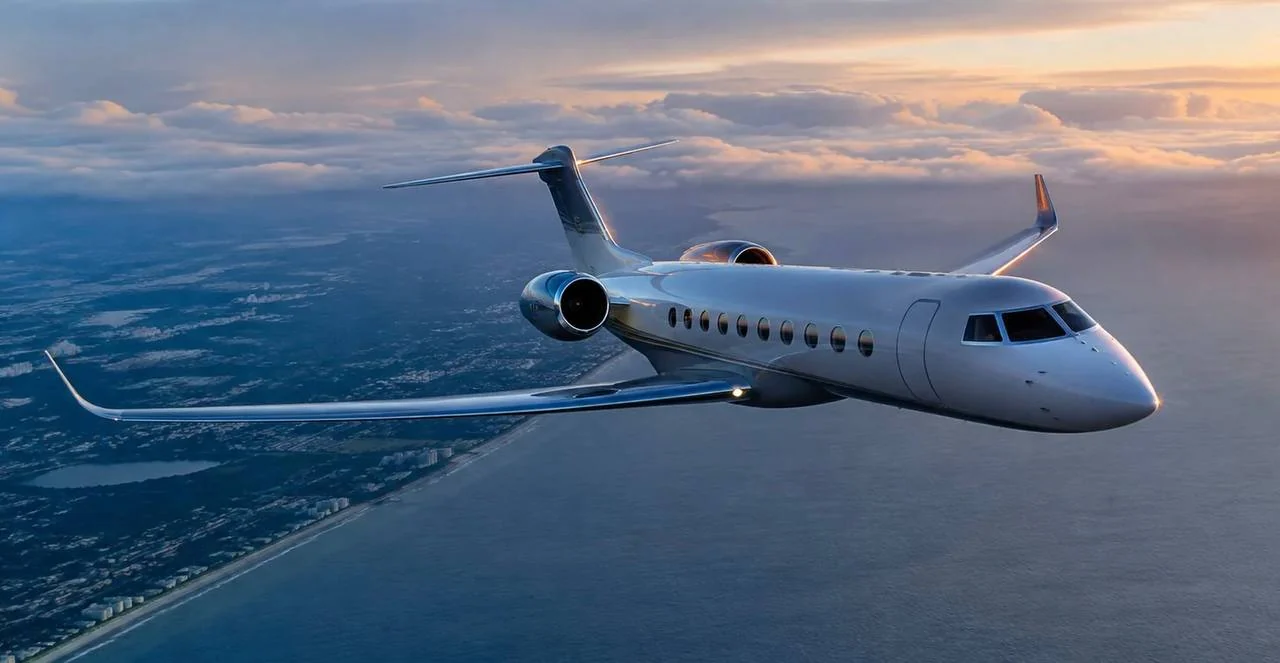
The G700 illustrates Gulfstream’s approach. Its cabin can be divided into several zones for meetings, dining and sleeping. Large oval windows bring in natural light, the ventilation system supplies fresh outside air, and the cabin is pressurised to a low altitude even when the aircraft is flying high above the ground. These features are designed for journeys in which passengers spend many hours on board.
The other side of this philosophy is the pilots’ workspace. The G700 uses the Symmetry Flight Deck, with active sidesticks and touchscreen interfaces. Automation helps the crew manage information through the different phases of flight. The manufacturer also develops its service network: for an owner, access to maintenance matters alongside the aircraft’s capabilities.
The G280 belongs to the super-midsize class, while the G650ER, G700 and G800 are intended for longer intercontinental routes. Range, dimensions and the number of cabin zones vary within the family. Features described for the G700 cannot automatically be assumed to apply to other generations.
When choosing a Gulfstream, compare the journey’s duration with the opportunities for rest on board. Separate zones are particularly useful when some passengers are working while others sleep. The exact variant and layout matter more than the brand name alone: the G650 and G650ER, for example, have different range capabilities.
The G200 is a Gulfstream business jet with a cabin 1.91 m high and 2.18 m wide. The configuration listed here accommodates up to ten passengers, with a maximum range of 6,134 km. It is a separate model: the later G280's specifications do not apply to it.
The G280 is Gulfstream's super-midsize model and the predecessor of the subsequently introduced new G300.
This entry covers the new G300 announced by Gulfstream in 2025: a super-midsize aircraft with two cabin zones, oval windows and the ability to operate from shorter airfields.
This entry covers the new-generation G400: a large-cabin Gulfstream designed for long-range flights, with two and a half cabin zones.
The G450 is a Gulfstream business jet in the Gulfstream G family. The configuration listed here accommodates up to 16 passengers, with a maximum range of 8,056 km. A cabin height of 1.88 m and width of 2.24 m give an initial sense of the space on board before examining the layout.
The G500 combines a large cabin with a high cruise speed. Its layout accommodates up to three separate zones.
The G550 is a Gulfstream business jet in the Gulfstream G family. The configuration listed here accommodates up to 16 passengers, with a maximum range of 12,501 km. A cabin height of 1.88 m and width of 2.24 m give an initial sense of the space on board before examining the layout.
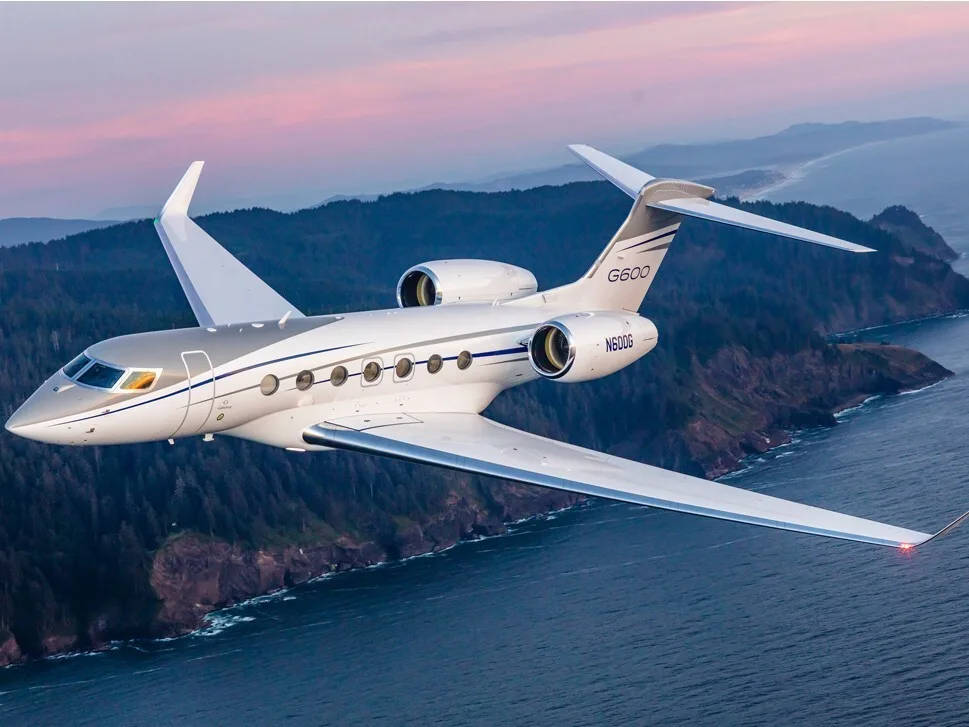
The G600 is a long-range Gulfstream whose cabin can be divided into four zones for working, relaxing and sleeping.
The G650 is a long-range, large-cabin Gulfstream. The G650ER is an extended-range variant of the same platform.
The G650ER is a Gulfstream business jet in the Gulfstream G family. The configuration listed here accommodates up to 19 passengers, with a maximum range of 13,890 km. A cabin height of 1.91 m and width of 2.49 m give an initial sense of the space on board before examining the layout.
The G700 is a Gulfstream business jet in the Gulfstream G family. The configuration listed here accommodates up to 19 passengers, with a maximum range of 14,353 km. A cabin height of 1.91 m and width of 2.49 m give an initial sense of the space on board before examining the layout.
The G800 is designed for Gulfstream's longest non-stop missions. Its cabin can accommodate up to four functional zones.
 BombardierCanada · 14 models
About the manufacturer
Challengers serve medium- and long-range routes, while Globals are designed for longer international flights.
History and models Bombardier
The future aircraft manufacturer began with transport for snow-covered Quebec. Mechanic and inventor Joseph-Armand Bombardier sought a way to help people travel in winter. After the commercial success of the seven-seat B7 in 1937, he founded L’Auto-Neige Bombardier Limitée in 1942. The company made snow vehicles, including those used to carry goods, mail and patients, and later entered the rail transport market.
Its aviation history began in 1986 with the acquisition of Canadair, the manufacturer of the Challenger. Buying Learjet in 1990 added expertise in light business aircraft. In 1993, Bombardier announced the Global Express programme: the first flight followed in 1996 and service entry in 1999. Several engineering traditions thus grew into a range covering different business aviation needs.
Modern Bombardier jets combine attention to the route with attention to life on board. On the Global 7500, this means four separate cabin zones, a galley and crew space. The arrangement allows passengers to hold a meeting, dine and rest during a single long flight without making the whole cabin serve one function.
Comfort is also linked to aircraft design. The Smooth Flĕx Wing was developed with high-speed performance, take-off, landing and ride quality in mind. The Nuage seat became a separate ergonomics project, featuring a deep recline. These examples illustrate the brand’s engineering approach: improving both flight capability and the details passengers experience directly.
Challenger and Global represent different branches of development. Challenger combines a large cabin with regional and transcontinental capability; Global focuses on longer international routes. The Challenger 3500 and 650 also have different design foundations: the model numbers do not describe one progressively larger aircraft.
Historic Learjets remain part of Bombardier’s aviation heritage and continue to fly after the end of series production. For any aircraft from the brand, the exact variant, maintenance history and cabin plan shape the travel experience. The number of passenger seats is not the same as the number of full sleeping places.
The Challenger 300 is a Bombardier business jet in the Challenger family. The configuration listed here accommodates up to 9 passengers, with a maximum range of 5,741 km. A cabin height of 1.83 m and width of 2.19 m give an initial sense of the space on board before examining the layout.
The Challenger 350 is a Bombardier business jet in the Challenger family. The configuration listed here accommodates up to 10 passengers, with a maximum range of 5,926 km. A cabin height of 1.83 m and width of 2.19 m give an initial sense of the space on board before examining the layout.
The Challenger 3500 is a Bombardier business jet in the Challenger family. The configuration listed here accommodates up to 10 passengers, with a maximum range of 6,297 km. A cabin height of 1.83 m and width of 2.19 m give an initial sense of the space on board before examining the layout.
The Challenger 604 is a Bombardier business jet in the Challenger family. The configuration listed here accommodates up to 12 passengers, with a maximum range of 7,439 km. A cabin height of 1.83 m and width of 2.41 m give an initial sense of the space on board before examining the layout.
The Challenger 605 is a Bombardier business jet in the Challenger family. The configuration listed here accommodates up to 12 passengers, with a maximum range of 7,408 km. A cabin height of 1.83 m and width of 2.41 m give an initial sense of the space on board before examining the layout.
The Challenger 650 is a Bombardier business jet in the Challenger family. The configuration listed here accommodates up to 12 passengers, with a maximum range of 7,408 km. A cabin height of 1.83 m and width of 2.41 m give an initial sense of the space on board before examining the layout.
The Challenger 850 is a large-cabin Bombardier business jet based on the regional CRJ200. Its notably long cabin measures 14.76 m in length and 2.49 m in width. The catalogue lists a 14-passenger configuration with a maximum range of 5,206 km.
The Global 5000 is a Bombardier business jet in the Global family. The configuration listed here accommodates up to 16 passengers, with a maximum range of 9,630 km. A cabin height of 1.88 m and width of 2.41 m give an initial sense of the space on board before examining the layout.
The Global 5500 is a Bombardier business jet in the Global family. The configuration listed here accommodates up to 16 passengers, with a maximum range of 10,927 km. A cabin height of 1.88 m and width of 2.41 m give an initial sense of the space on board before examining the layout.
The Global 6000 is a Bombardier business jet in the Global family. The configuration listed here accommodates up to 17 passengers, with a maximum range of 11,112 km. A cabin height of 1.88 m and width of 2.41 m give an initial sense of the space on board before examining the layout.
The Global 6500 is a Bombardier business jet in the Global family. The configuration listed here accommodates up to 17 passengers, with a maximum range of 12,223 km. A cabin height of 1.88 m and width of 2.41 m give an initial sense of the space on board before examining the layout.
The Global 7500 is a Bombardier business jet in the Global family. The configuration listed here accommodates up to 19 passengers, with a maximum range of 14,260 km. A cabin height of 1.88 m and width of 2.44 m give an initial sense of the space on board before examining the layout.
The Global 8000 is Bombardier's flagship for ultra-long-range routes, with a spacious cabin divided into several zones.
The Global Express launched Bombardier's long-range Global family.
 Dassault AviationFrance · 9 models
About the manufacturer
A family of long-range aircraft focused on efficiency and operational flexibility.
History and models Dassault Aviation
Dassault Aviation’s origins are linked to engineer Marcel Bloch, later known as Marcel Dassault. In 1916 he developed the Éclair propeller, and in 1930 he assembled a new team to build aircraft. This work grew into an aviation tradition in which military and civil designs developed alongside each other.
The business aircraft family began with the Mystère 20, later the Falcon 20, which first flew on 4 May 1963. A Pan American delegation including Charles Lindbergh inspected the aircraft that same day. The American carrier’s interest helped bring the programme to the international market. New generations followed the Falcon 20, drawing on the company’s military design experience while obtaining their own civil certification.
Dassault pays particular attention to how an aircraft responds to its pilot. The Falcon 7X became the first business jet with digital fly-by-wire controls. The system drew on experience from the company’s military programmes, including the Rafale: computers process pilot commands and control the deflection of flight control surfaces.
The system helps keep the aircraft within its operating limits and reduces crew workload. It developed alongside the EASy flight deck, which brings flight information together. In the passenger cabin, the same attention to detail appears in the use of space, acoustics and long-haul comfort. The Falcon approach combines precise handling with a carefully considered onboard environment.
The Falcon 2000 and 6X have two engines; the 900, 7X and 8X families have three. Engine count alone does not determine a trip’s comfort or economy: the airfield, range, load and exact aircraft version matter. Even within the Falcon 2000 family, the S and LXS address somewhat different route requirements.
The Falcon 6X, which entered service in 2023, stands out for its wide, tall cabin. The 10X programme develops the large twin-engine jet segment further. When comparing generations, distinguish the specifications of production aircraft from the design targets of a model still under development.
The Falcon 2000 is a Dassault Aviation business jet in the Falcon family. The configuration listed here accommodates up to 12 passengers, with a maximum range of 7,408 km. A cabin height of 1.88 m and width of 2.34 m give an initial sense of the space on board before examining the layout.
The Falcon 2000S is a large-cabin, twin-engine Dassault with an emphasis on short-runway operations.
The Falcon 2000LXS develops the twin-engine Falcon 2000 family, combining a spacious cabin with the ability to use short and challenging runways.
The Falcon 6X is a widebody, twin-engine Dassault with a tall cabin and three passenger zones.
The Falcon 7X is a Dassault Aviation business jet in the Falcon family. The configuration listed here accommodates up to 16 passengers, with a maximum range of 11,019 km. A cabin height of 1.88 m and width of 2.34 m give an initial sense of the space on board before examining the layout.
The Falcon 8X is a Dassault Aviation business jet in the Falcon family. The configuration listed here accommodates up to 16 passengers, with a maximum range of 11,945 km. A cabin height of 1.88 m and width of 2.34 m give an initial sense of the space on board before examining the layout.
The Falcon 900 is Dassault's large-cabin, three-engine family. The 900LX is one of its later variants.
The Falcon 900LX is a three-engine member of the Falcon 900 family, designed for long routes and flexible airport access.
The Falcon 10X is Dassault's flagship under development, with an exceptionally wide and tall cabin. Its published specifications remain design targets until certification is complete.
 Textron AviationUnited States · 20 models
About the manufacturer
A broad range from light jets for short trips to spacious midsize models.
History and models Textron Aviation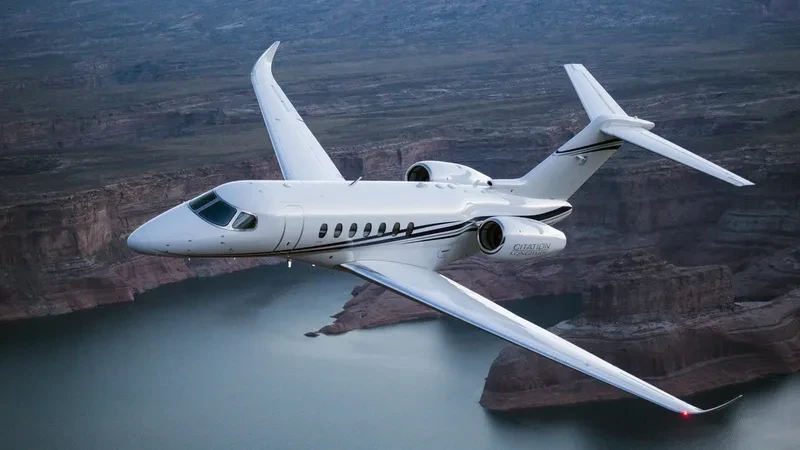
Textron Aviation was formed on 14 March 2014 when Cessna and Beechcraft were brought together within Textron. Behind the relatively new name lie much longer aviation histories. The company represents Cessna, Beechcraft and Hawker; its expertise covers trainers, piston aircraft, turboprops, business jets and special-mission aviation.
The Citation jet line began with the Fanjet 500 programme, announced in 1968. Following the name change, the Citation 500 prototype first flew in Wichita on 15 September 1969; deliveries began in January 1972. The compact business jet became the foundation of a family that eventually expanded from light aircraft to models with larger cabins and longer range.
The Citation began with the idea of making a business jet simpler and more accessible to operate. That idea remains visible across the broad range: customers can select the size and capabilities that fit their actual routes. Some light Citations are certified for single-pilot operation, although crew requirements for a particular charter flight are determined separately.
Practicality also extends to the aircraft’s life after sale. Textron Aviation supports its own network of service centres and mobile technicians. For an owner, this is part of the product: access to maintenance and technical assistance affects the reliability of travel. The brand’s philosophy therefore combines everyday usefulness, versatility and in-service support.
The M2 and CJ family serve small groups on relatively short routes. The Latitude emphasises a spacious, flat-floor cabin, while the Longitude belongs to the super-midsize class and offers greater long-range capability. The similar names of the latter two do not mean they share the same design.
The historic Citation X and X+ are known for their speed. Gen2, Gen3 and “+” refer to specific upgrades, so the full model designation matters. The cabin dimensions, baggage volume and equipment of an individual aircraft help establish how well it suits a typical journey.
The Citation Mustang is a Cessna business jet in the Cessna Citation family. The configuration listed here accommodates up to 5 passengers, with a maximum range of 1,783 km. A cabin height of 1.37 m and width of 1.4 m give an initial sense of the space on board before examining the layout.
The Citation M2 is the entry-level light jet in the Cessna Citation range, designed for small groups and regional flights.
The Citation M2 Gen2 is an updated light Citation for small groups and regional routes.
The Citation CJ2 is a light CitationJet, designated Model 525A by the manufacturer.
The Citation CJ3 is a light CitationJet in the 525B series. The newer CJ3 Gen2 has a separate entry in this catalogue.
The Citation CJ3 Gen2 continues the light CJ family with an updated flight deck and improved cabin layout.
The Citation CJ4 is the largest model in the light CitationJet family, designated 525C.
The Citation CJ4 Gen2 is the most spacious model in the light CJ family and features an updated interior.
The Citation Bravo is a Cessna 550B, developed from the earlier Citation II line.
The Citation Encore is one of the earlier mid-range Citation models in the 560 series.
The Citation Excel is a 560XL-series aircraft that formed the basis for the later XLS and XLS+ variants.
The Citation XLS develops the 560XL platform, sitting between the original Excel and the later XLS+.
The Citation XLS+ is a later variant of the Citation 560XL family, which also includes the Excel and XLS.
The Citation Ascend is a Cessna business jet in the Cessna Citation family. The configuration listed here accommodates up to 9 passengers, with a maximum range of 3,593 km. A cabin height of 1.52 m and width of 1.68 m give an initial sense of the space on board before examining the layout.
The Citation Latitude is a Cessna business jet in the Cessna Citation family. The configuration listed here accommodates up to 9 passengers, with a maximum range of 5,000 km. A cabin height of 1.83 m and width of 1.96 m give an initial sense of the space on board before examining the layout.
The Citation Sovereign is a larger Citation in the 680 series, designed for longer flights than the light CJ models.
The Citation Sovereign+ is a further development of the 680-series Citation Sovereign.
The Citation X is a Cessna business jet in the Cessna Citation family. The configuration listed here accommodates up to 9 passengers, with a maximum range of 5,762 km. A cabin height of 1.73 m and width of 1.68 m give an initial sense of the space on board before examining the layout.
The Citation X+ is a later variant of the high-speed, 750-series Citation X.
The Citation Longitude is a Cessna business jet in the Cessna Citation family. The configuration listed here accommodates up to 12 passengers, with a maximum range of 6,482 km. A cabin height of 1.83 m and width of 1.96 m give an initial sense of the space on board before examining the layout.
 Embraer Executive JetsBrazil · 12 models
About the manufacturer
Phenoms serve small groups; Praetors offer longer range and more cabin space.
History and models Embraer Executive Jets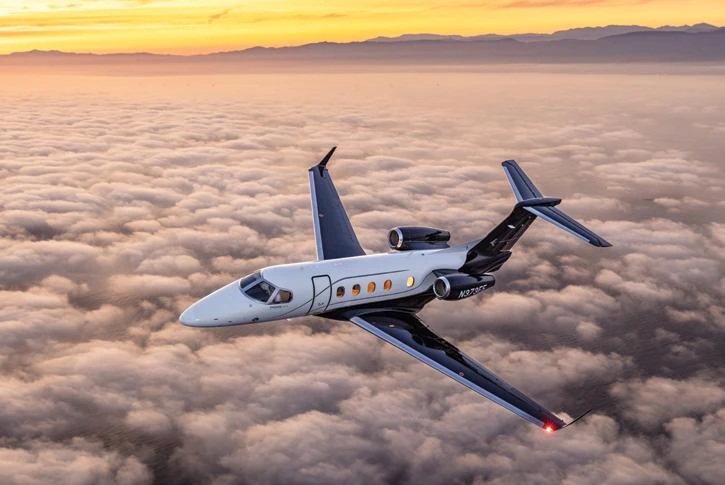
Embraer was founded on 19 August 1969 as a mixed-capital company under state control. Its origins are linked to Brazil’s CTA and ITA engineering institutions and the Bandeirante project developed by Ozires Silva’s team. Manufacturing began in January 1970 in São José dos Campos. Passenger and military programmes laid the foundations for further growth.
Embraer entered business aviation with the Legacy 600, based on the regional ERJ. It then moved to purpose-built business jets: the Phenom and Legacy 450/500. The Praetor family was introduced in 2018. This progression shows how the experience of a large aircraft manufacturer gradually developed into a distinct approach to business aviation.
Embraer Executive Jets links its approach to engineering innovation and continuous improvements in the customer experience. The work encompasses the aircraft, interior and maintenance, using feedback from owners and crews to develop models. Experience in passenger and military aviation provides a foundation for new business aircraft platforms.
One example is the digital fly-by-wire system on the Praetor 500 and 600, which actively reduces the effects of turbulence. It detects disturbances and adjusts control surfaces to help smooth the ride. The technology addresses a need passengers can readily understand: reducing the shaking they feel. Together with cabin development, it shows how engineering relates to the everyday travel experience.
The Phenom 100 is a very light jet and the Phenom 300 a light jet. The Praetor 500 and 600 offer larger cabins and greater long-range capability. In February 2026, Embraer introduced the updated Praetor 500E and 600E with passenger cabin changes; the additional letter identifies a specific version.
The Legacy 600/650 and Lineage 1000 retain links to regional passenger platforms and take a different approach to cabin volume. Compare them with the Phenom and Praetor against the intended journey: passenger numbers, baggage, flight duration and airport requirements. A larger aircraft is particularly valuable when its space will actually be used.
The Phenom 100 is a Embraer Executive Jets business jet in the Phenom family. The configuration listed here accommodates up to 6 passengers, with a maximum range of 2,182 km. A cabin height of 1.5 m and width of 1.55 m give an initial sense of the space on board before examining the layout.
The Phenom 100EX develops Embraer's entry-level aircraft for small groups, with improvements to cabin ergonomics and the flight deck.
The Phenom 300 is a Embraer Executive Jets business jet in the Phenom family. The configuration listed here accommodates up to 9 passengers, with a maximum range of 3,650 km. A cabin height of 1.5 m and width of 1.55 m give an initial sense of the space on board before examining the layout.
The Phenom 300E is an updated version of the light Phenom 300, with a cabin for business travel and Prodigy Touch avionics.
The Praetor 500 is a midsize Embraer business jet with fly-by-wire controls and a cabin designed for longer journeys.
The Praetor 600 is a Embraer Executive Jets business jet in the Praetor family. The configuration listed here accommodates up to 12 passengers, with a maximum range of 7,441 km. A cabin height of 1.83 m and width of 2.08 m give an initial sense of the space on board before examining the layout.
The Legacy 450 is a midsize Embraer business jet introduced as part of a new generation of the Legacy family.
The Legacy 500 is a Embraer Executive Jets business jet in the Legacy family. The configuration listed here accommodates up to 12 passengers, with a maximum range of 5,788 km. A cabin height of 1.83 m and width of 2.08 m give an initial sense of the space on board before examining the layout.
The Legacy 600 is a large-cabin Embraer business jet derived from the company's regional jet platform.
The Legacy 650 is a Embraer Executive Jets business jet in the Legacy family. The configuration listed here accommodates up to 14 passengers, with a maximum range of 7,223 km. A cabin height of 1.82 m and width of 2.08 m give an initial sense of the space on board before examining the layout.
The Lineage 1000 is a Embraer Executive Jets business jet in the Lineage family. The configuration listed here accommodates up to 19 passengers, with a maximum range of 8,334 km. A cabin height of 2.01 m and width of 2.68 m give an initial sense of the space on board before examining the layout.
The Lineage 1000E is a large Embraer business aircraft based on an airliner platform, with a cabin divided into several zones.
 Pilatus AircraftSwitzerland · 4 models
About the manufacturer
Business aircraft for regional airfields; the PC-12 is included as a turboprop alternative to a jet.
History and models Pilatus Aircraft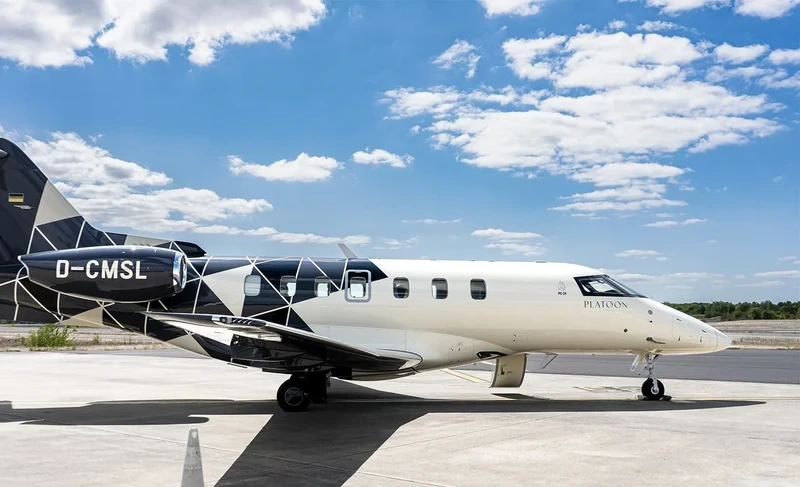
Pilatus was founded in Stans on 16 December 1939. Its initial activities involved maintaining Swiss Air Force aircraft; it later developed its own designs. Trainers and utility aircraft established its reputation for practical operation and the ability to work beyond major airports.
The PC-12 became an important civil programme: development began in 1987, the first flight took place on 31 May 1991, and certification and initial deliveries followed in 1994. The next step, the jet-powered PC-24, extended the brand’s speed capabilities. The first customer deliveries began in February 2018.
For Pilatus, convenient travel is about more than time in the air: access to the final destination also matters. The PC-12’s large cargo door and flat-floor cabin allow it to combine passenger and transport roles. Flexible layouts are useful for business flights, equipment transport and special missions.
The PC-24 brought some of that versatility to the jet class. It also has a large cargo door and is certified to operate from certain types of unpaved runway. The Pilatus approach expresses Swiss precision through attention to design, manufacturing and continuous model improvements. Access to a smaller airfield can shorten the ground journey and make the whole trip more convenient.
The PC-12 is a single-engine turboprop; the PC-24 is a twin-engine jet. Compare them in terms of speed, route length, load and operating cost. PC-12 generations, including the NG, NGX and PRO, differ in flight deck equipment and cabin features.
Special airfield capabilities do not mean a Pilatus can use any landing site. Runway length and condition, aircraft weight and permitted surfaces must meet the limitations of the specific version. The brand’s advantage is most useful when a suitable regional airport really is closer to the journey’s destination.
The PC-12 is a single-engine Pilatus turboprop. Its platform serves business, cargo and medical transport roles.
The PC-12 NG develops the original PC-12 with updated equipment and a layout suited to business travel and special missions.
The PC-12 NGX is the third-generation PC-12, featuring an upgraded engine and flight deck, and larger cabin windows.
The PC-24 is a Pilatus Aircraft business jet in the PC-24 family. The configuration listed here accommodates up to 9 passengers, with a maximum range of 3,932 km. A cabin height of 1.55 m and width of 1.69 m give an initial sense of the space on board before examining the layout.
 Honda AircraftUnited States · 5 models
About the manufacturer
Compact jets for short business routes and small passenger groups.
History and models Honda Aircraft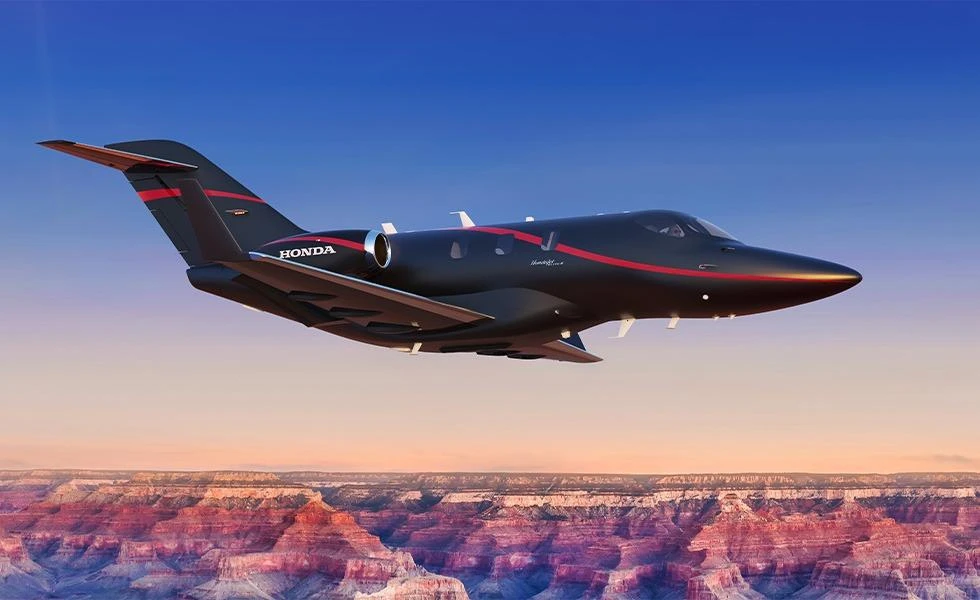
Honda Aircraft Company was established in 2006 as a subsidiary of Honda Motor, based in Greensboro, North Carolina. The aviation programme began much earlier. Engineer Michimasa Fujino and his team studied the design of a compact business aircraft; an experimental jet first flew in December 2003.
HondaJet was presented to the public in 2005, and the creation of a dedicated company marked a step towards commercial production. The original HondaJet received FAA certification in December 2015. The programme combined Japanese engineering culture with aircraft development and manufacturing in the United States.
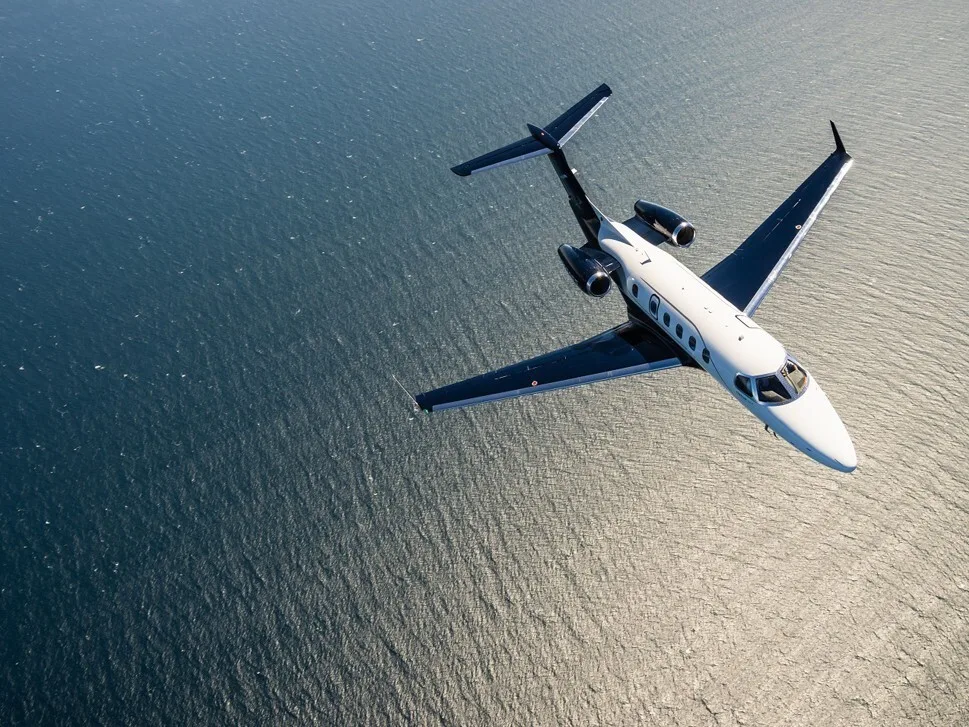
HondaJet’s most recognisable feature is its engines, mounted on pylons above the wings. Fujino formulated the concept in 1997. This placement frees up usable fuselage space and helps reduce cabin noise. The engine positions were developed alongside the wing shape: making this arrangement work aerodynamically required research and testing.
Other elements include a composite fuselage and nose and wing shapes designed for natural laminar flow: more orderly airflow close to the surface. Together, they aim to deliver efficient flight and a comfortable cabin within compact external dimensions. HondaJet’s unusual appearance is a consequence of its engineering objectives.
HondaJet, Elite, Elite S and Elite II are successive versions of the light jet family, with different ranges and equipment. For a small group of passengers, the actual layout, baggage provision and lavatory comfort are particularly important: these details shape the everyday experience.
HondaJet Echelon is a separate programme for a larger aircraft. According to the manufacturer’s September 2026 update, the first flight is planned for 2028, with certification and the first delivery in 2031. These are development plans and may change; Echelon’s design targets should be considered separately from the capabilities of the HondaJet Elite II already in service.
The HondaJet is distinguished by its over-wing engine mounts and composite fuselage, two defining features of the original platform.
The HondaJet Elite develops the original over-wing-engine platform with updated aerodynamics and cockpit equipment.
The HondaJet Elite S has a higher maximum take-off weight and updated avionics compared with the Elite.
The HondaJet Elite II further develops the light jet series with greater fuel capacity and range.
The HondaJet Echelon is a light jet under development, with a larger cabin and greater range than the Elite II.
In developmentBusiness jet comparisons
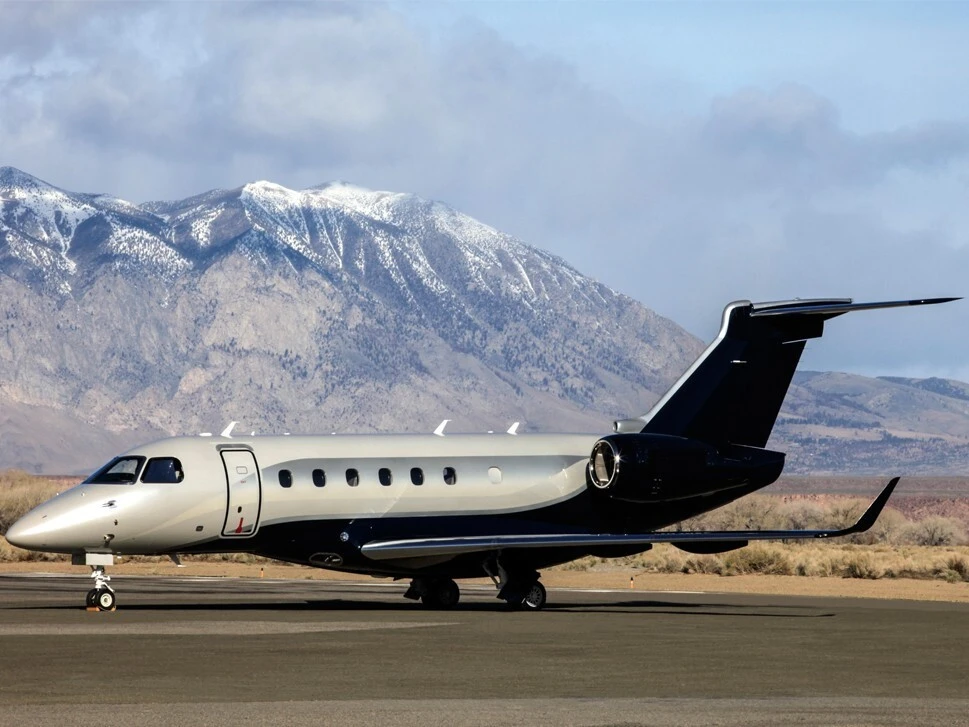
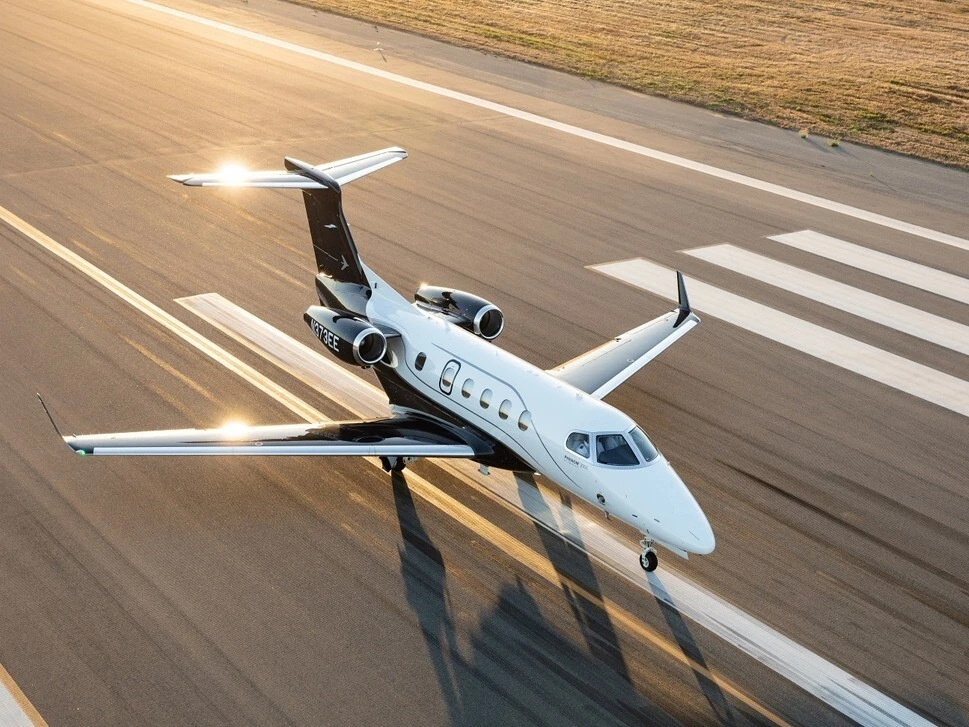
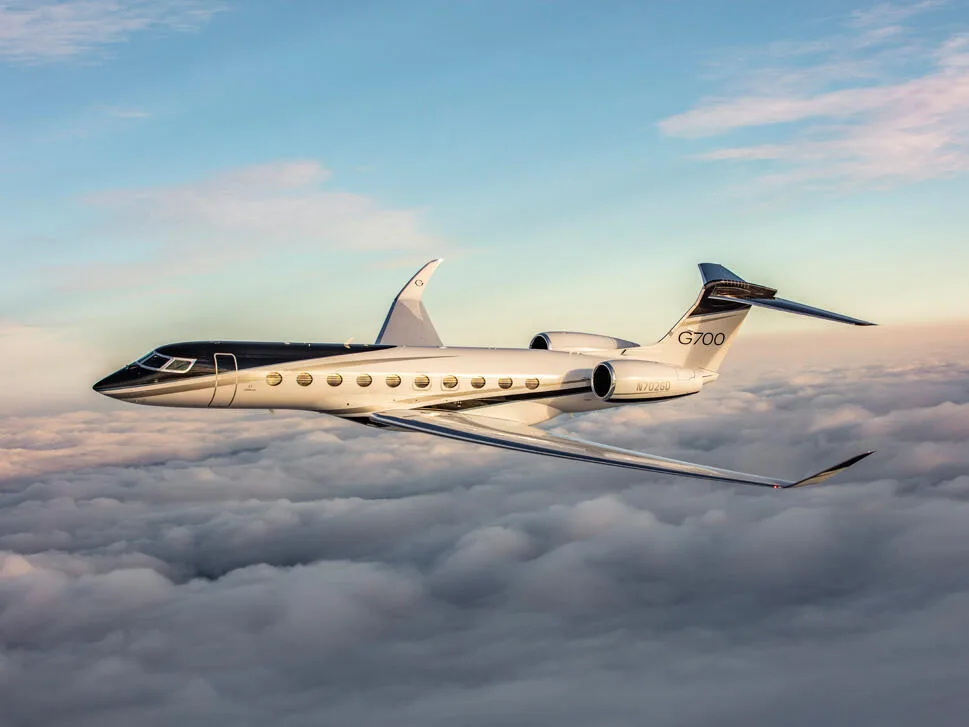
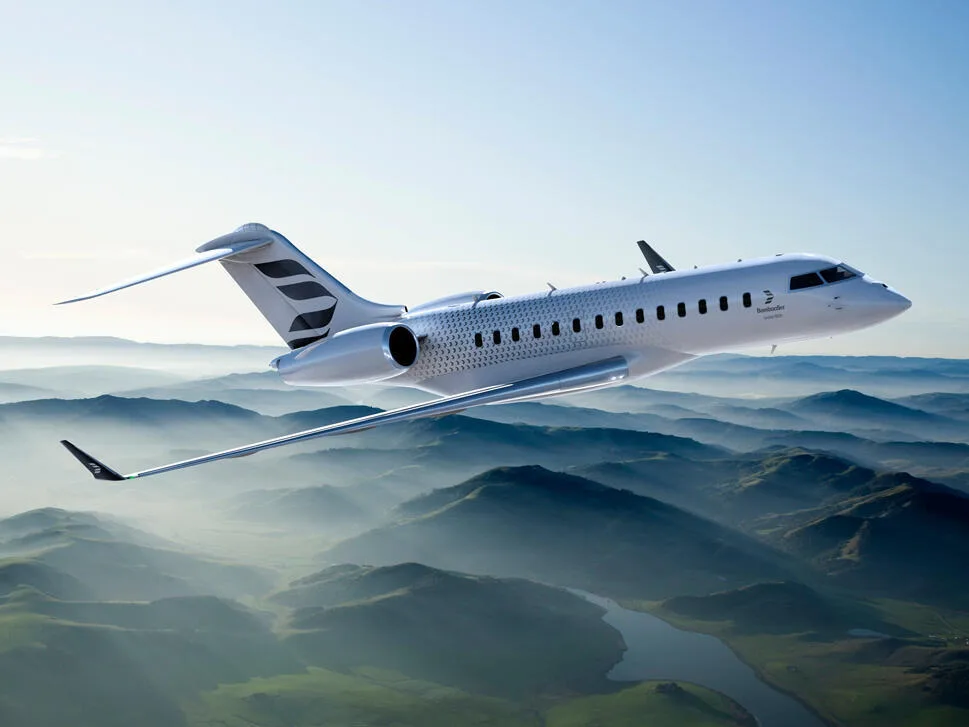
Destinations
Business jets can use major international airports or dedicated business aviation terminals. The choice depends on runway length, slots, customs facilities and transfer time.
Popular routes
The ranges give an indication of cost and flight time. The actual flight path is almost always longer than the direct distance because of weather, air traffic restrictions and closed airspace.
| Route | Distance | Time | Class | Estimate |
|---|---|---|---|---|
| Los AngelesLas Vegas | approximately 370 km | 1–1.5 h | Turboprop / light jet | $7 000–9 000 |
| New YorkMiami | approximately 1,760 km | 2.5–4 h | Light / midsize jet | $12 000–18 000 |
| New YorkLos Angeles | approximately 3,940 km | 5.5–6 h | Midsize / super-midsize jet | $39 000–51 000 |
| LondonParis | approximately 345 km | 0.5–1.5 h | Turboprop / light jet | $7 000–8 000 |
| LondonGeneva | approximately 750 km | 1.5–2 h | Light | $12 000–18 000 |
| DubaiMalé | approximately 3,040 km | 4–5 h | Midsize / super-midsize jet | $29 000–39 000 |
| New YorkLondon | approximately 5,570 km | 7–8 h | Heavy / ultra-long-range jet | $83 000–96 000 |
| MiamiNassau | approximately 300 km | 0.5–1 h | Light / midsize jet | $6 000–9 000 |
Flight calculator
An estimate based on the direct distance between cities, with an allowance for climb and descent. Use it to compare aircraft classes; it is not a flight plan or a charter quotation.
Super-midsize · cruising speed of about 850 km/h · operating range up to 7,400 km
Charter costs
The hourly rate is only a starting point. The final cost depends on aircraft positioning, airport charges, season, parking, crew, de-icing and your chosen schedule.
Short routes, small airfields and a reasonable hourly cost.
Fast flights within a country and between neighbouring countries.
More cabin and baggage space for longer regional routes.
Transcontinental flights with a full galley and a stand-up cabin.
Long international routes, several cabin zones and a large baggage compartment.
Non-stop intercontinental flights and the most space.
Prices are indicative figures for comparing aircraft classes, not a public offer. A shorter route does not always cost proportionately less: minimum charter time and aircraft positioning can account for a substantial part of the quote.
Multiplying the hourly rate by flight time gives a preliminary estimate. The final quote may separately include an empty positioning flight to the departure airport, ground handling, parking and crew expenses. Compare quotes for the same route and dates, with a clear list of what is included.
Start with passenger numbers, baggage and the ability to fly non-stop. Then compare the cabin and total trip cost. The lowest hourly rate does not guarantee the cheapest journey: a smaller aircraft may take longer or require a fuel stop.
A charter price covers a particular flight. A purchase price covers the aircraft itself and does not include all future operating costs. Use the catalogue for model specifications and the route calculator for an estimate of trip cost; they measure different things.
Read about business aviation
Owners of famous jets, unusual aircraft and travel destinations.