
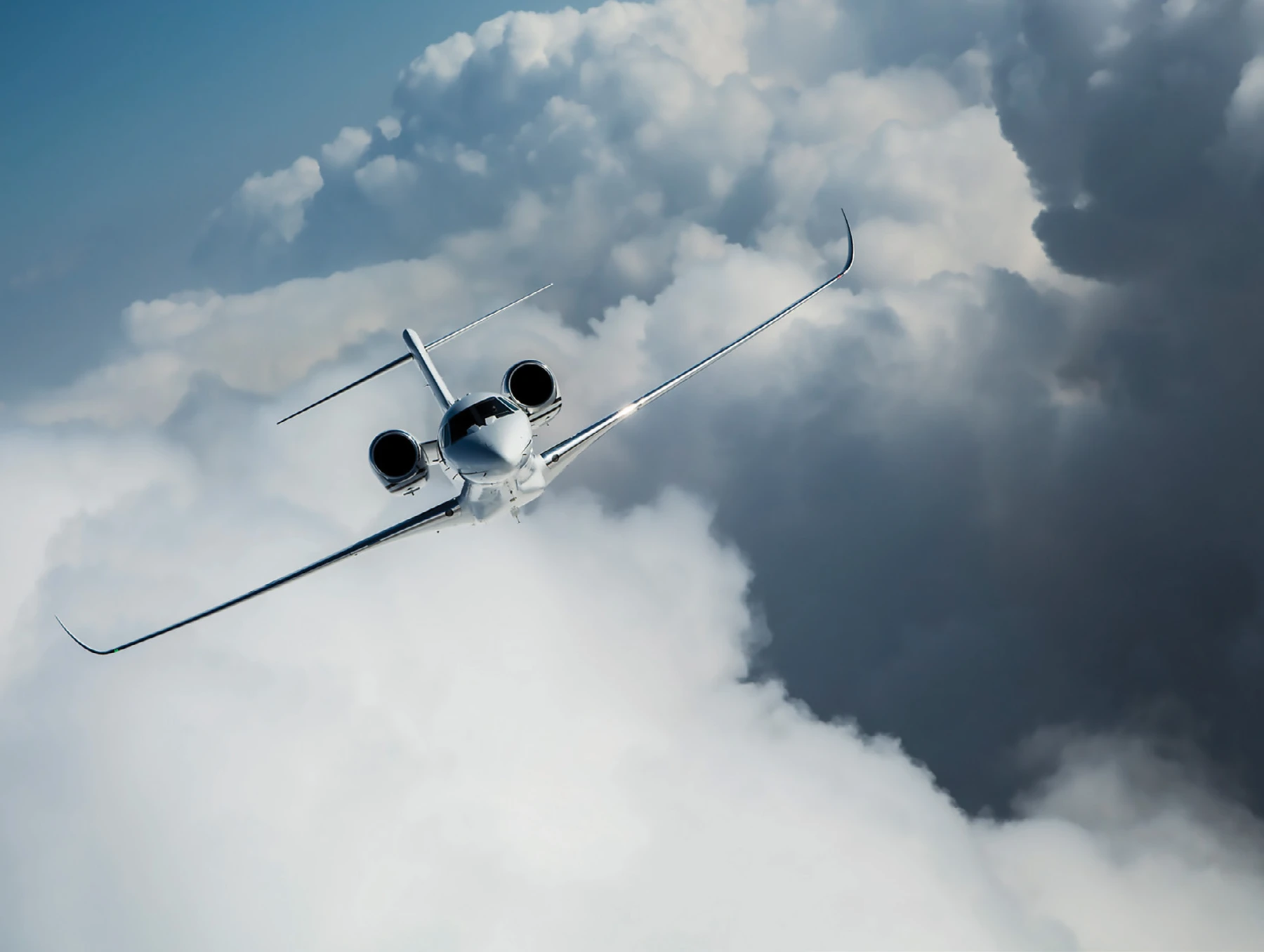
Model profile
Citation X+: history and features
The Citation X (Model 750) was created as a high-speed business jet. It first flew in 1993 and was certified in 1996. Later, there was an extended and updated version of the X+.
Programme development
The appearance of the Citation X was a transition for Cessna to the aircraft, where high cruising speed was the central characteristic of the project. The wing and powerplant were selected for this task, and did not borrow directly from the lower-speed Citation. The X+ variant extended the life of the program with changes in the fuselage and onboard systems.
Design
For high speed, the aircraft received a new swept wing, T-shaped plumage and powerful engines. The X+ retained the base of the platform, but changed the length of the cabin and equipment.
Technical features
The high-speed design of the Citation X required a swept wing and powerful Rolls-Royce AE 3007 engines. The extended X+ also received updated instruments; the increase in cabin length does not make it a new aircraft from scratch.
Purpose and uses
Citation X was chosen for long business flights, in which the flight time had a special price. When comparing with other Citations, you need to take into account higher speeds, sizes and operating requirements. The X+ represents a late stage of the line and should not be confused with the original aircraft in the performance tables.
Its place in the family
X+ - modernization of the high-speed platform with an extended cabin and updated systems.
The platform and its development
The Citation X was designed around high speed. The arrow-shaped wing, T-shape and Rolls-Royce AE 3007 engines distinguished it from the quieter Citation lines. The constructive choice helped reduce time on the long business route, but the high-speed cruise mode consumes fuel differently than the maximum range mode. Therefore, advertising speed and passport range cannot be automatically expected at the same time.
The Citation X+ extended the cabin and updated the systems, maintaining a relationship with the original Model 750. In the park in operation, both versions may have different equipment after upgrades. It is important for the owner to assess not only the record speed indicator, but also the weight of luggage, the availability of the airfield and the cost of engine maintenance. A similar name does not give the right to transfer the numbers X+ to the early X.
Places and planning
The Citation X+ offers up to 12 passengers. The number of seats does not describe the entire interior: the club group of seats, sofa and dining table occupy the space in different ways. Before a long flight, it is useful to check the number of full-fledged beds, the location of the toilet and the ability to separate the recreation area. Maximum capacity does not mean that all these amenities are available at the same time.
Which means distance.
Citation X+ has a maximum range of 6,312 km (3,408 nautical miles). The terms of the published calculation: the manufacturer's passport for Citation X+. This is a benchmark for comparison, not a promise of non-stop travel with any number of passengers. The oncoming wind, airspace bypasses, a lot of luggage and a supply of fuel for care at another airfield change the possible route. Maximum capacity and maximum range cannot be automatically added to a single scenario.
Position on the range among the models of the manufacturer
Cessna's catalog for Citation X+ lists 3,408 nautical miles. Among the 26 models of the manufacturer of the same type with published range, the aircraft takes 25th place when sorting from a smaller value to a larger one. The nearest Citation Longitude published 3,500 nautical miles: the difference is 92 nautical miles, or about 3% of the comparable model. This shows the scale of the difference more accurately than the conditional division of aircraft into “medium” and “long-range”. For the current model, this is a comparison of passport values; a separate flight is planned according to the actual mass and weather conditions.
Capacity and payload
The Citation X+ has a maximum passenger capacity of 12 people. The Citation Longitude has up to 12 passengers. Equal declared capacity leaves the main question of the size and arrangement of the cabin, as well as the ability to use all the seats on the selected route. There is no separate confirmed luggage compartment volume for this version in the catalog; the number of seats does not allow you to calculate it automatically. When comparing aircraft, a combination of passengers, fuel and luggage should be checked: the maximum figure for each of these parameters usually describes different design cases. It is this combination that determines how much the published range fits a group with a specific number of things.
Close to Model Capabilities
The Citation X+ is part of the Cessna Citation line. When sorted by published range, the closest are Citation Longitude (3,500 nautical miles, up to 12 passengers), Citation Sovereign+ (3,200 nautical miles, up to 12 passengers), Citation X (3,111 nautical miles, up to 9 passengers). These options differ not only in the route: the number of seats, cabin proportions and the generation of equipment have to be compared separately. If you need another passenger or more luggage, the close range of two aircraft does not mean equal suitability for the trip. If the decisive is the airfield, additionally compare the runway restrictions of specific modifications. For the released board, the year of manufacture, installed avionics and the actual interior are significant.
The history of Cessna and the Citation family
Cessna traces its history to 1927. Its jet programme began with the Fanjet 500: the prototype of the future Citation first flew on 15 September 1969. The company went on to develop several business aircraft families with different cabin sizes and ranges.
Cessna is part of Textron Aviation. The Citation name covers distinct platforms: the 525, 550, 560 and 650 models each have their own history and technical characteristics.
Choosing an aircraft for your route
The Mustang, M2 and CitationJet suit small groups on regional flights. The XLS, Latitude and Longitude offer more space. High speed became the Citation X’s defining feature.
The exact variant, passenger numbers, baggage and airports all matter. Specifications from an earlier generation cannot be applied to a Gen2 or Gen3 simply because the names are similar.
Several platforms under one name
Citation is a family of trade names, not one design with progressively increasing numbers. The compact CitationJet line, Excel/XLS aircraft and swept-wing Citation III/VII use different platforms. Start a comparison by identifying the exact model: Roman numerals, letters and “+” signs denote specific variants. This avoids taking the range or cabin dimensions of one aircraft and applying them to another with a similar name.
Earlier generations remain an important part of the operating fleet. An individual aircraft’s year of manufacture, upgrades and condition must be considered separately from the history of its type. An interior or avionics upgrade may improve comfort and equipment, but it does not turn the aircraft into a different platform. When choosing a charter, ask for the current layout and details of the actual aircraft being offered.
Regional trips and cabin space
For a short flight with a small group, the airport, baggage and schedule matter. A compact Citation can meet those needs without the space of a large long-range aircraft. If passengers want to work at a table, move around the cabin or rest on a longer flight, the criteria change. Seat count does not tell you the aisle height, seat width or whether the whole group can travel comfortably.
The Latitude and Longitude offer a different scale of passenger space from compact CitationJets. However, the shared brand name does not guarantee the same layout or equipment. Check the galley, lavatory, connectivity and rest areas of the individual aircraft. Seating for daytime travel may also differ from sleeping accommodation, so specify both requirements in advance.
Understanding Citation range and speed
Published range is calculated under particular assumptions about passengers, speed and fuel reserves. A heavier load or headwind may change the result for a specific flight. Maximum capacity and maximum range are not necessarily available at the same time. Use comparable assumptions when comparing catalogue figures; for a trip, ask the operator to calculate performance for your actual party, baggage and suitable airports.
The Citation X is known for its focus on high speed, but time in the air is only part of the journey. Airport access, a possible stop and onward travel after landing also take time. The right model is not always the one with the highest figure in a table: it must fly the required route with the chosen load and provide the comfort passengers need.
Checking the individual aircraft before travelling
Confirm the exact variant, current photographs and cabin plan. Then agree passenger numbers and baggage dimensions, particularly for sports equipment or unusual items. Compartment volume does not describe the shape of the loading opening. If another form of transport follows the jet flight, account for its capacity separately. This connects the choice of Citation to the group’s entire journey rather than simply the number of seats listed.
Assess airports against the actual conditions: available runway, weather and ground services. A model’s ability to use certain airfields does not replace planning for a specific operation. The return flight may require parking or separate aircraft positioning, as well as crew arrangements. A quote should cover the complete journey and included services so that different Citations can be compared clearly on time and cost.