
Model profile
G300: history and features
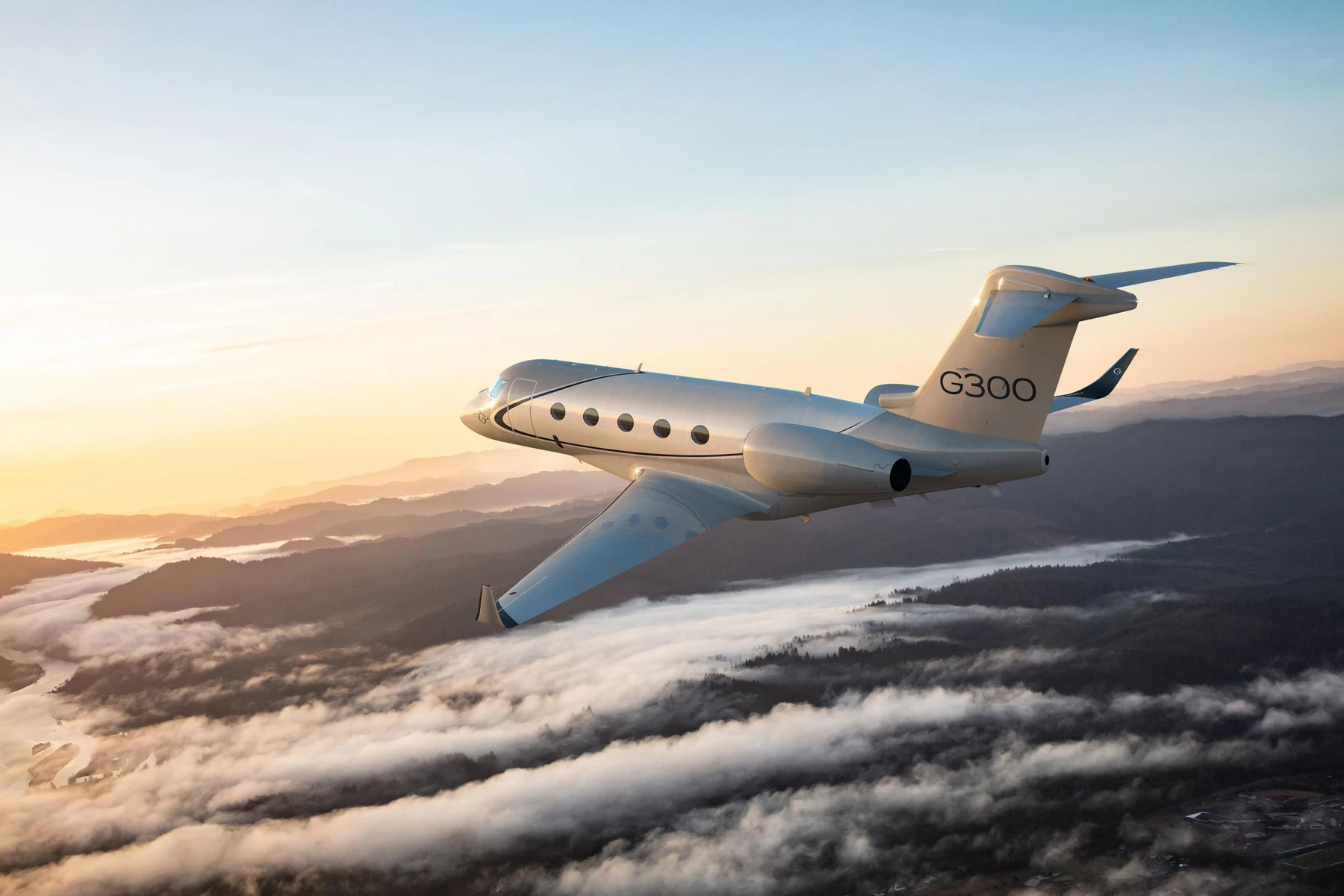
In the history of Gulfstream, the designation G300 was already used for the version of the previous generation. In 2025, the company introduced a new G300 in the super-midsize class; this is a separate program, so old information called G300 does not apply to it.
Programme development
Reusing the G300 index requires a particularly accurate source date. The earlier G300 belonged to the Gulfstream IV line, and the program presented in 2025 describes a new next-generation aircraft. Therefore, the article on the old version cannot serve as a specification of the new draft.
Design
The new G300 is described by the manufacturer as an aircraft with two cabin zones and a modern avionics complex. Its design characteristics should be read together with the date and conditions of publication.
Technical features
The new use of the name G300 refers to a program introduced in 2025. Encyclopedic information about the former G300 from the Gulfstream IV line describes another aircraft. For the new project, it is necessary to rely on the project parameters published by the manufacturer.
Purpose and uses
While the new G300 goes from announcement to certification and deliveries, the data published by the manufacturer are the target characteristics of the program. For future operators, the dual-zone cabin and the position of the model between smaller and larger Gulfstream are significant; real indicators should be clarified after the tests.
Its place in the family
This card is about the new G300, not a variant of Gulfstream IV, which bore the same name in the 2000s.
The platform and its development
The name G300 was used by Gulfstream in different years for different aircraft. The new G300, shown in 2025, cannot be described by the historical specification of the Gulfstream IV line variant. The manufacturer classifies the current program as super-midsize and shows a modern crew cabin and double-zone cabin. So far, information about it refers to the announced project and the stages of its implementation, and not to a large park with many years of statistics.
For the buyer of the future aircraft, the date of publication of characteristics is especially important. At the launch stage, the manufacturer can change the equipment, terms and details of the serial configuration. The preliminary range should be read together with the number of passengers and the fuel reserve at which it is declared. When comparing with the G280 or large G400/G500, it is necessary to separate the real operation of serial machines and the goals of the new program. This prevents the false conclusion that the same G300 index always meant the same aircraft.
Variant-specific features
The new G300 is introduced in 2025 as a successor to the super-midsize class. The project describes two functional areas of the cabin and a modern crew cabin. The old aircraft with the same index was associated with the Gulfstream IV line; its history, engines and specifications can not be transferred to the card of the new G300. While the program is developing, the design range should be compared with the parameters of the serial G280 with a separate status mark.
Places and planning
The G300 has up to 10 passengers. The number of seats does not describe the entire interior: the club group of seats, sofa and dining table occupy the space in different ways. Before a long flight, it is useful to check the number of full-fledged beds, the location of the toilet and the ability to separate the recreation area. Maximum capacity does not mean that all these amenities are available at the same time.
Which means distance.
For the G300, the catalogue lists a maximum range of 6,667 km (3,600 nautical miles). Terms of the published calculation: 4 passengers, 2 crew members, NBAA IFR reserve. This is a benchmark for comparison, not a promise of non-stop travel with any number of passengers. The oncoming wind, airspace bypasses, a lot of luggage and a supply of fuel for care at another airfield change the possible route. Maximum capacity and maximum range cannot be automatically added to a single scenario.
Position on the range among the models of the manufacturer
Gulfstream's G300 catalogue lists 3,600 nautical miles. Among the 12 models of the manufacturer of the same type with published range, the aircraft takes the 3rd place when sorting from a smaller value to a larger one. According to the published range, the nearest G280 has the same figure - 3,600 nautical miles. The coincidence of one digit does not mean the same design or equal opportunities for different loading. For the current model, this is a comparison of passport values; a separate flight is planned according to the actual mass and weather conditions.
Capacity and payload
The G300 has a maximum passenger capacity of 10 people. The G280 has up to 10 passengers. Equal declared capacity leaves the main question of the size and arrangement of the cabin, as well as the ability to use all the seats on the selected route. There is no separate confirmed luggage compartment volume for this version in the catalog; the number of seats does not allow you to calculate it automatically. When comparing aircraft, a combination of passengers, fuel and luggage should be checked: the maximum figure for each of these parameters usually describes different design cases. It is this combination that determines how much the published range fits a group with a specific number of things.
Close to Model Capabilities
The G300 is part of the Gulfstream G line. When sorted by published distance, the closest are G280 (3,600 nautical miles, up to 10 passengers), G200 (3,312 nautical miles, up to 10 passengers), G400 (4,200 nautical miles, up to 12 passengers). These options differ not only in the route: the number of seats, cabin proportions and the generation of equipment have to be compared separately. If you need another passenger or more luggage, the close range of two aircraft does not mean equal suitability for the trip. If the decisive is the airfield, additionally compare the runway restrictions of specific modifications. For the released board, the year of manufacture, installed avionics and the actual interior are significant.
The history of Gulfstream: from Grumman to long-haul travel
Gulfstream began within the American company Grumman. The Gulfstream I, a turboprop designed for business travel, first flew in 1958 and entered service in 1959. The jet-powered Gulfstream II opened the next chapter: the company began developing aircraft that could carry passengers faster and farther while retaining a spacious cabin.
Savannah, Georgia, has been Gulfstream’s home since 1967. Today, Gulfstream Aerospace is part of General Dynamics. Over the decades, the brand has developed its own approach to large business jets, advancing range and speed alongside cockpit design, crew equipment and support throughout the aircraft’s operating life.
Engineering philosophy: making travel time useful
The G700 illustrates Gulfstream’s approach. Its cabin can be divided into several zones for meetings, dining and sleeping. Large oval windows bring in natural light, the ventilation system supplies fresh outside air, and the cabin is pressurised to a low altitude even when the aircraft is flying high above the ground. These features are designed for journeys in which passengers spend many hours on board.
The other side of this philosophy is the pilots’ workspace. The G700 uses the Symmetry Flight Deck, with active sidesticks and touchscreen interfaces. Automation helps the crew manage information through the different phases of flight. The manufacturer also develops its service network: for an owner, access to maintenance matters alongside the aircraft’s capabilities.
How the brand’s ideas appear in its models
The G280 belongs to the super-midsize class, while the G650ER, G700 and G800 are intended for longer intercontinental routes. Range, dimensions and the number of cabin zones vary within the family. Features described for the G700 cannot automatically be assumed to apply to other generations.
When choosing a Gulfstream, compare the journey’s duration with the opportunities for rest on board. Separate zones are particularly useful when some passengers are working while others sleep. The exact variant and layout matter more than the brand name alone: the G650 and G650ER, for example, have different range capabilities.