
Specifications Airbus A330
The figures in this table refer to one specific variant — A330-300. This avoids combining the range, capacity and dimensions of different versions into an inaccurate set of figures.
- Variant shown in the table
- A330-300
- Type
- long-haul wide-body aircraft
- Family's first flight
- Year 1992
- Passenger capacity
- 250–290 seats in a typical three-class layout; maximum 440
- Flight range
- up to 11,750 km (6,350 nautical miles)
- Mach limit
- M 0,86
- Length
- 63,66 m
- Wingspan
- 60,30 m
How the aircraft came about
History Airbus A330
The A330 made its maiden flight in 1992. Versions of the A330-200 and A330-300 became widespread, and the A330neo generation continued the program with new engines and wing.
The A330 was developed in parallel with the four-engine A340 as a development of earlier wide-body Airbus. The first in 1994 began carrying A330-300 passengers; a shorter and longer A330-200 followed later. Common solutions with the A340 concerned the wing, cab and a number of systems, but the power plant of the A330 is twin-engined.
Milestones and decisions
Programme development
The A330 and the four-engined A340 were developed in parallel, using similar solutions for the fuselage and cockpit. As long-haul access for twin-engine aircraft has expanded, the A330's scope has grown. Airbus later offered a cargo A330-200F, an A330 MRTT tanker aircraft and an updated Neo passenger line. These projects show how the basic glider was adapted to different tasks.
Model features
Design and variants
A wide fuselage with two aisles allows you to place several classes and use the lower deck for container baggage and cargo. The cockpit continued the Airbus line with electric remote control. Differences in fuselage length and fuel stock between the variants directly affect the combination of capacity and range.
In addition to passenger A330-200 and -300 were produced cargo and multi-purpose options. The A330neo generation received Rolls-Royce Trent 7000 engines, aerodynamic changes and an updated interior. The A330-300 data from the table on the page refers to the original version, and not to all aircraft with the A330 index.
Powerplant
Engines
Two General Electric CF6-80E1, Pratt & Whitney PW4000 or Rolls-Royce Trent 700 are optional.
The engine variant fitted to an individual aircraft is recorded in its documentation. The powerplant affects thrust, fuel consumption, noise and maintenance requirements.
On board
Cabin and passenger capacity
Two passes; common economic scheme 2+4+2. The width of the cabin allows you to install several classes, crew rest areas and large luggage shelves.
Passenger capacity - 250-290 seats in a typical three-class layout; a maximum of 440. The exact number of seats is determined by the operator: business class, kitchens, toilets and recreation areas of the crew take place. Therefore, the layout of the cabin differs even with the same models.
In practice
Operations and uses
The passenger A330 has two lines of seats separated by two aisles, and the lower deck accepts luggage and standard containers. The aircraft was used on both long-haul flights and on routes with high medium-haul demand. The A330-200 and the longer A330-300 solve these problems with a different combination of seats and range; the cargo or military version cannot be estimated by passenger layout.
Technical analysis
How it works Airbus A330
The development of the A330 went along with the A340 program: two aircraft received close solutions for the fuselage and cabin, but a different number of engines. For Airbus, this meant the opportunity to use part of the overall engineering experience on routes of different distances. The A330 has two engines under its wing, so the rules of flying over remote areas with a limited number of spare airfields were of particular importance. The expansion of such tolerances gradually increased the number of routes where a twin-engine wide-body aircraft could replace a four-engine car.
The A330-300 was the original long version, designed for significant passenger traffic. The shortened A330-200 received a different balance of cabin length and range margin. The difference is not limited to the number of seats: the route is affected by the maximum weight, fuel, luggage and cargo on the lower deck. The wide fuselage allows for two passes and container loading. The airline can use the space for a dense scheme, a spacious business class or additional crew areas, so the same aircraft often look completely different inside.
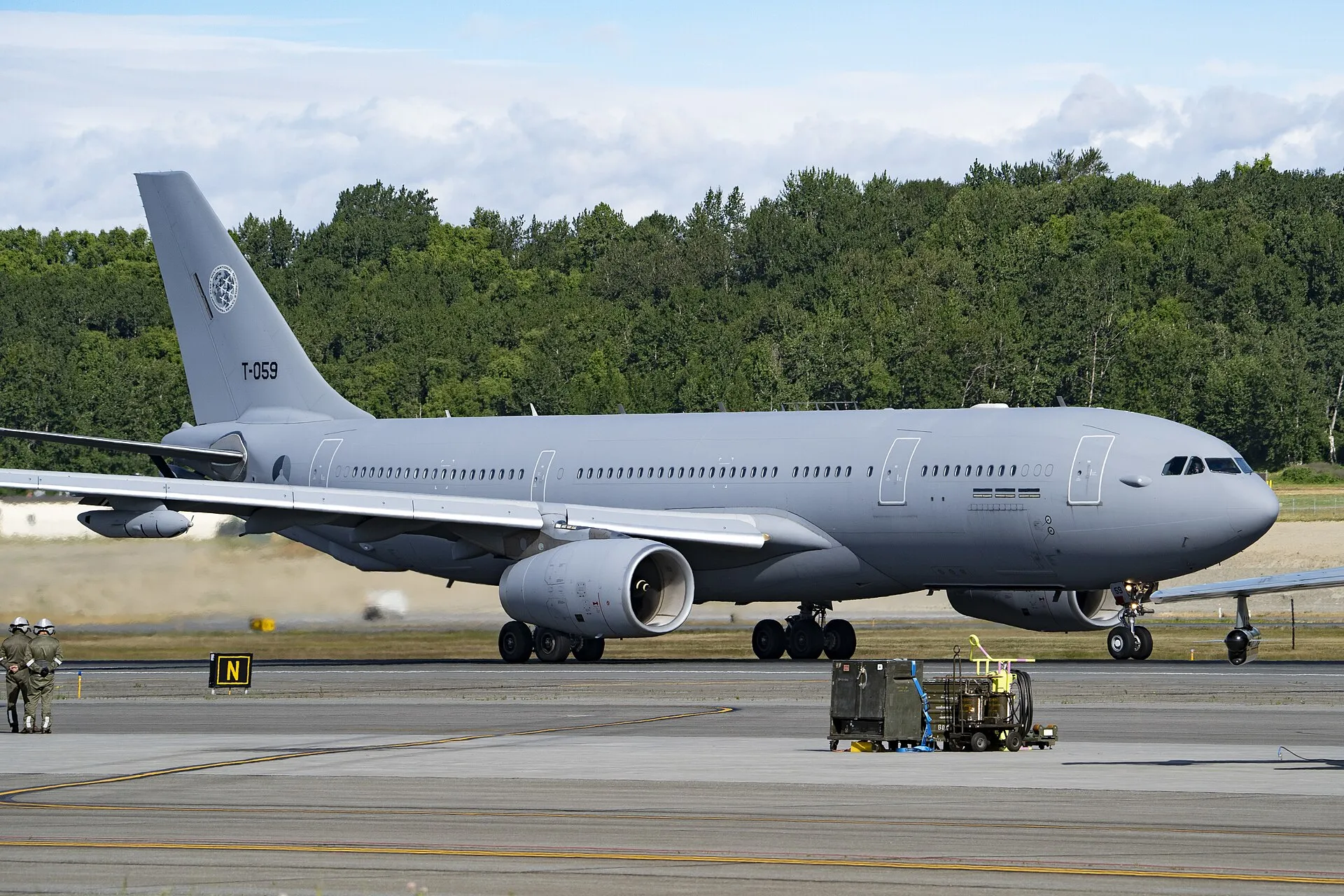
The A330neo generation retained the overall glider line, but received Rolls-Royce Trent 7000 engines, modified aerodynamic surfaces and an updated interior. It did not replace the technical characteristics of the early A330 with CF6, PW4000 or Trent 700 engines. Separate branches of the family include the cargo A330-200F and the military A330 MRTT, which is used for refueling and transport tasks. The overall design base makes these aircraft related, but passenger capacity tables do not apply to them.
History and operations
Role Airbus A330 in airline service
The first passenger variant on the lines was the A330-300 in 1994. The further spread of the A330 coincided with the growth of international traffic and the development of economical long-range twin-engine aircraft. Carriers used it on intercontinental routes, as well as on busy medium-haul lines, where you need a large cabin and space for luggage. The same type could work in different network roles depending on version and layout.
For the passenger, the A330 means two aisles and a cabin that is easily divided into several classes, but the exact width of the seat and the distance between the rows depend on the carrier. Some economy class schemes use eight seats in a row, others are denser. The duration of the flight requires attention to the kitchens, toilets, places of rest of the crew and the amount of luggage. These solutions reduce available seating space, so maximum certified capacity rarely describes a conventional long-haul flight.
Comparing the A330 with the A350 or Boeing 787, you need to take into account the generation and specific route. The A330ceo was created in other years, and the A330neo received new engines and aerodynamics; mixing their performance makes the comparison meaningless. For the airline, the cost of the aircraft, cabin loading, technical support and the ability to transport cargo simultaneously with passengers are important. A long-distance route with a small flow may require one option, and a tight line between nodes may require another.
For comparison
Location Airbus A330 among other aircraft
The Airbus line is useful to consider the task of the route, and not as a sequence of "better - worse". A319, A320 and A321 belong to the same single-pass family, but give different capacity and, in some versions, different range. The A330 and A350 are designed for double-passage and long international flights; the A380 solves the special problem of maximum flow between major airports. The carrier does not choose the largest aircraft at all, but the size that corresponds to the load and the desired frequency. If you send too large a car, empty seats can negate the benefits of its passport effectiveness. If it's too small, there won't be enough space or you'd have to limit your luggage. Therefore, one airline can simultaneously operate several types of Airbus on routes of different length and density.
The general school of cockpit and control systems is noticeable for many Airbus, but it does not make certificates, engines and gliders the same. Even the close A319 and A321 differ in mass, output and layout, and there are much more engineering differences between the A320 and A350. The words ceo, neo, LR, XLR, and ULR refer to specific generations or tasks. When reading the technical table, you should first find the full index of the modification, then check the range conditions: the number of passengers, cargo, cruising mode and fuel reserves. The declared maximum in capacity and the declared maximum in range often refer to different scenarios. This order allows you to compare aircraft on a real flight, rather than a combination of the two most attractive numbers from different advertising lines.
Where it flies
Airline operators
Examples of current or historically notable operators of the model and its variants:
- Turkish Airlines
- Delta Air Lines
- TAP Air Portugal
- Virgin Atlantic
Fleets change. Check the aircraft type and seat map on the airline's official website before your flight.
Updates
News Airbus A330 on Telegram
New deliveries, routes and events with the participation of Airbus A330 are published in the Telegram channel at legkoenebo.
Open the Telegram channel