
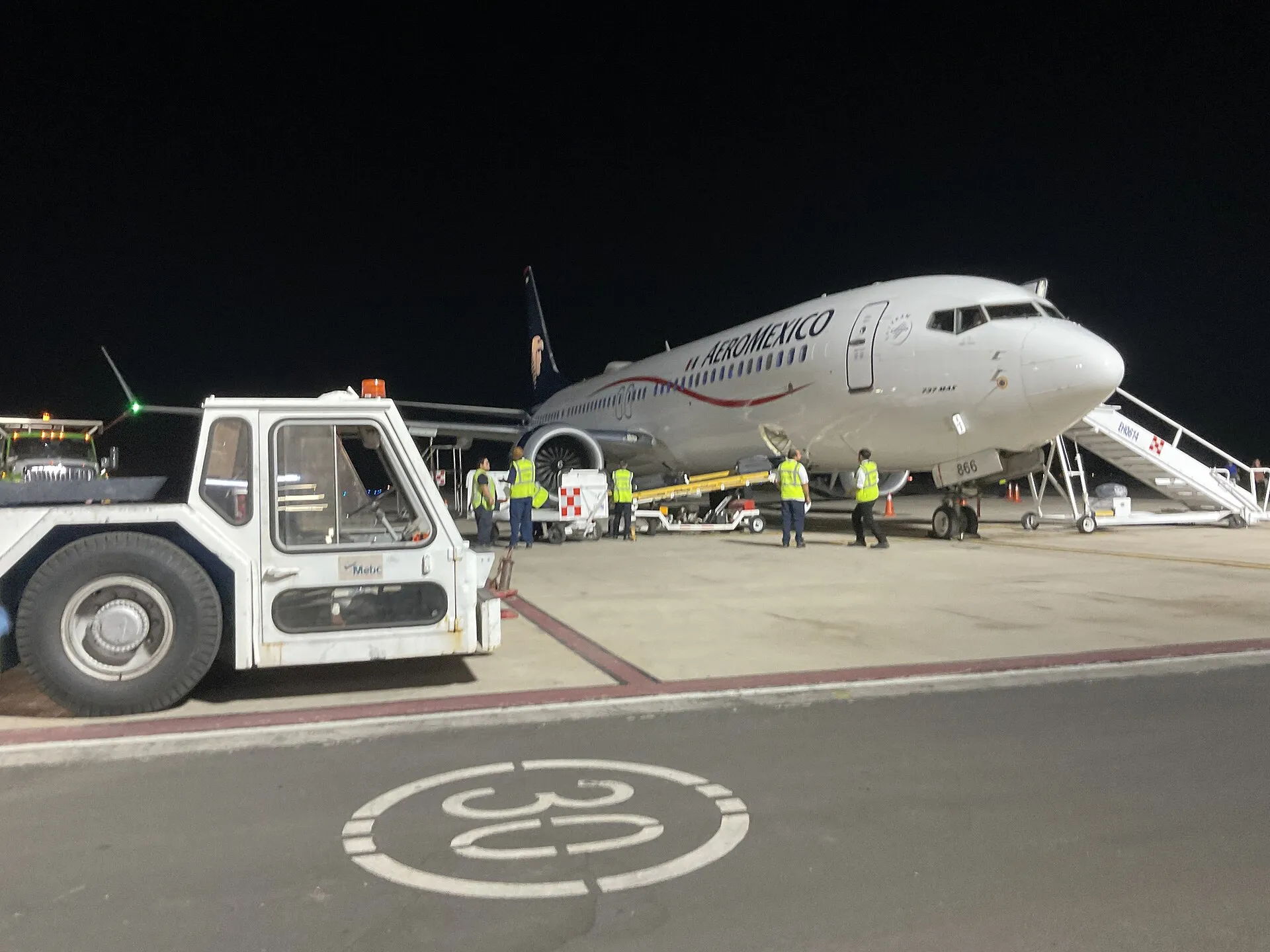
Specifications Boeing 737
The figures in this table refer to one specific variant — 737-800. This avoids combining the range, capacity and dimensions of different versions into an inaccurate set of figures.
- Variant shown in the table
- 737-800
- Type
- narrow-body passenger aircraft
- Family's first flight
- Year 1967
- Passenger capacity
- 162 seats in a two-class layout; maximum 189
- Flight range
- up to 5,765 km (3,115 nautical miles)
- Mach's Cruising Number
- M 0,785
- Length
- 39,47 m
- Wingspan
- 35.79 m with finishes
How the aircraft came about
History Boeing 737
The first Boeing 737 flew in 1967. The design was consistently updated: the engines, wing, avionics and interior were changed, while the general concept of a low twin-engine liner was preserved.
Boeing developed the 737 as a smaller twin-engine aircraft in addition to the 727. The first 737-100 flew in 1967 and entered Lufthansa in 1968. The family then changed several times, spanning the Original, Classic and Next Generation generations; each stage met new requirements for capacity and economy.
Milestones and decisions
Programme development
The first 737s were designed for short flights with fewer passengers than Boeing 727s. In the Classic generation, the aircraft received new engines and extended versions. Next Generation then brought a redesigned wing, an updated cabin, and further development of the family. Therefore, the historical 737-100 and the widespread 737-800 share a common ancestry, but differ significantly in technique and capabilities.
Model features
Design and variants
From the very beginning, the 737 received six seats in a row and two engines under the wing. The low location of the fuselage made it easier to work in airports with limited ground equipment. As new engines appeared, the motorgondols, wing, dashboard and systems changed, so the design of the early 737 can not be considered the unchanged basis of all later versions.
The indices 737-100/200, Classic -300/400/500 and Next Generation -600/700/800/900 denote multiple generations. This page features the 737-800. The new 737 MAX family has a separate page, as its engines and certification history require self-description.
Powerplant
Engines
Two CFM International CFM56-7B.
The engine variant fitted to an individual aircraft is recorded in its documentation. The powerplant affects thrust, fuel consumption, noise and maintenance requirements.
On board
Cabin and passenger capacity
One pass, usually six seats in a row. The capacity depends on the length of the fuselage and service classes.
Passenger capacity - 162 seats in a two-class layout; a maximum of 189. The exact number of seats is determined by the operator: business class, kitchens, toilets and recreation areas of the crew take place. Therefore, the layout of the cabin differs even with the same models.
In practice
Operations and uses
The 737-800 became one of the main aircraft for mass short and medium transport. The low height of the fuselage relative to the ground initially helped service the early 737 at airports with limited equipment. For modern operation, a specific modification, cabin scheme and flight restrictions are more important. Cargo alterations and passenger aircraft of one generation differ in payload and internal device.
Technical analysis
How it works Boeing 737
When Boeing designed the first 737, the company sought to get a small twin-engine aircraft for routes on which the 727 was too large. The low location of the fuselage above the ground allowed faster maintenance of early cars at airports with modest ground equipment. Over time, the original 737-100 and -200 gave way to the Classic and Next Generation generations. The overall number remained, but the new wing, crew cabin and engines significantly changed the aircraft.
Larger engines of the Classic and NG generations had to be placed taking into account the limited space under the wing. That is why the motorgondols of the late 737 look different than those of the early cars. In the Next Generation, the wing was redesigned, its area and fuel supply were increased, and a modern dashboard was introduced. Such changes affected the range and payload; you can not take the technical indicators of the 737-800 and attribute them to any aircraft on board which is written "737".
The 737-800 is a variant of the NG generation. Its single-aisle cabin usually has six seats in a row, but the number of rows and the layout of the exits depend on the airline's safety requirements and decisions. The family includes the shorter 737-700 and the longer 737-900. The late 737 MAX continues the line, however, received other engines and a separate certification history; for it, the catalog has its own article.
History and operations
Role Boeing 737 in airline service
The 737 has become widespread due to its ability to operate many short flights throughout the day. For the carrier, not only the passport range and the price of fuel are significant, but also the speed of preparation for the next departure, the availability of engineers and spare parts. Aircraft of the same generation can differ in the number of seats: the budget carrier usually chooses a denser cabin, and the network one leaves room for several classes of service.
The NG generation operated on domestic routes of large countries and on international medium-haul lines. The range of the 737-800 depends on the fuel, cargo, mass of passengers, weather and the necessary reserve. The conditions of certification and equipping of a particular board are also important when flying over remote areas. Therefore, the route possible for one airline on the 737-800 does not become automatically available for any other aircraft of the same family.
Many 737s are converted to freight after passenger service. In such a machine, the interior layout is changed and equipment is placed for another load; the passenger account of seats ceases to make sense. The long history of the 737 makes the park very heterogeneous. When comparing two aircraft, it is useful to look at the generation, the exact index, engines, the year of production and the changes made during maintenance, and not rely only on the familiar name.
For comparison
Location Boeing 737 among other aircraft
Boeing models in this catalog were created for different stages of development of route networks. The 737 serves mass lines with one pass; the 747 ushered in an era of very large long-haul passenger aircraft. The 757 and 767 were designed in parallel as aircraft of different sizes with close crew cabins. The 777 showed just how much passenger load the long-haul twin-engine airliner can carry, and the 787 relied on new materials and routes with less flow. This story explains why a later index doesn’t necessarily mean more capacity. The airline can choose 787 instead of 777 precisely because it needs a smaller cabin for a direct flight. Conversely, the 777 is appropriate where sustained demand allows you to fill more seats and take commercial cargo.
The Boeing family name often covers decades of technical change. The early 737, the Next Generation and the 737 MAX require separate characteristics; similarly, the passenger 747-8 cannot be replaced with 747-400 data. The 767-300ER, 777-300ER and 787-9 suffixes denote specific variants, but not one common range calculation standard. When comparing, it is useful to take into account payload, number of engines, airport restrictions and available spare airfields. The layout of the cabin also depends on the carrier: two aircraft of the same type can have a different number of seats and different conditions for the passenger. Historical facts about the first flight or the beginning of production give context, but for today's flight, the age of a particular board, the improvements made and its maintenance are additionally important.
The story of the 737 is an example of how one recognizable silhouette hides different generations of the aircraft. Early models, Classic, Next Generation and MAX have different engines, wing, crew cabin and operational limitations. A significant part of the success of the family is associated with work on frequent flights between cities, where parking time, capacity and availability of technical support are important. When reading the schedule, the designation "Boeing 737" gives too little information about a particular machine: to assess the cabin, range and equipment, you need a full version index and a carrier scheme.
Where it flies
Airline operators
Examples of current or historically notable operators of the model and its variants:
- Ryanair
- Southwest Airlines
- KLM
- Turkish Airlines
Fleets change. Check the aircraft type and seat map on the airline's official website before your flight.
Updates
News Boeing 737 on Telegram
New deliveries, routes and events with the participation of Boeing 737 are published in the Telegram channel at legkoenebo.
Open the Telegram channel