
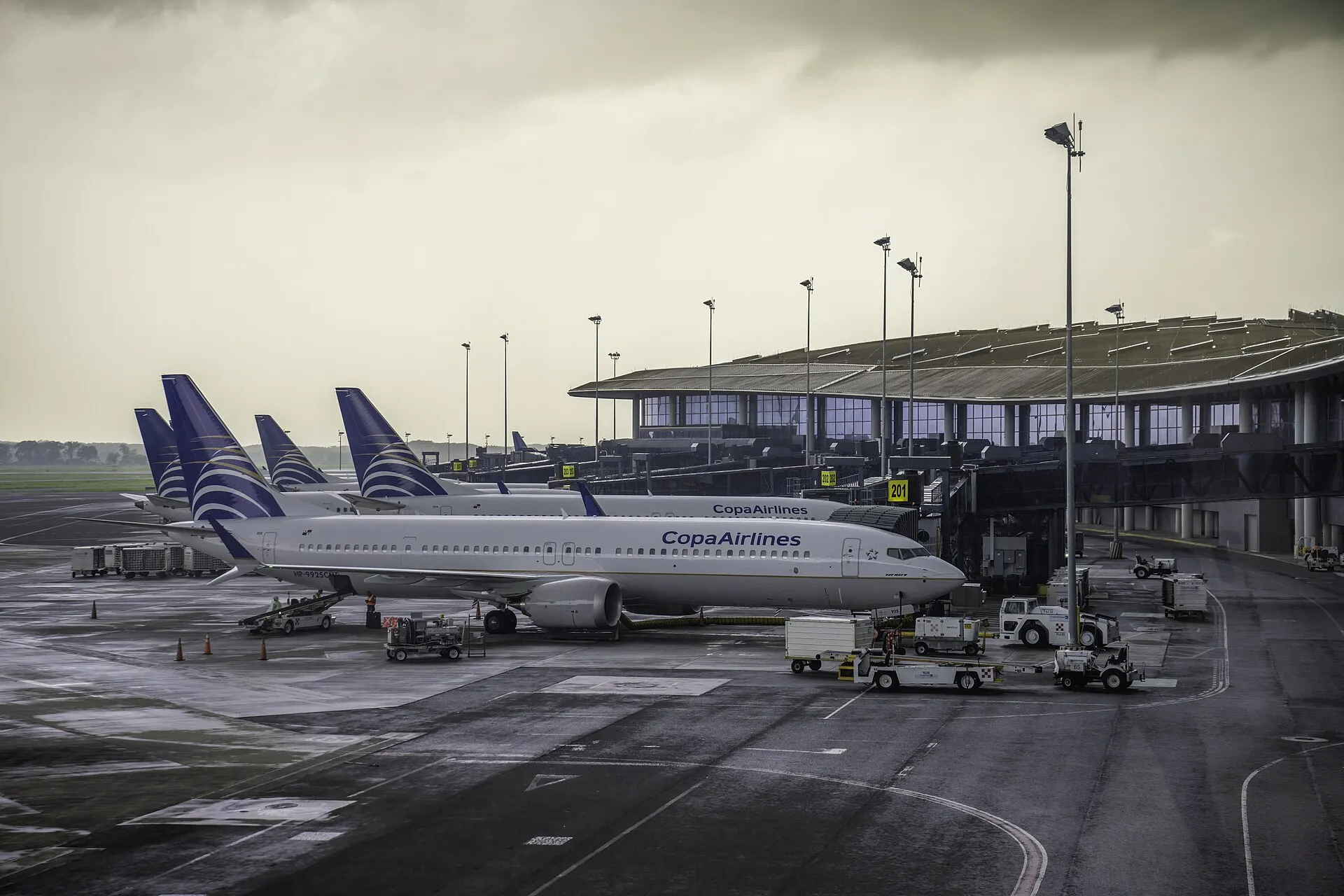
Specifications Boeing 737 MAX
The figures in this table refer to one specific variant — 737-8. This avoids combining the range, capacity and dimensions of different versions into an inaccurate set of figures.
- Variant shown in the table
- 737-8
- Type
- narrow-body passenger aircraft
- Family's first flight
- 2016 year
- Passenger capacity
- 160–180 seats in a two-class layout; maximum 210
- Flight range
- up to 6,480 km (3,500 nautical miles)
- Mach's Cruising Number
- M 0,79
- Length
- 39,5 m
- Wingspan
- 35,9 m
How the aircraft came about
History Boeing 737 MAX
The first flight of the 737 MAX took place in 2016, and commercial operation began in 2017. The family includes four versions of different lengths: 737-7, 737-8, 737-9 and 737-10.
The MAX program was announced in 2011 as a continuation of the 737 Next Generation line. The first aircraft took to the air in 2016, and commercial flights began in 2017. After two disasters, the family's flights were temporarily suspended; the return to operation was accompanied by changes in software and crew training.
Milestones and decisions
Programme development
The 737 MAX was developed as a response to airline demand for a more fuel-efficient single-aisle aircraft. The installation of larger LEAP-1B engines on the 737 platform required changes in aerodynamics and control systems. After the disasters of 2018 and 2019, the family was temporarily suspended from flights; before returning to operation, the software, procedures and crew training were revised. Certification of each option is carried out separately.
Model features
Design and variants
LEAP-1B engines have a larger diameter than 737NG power plants, so their placement on a platform that has survived in origin required changes in design and systems. Among the external differences are characteristic wing endings. Information about the operation of control and certification systems relate to the exact version of the aircraft and the release period.
The line includes 737-7, 737-8, 737-9 and 737-10 with different fuselage length and capacity, as well as a dense version of the MAX 200. The table on this page describes 737-8. The dates of admission to transportation and the actual deliveries of the remaining options should be checked separately.
Powerplant
Engines
Two CFM International LEAP-1B.
The engine variant fitted to an individual aircraft is recorded in its documentation. The powerplant affects thrust, fuel consumption, noise and maintenance requirements.
On board
Cabin and passenger capacity
One pass and a 3+3 scheme. The corporate interior of Boeing Sky Interior uses enlarged shelves and LED lighting.
Passenger capacity - 160-180 seats in a two-class layout; maximum 210. The exact number of seats is determined by the operator: business class, kitchens, toilets and recreation areas of the crew take place. Therefore, the layout of the cabin differs even with the same models.
In practice
Operations and uses
In regular transport, MAX performs tasks of the 737 family: frequent flights on short and medium lines. The capacity varies markedly between 737-7, -8, -9 and -10, and the dense MAX 200 is designed for a different seating pattern. The presence of a common trade name does not mean the same admission of all versions to transportation at a certain moment or the same range at full load.
Technical analysis
How it works Boeing 737 MAX
Boeing launched the MAX program when airlines expected to reduce fuel consumption without switching to an entirely new type. CFM LEAP-1B engines are larger than 737NG power plants; for their installation, the placement of motogondol and a number of systems were changed. The wing received characteristic split endings. At the same time, the aircraft retained many common solutions with the previous 737, so the engineering task was not only to install the engine, but also to coordinate the new aerodynamics with the old design line.
The MCAS system was part of the MAX security discussion following the Lion Air and Ethiopian Airlines disasters. Its initial implementation, reliance on sensor data, and crew performance were reviewed in the course of investigations. After the flight stopped, regulators demanded software changes, inspections, and pilot training. History shows why certification concerns the entire aircraft as a system: a separate engine or declared efficiency cannot be considered in isolation from control and procedures.
The symbols 737-7, -8, -9 and -10 correspond to different sizes. A longer fuselage makes it possible to put more seats, but changes the mass and conditions of use at a particular airfield. The MAX 200 is a 737-8 variant for tight layout with different emergency exit requirements. The table of characteristics refers to the 737-8; the range and capacity values of the remaining members of the line need to be checked from their own data.
History and operations
Role Boeing 737 MAX in airline service
The first commercial MAX flights began in 2017. After the global cessation of flights, the return of the type proceeded according to the decisions of individual aviation authorities and after the completion of the already built aircraft. Therefore, the renewal date is not the same for all countries and airlines. The passenger flight performs a specific certified version with installed equipment and a trained crew, rather than an abstract MAX family as a whole.
In operation, the MAX takes the place of a mass narrow-body aircraft on short and medium-haul lines. The airline chooses the size of the option by passenger traffic and schedule. A more economical engine makes sense only together with the real load of the cabin, the duration of the flight, the cost of service and the availability of the board. On short flights, time on the ground can affect the result of at least a few percent of the difference in fuel consumption.
For the passenger, the appearance of the MAX is familiar according to the previous 737, but the actual comfort is determined by the layout of the particular airline. A dense lounge, extra legroom and business class can meet at the same 737-8 in different parks. When reading news about deliveries or admission to flights, it is useful to clarify the version index: the decision on 737-8 does not necessarily mean the same stage for 737-10.
For comparison
Location Boeing 737 MAX among other aircraft
Boeing models in this catalog were created for different stages of development of route networks. The 737 serves mass lines with one pass; the 747 ushered in an era of very large long-haul passenger aircraft. The 757 and 767 were designed in parallel as aircraft of different sizes with close crew cabins. The 777 showed just how much passenger load the long-haul twin-engine airliner can carry, and the 787 relied on new materials and routes with less flow. This story explains why a later index doesn’t necessarily mean more capacity. The airline can choose 787 instead of 777 precisely because it needs a smaller cabin for a direct flight. Conversely, the 777 is appropriate where sustained demand allows you to fill more seats and take commercial cargo.
The Boeing family name often covers decades of technical change. The early 737, the Next Generation and the 737 MAX require separate characteristics; similarly, the passenger 747-8 cannot be replaced with 747-400 data. The 767-300ER, 777-300ER and 787-9 suffixes denote specific variants, but not one common range calculation standard. When comparing, it is useful to take into account payload, number of engines, airport restrictions and available spare airfields. The layout of the cabin also depends on the carrier: two aircraft of the same type can have a different number of seats and different conditions for the passenger. Historical facts about the first flight or the beginning of production give context, but for today's flight, the age of a particular board, the improvements made and its maintenance are additionally important.
MAX continued the 737 line with LEAP-1B engines and aerodynamic changes, but includes several size options. MAX 8 settings cannot be automatically transferred to MAX 7, MAX 9, or MAX 10. The history of certification and subsequent software changes is an important part of the biography of this generation; when describing flights, you need to take into account the approved configuration and requirements of the aviation regulator. For the passenger, the final layout is still determined by the airline: the same version can have a different number of rows and a different step of seats.
Where it flies
Airline operators
Examples of current or historically notable operators of the model and its variants:
- Southwest Airlines
- Ryanair
- United Airlines
- Turkish Airlines
Fleets change. Check the aircraft type and seat map on the airline's official website before your flight.
Updates
News Boeing 737 MAX on Telegram
New deliveries, routes and events with the participation of Boeing 737 MAX are published in the Telegram channel at legkoenebo.
Open the Telegram channel