
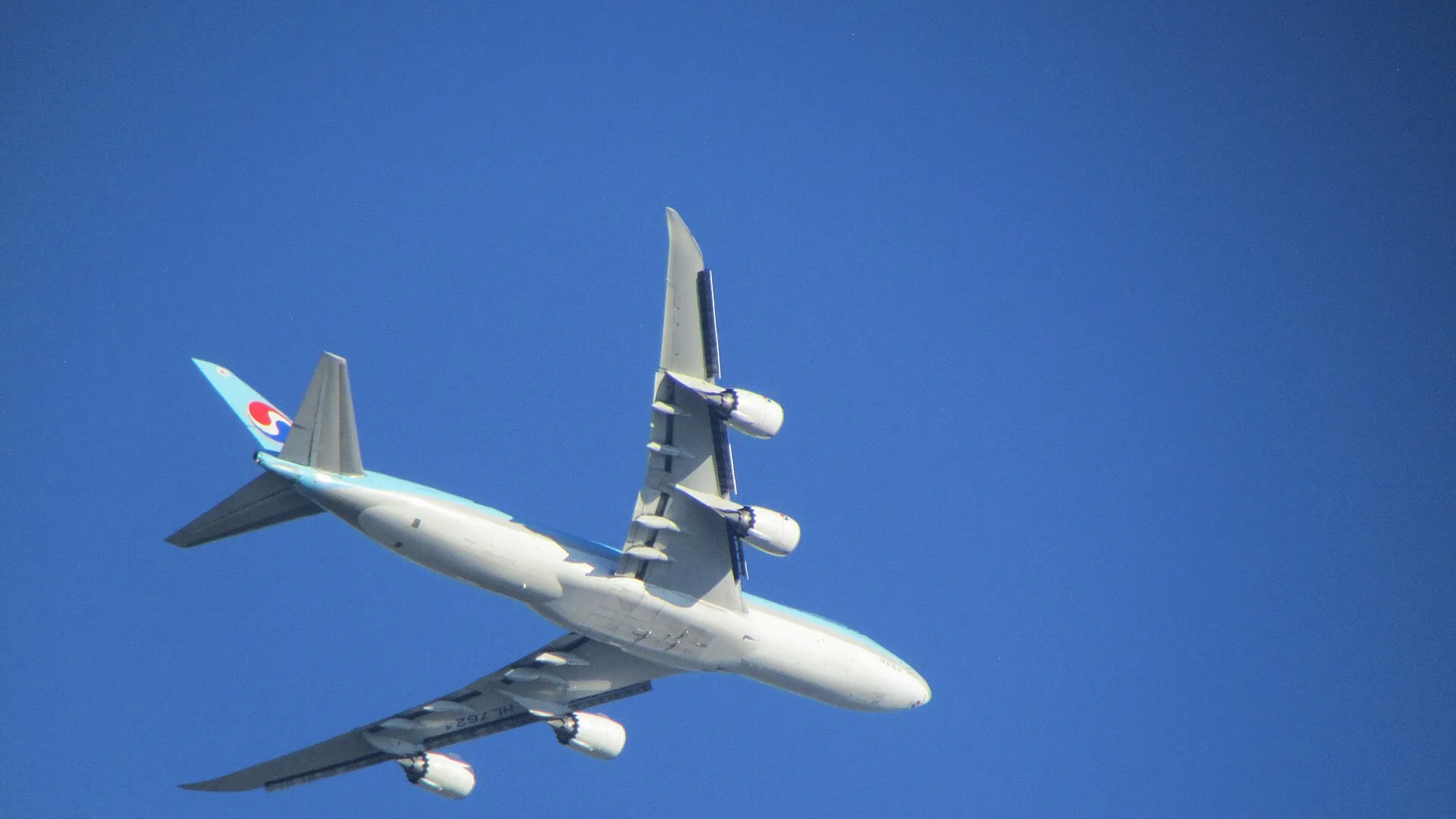
Specifications Boeing 747
The figures in this table refer to one specific variant — 747-8 Intercontinental. This avoids combining the range, capacity and dimensions of different versions into an inaccurate set of figures.
- Variant shown in the table
- 747-8 Intercontinental
- Type
- four-engine wide-body aircraft
- Family's first flight
- Year 1969
- Passenger capacity
- 410 seats in a typical three-class layout
- Flight range
- up to 14,260 km (7,700 nautical miles)
- Mach's Cruising Number
- M 0,855
- Length
- 76,25 m
- Wingspan
- 68,40 m
How the aircraft came about
History Boeing 747
The first flight was in 1969. The family evolved from the 747-100 to the 747-8; the passenger role gradually decreased, but freight versions continue to be actively used.
The creation of the 747 was due to Pan Am's request for an aircraft noticeably larger than the Boeing 707. The project was led by Joe Sutter; the first flight took place in 1969, and in 1970 the liner went on regular lines. Passenger and cargo variants were produced for more than half a century, until the completion of production in 2023.
Milestones and decisions
Programme development
Boeing 747 was created in anticipation of the growth of mass intercontinental transportation. The upper deck was placed above the bow, leaving the possibility to raise the nose of the cargo version to load large items. For half a century, the family received new wings, engines and instrument complexes. The last aircraft built was the cargo 747-8, which completed the production line in 2023.
Model features
Design and variants
The characteristic upper deck formed a high nose profile. This decision left the possibility of a front cargo door on the cargo 747, and the wide-body deck allowed to carry significantly more people on long-distance routes. The four-engine scheme reflected the technical and regulatory conditions of the era of the appearance of the aircraft.
The family went from 747-100 to a massive 747-400 and a late 747-8. The length of the fuselage, the engines and the range between them differ. The table shows the passenger 747-8 Intercontinental; cargo 747-8F has a different purpose and layout.
Powerplant
Engines
Four General Electric GEnx-2B67.
The engine variant fitted to an individual aircraft is recorded in its documentation. The powerplant affects thrust, fuel consumption, noise and maintenance requirements.
On board
Cabin and passenger capacity
Main wide deck with two aisles and short upper deck. The passenger versions of the salon were divided into several classes.
Passenger capacity is 410 seats in a typical three-class layout. The exact number of seats is determined by the operator: business class, kitchens, toilets and recreation areas of the crew take place. Therefore, the layout of the cabin differs even with the same models.
In practice
Operations and uses
The 747 has been a prominent long-haul passenger carrier for decades, but over time many airlines have replaced it with twin-engine airliners. In cargo aviation, a wide fuselage and a front door have retained special value. Passenger 747-8 Intercontinental and cargo 747-8F are close in generation, but they have different layout and perform different tasks.
Technical analysis
How it works Boeing 747
When creating the 747, Boeing expected a large increase in passenger flow. The wide fuselage with two aisles and four engines allowed to carry much more people than the previous long-range jets. The short upper deck formed a recognizable silhouette. Its placement had a practical meaning: in cargo variants, the nose can be raised to load long and large items through the front of the fuselage.
The first 747-100 and later 747-8 belong to the same historical family, but differ in wing, engines, electronics and length. The 747-400 became an important stage due to the updated cockpit and aerodynamic wing tips. The 747-8 received further changes to the airframe and powerplant. Therefore, the values of flow, range or number of places published for one generation cannot be applied to the entire half-century series.
At the passenger 747-8 Intercontinental, the upper and main decks are used for people and long-haul service. Cargo 747-8F has a different internal design and the main role is played by volume for containers and non-standard cargo. In addition to these factory options, there were special state and military vehicles. Their equipment, permissible masses and tasks are different from a conventional passenger liner, although the overall silhouette remains familiar.
History and operations
Role Boeing 747 in airline service
Pan Am began regular service on the 747 in 1970, after which the aircraft became a symbol of affordable intercontinental travel. The large cabin reduced the cost of one seat at high load and helped connect the largest cities with direct flights. However, the huge capacity was not an advantage on every route. If there are not enough passengers, the airline is forced to pay for the operation of a large aircraft with empty seats.
As the long-haul twin-engine airliners developed, many carriers were reducing 747 passenger fleets. Instead of one large flight, you could offer more frequencies on smaller aircraft or open a direction with lower demand. In cargo aviation, the fate of the 747 was different: the front door and a large volume allow you to work with shipments that are difficult to place in a conventional cargo aircraft. It was the cargo 747 that completed the production program of the family.
In the passenger cabin of 747 different generations and airlines, you can find very different schemes. The upper deck was used for different classes of service, and the number of seats on the main deck depended on the route and policy of the carrier. To assess the flight, it is important to know not only the number "747", but also the index -400 or -8, the year of modernization of the interior and the scheme of a particular side. The historical fame of the model itself does not speak about the current state of the salon.
For comparison
Location Boeing 747 among other aircraft
Boeing models in this catalog were created for different stages of development of route networks. The 737 serves mass lines with one pass; the 747 ushered in an era of very large long-haul passenger aircraft. The 757 and 767 were designed in parallel as aircraft of different sizes with close crew cabins. The 777 showed just how much passenger load the long-haul twin-engine airliner can carry, and the 787 relied on new materials and routes with less flow. This story explains why a later index doesn’t necessarily mean more capacity. The airline can choose 787 instead of 777 precisely because it needs a smaller cabin for a direct flight. Conversely, the 777 is appropriate where sustained demand allows you to fill more seats and take commercial cargo.
The Boeing family name often covers decades of technical change. The early 737, the Next Generation and the 737 MAX require separate characteristics; similarly, the passenger 747-8 cannot be replaced with 747-400 data. The 767-300ER, 777-300ER and 787-9 suffixes denote specific variants, but not one common range calculation standard. When comparing, it is useful to take into account payload, number of engines, airport restrictions and available spare airfields. The layout of the cabin also depends on the carrier: two aircraft of the same type can have a different number of seats and different conditions for the passenger. Historical facts about the first flight or the beginning of production give context, but for today's flight, the age of a particular board, the improvements made and its maintenance are additionally important.
The 747 features a combination of a wide two-pass fuselage, four engines, and a distinctive upper deck. Such a scheme for decades gave a large capacity in busy long-distance directions, and a large fuselage was valuable in cargo aviation. At the same time, the cost and demand on each route determine whether it is profitable to send one large aircraft instead of several smaller ones. The late 747-8 differs from the early 747-100 and the mass 747-400 in wing design, engines and equipment; the overall history of the model does not negate the differences of a specific modification.
Where it flies
Airline operators
Examples of current or historically notable operators of the model and its variants:
- Lufthansa
- Korean Air
- Atlas Air
- Cargolux
Fleets change. Check the aircraft type and seat map on the airline's official website before your flight.
Updates
News Boeing 747 on Telegram
New deliveries, routes and events with the participation of Boeing 747 are published in the Telegram channel at legkoenebo.
Open the Telegram channel