
Specifications Superjet 100
The figures in this table refer to one specific variant — SSJ100-95LR. This avoids combining the range, capacity and dimensions of different versions into an inaccurate set of figures.
- Variant shown in the table
- SSJ100-95LR
- Type
- regional passenger aircraft
- Family's first flight
- Year 2008
- Passenger capacity
- up to 103 passengers
- Flight range
- up to 4,578 km
- Max Cruise Number Mach
- M 0,81
- Length
- 29,94 m
- Wingspan
- 27,80 m
How the aircraft came about
History Superjet 100
The first flight took place in 2008, commercial operation began in 2011. The aircraft was the first new Russian passenger jet project of the post-Soviet period.
The regional Superjet program began in the 2000s. The first aircraft flew in 2008, and commercial operation began in 2011. It became one of the first new Russian passenger aircraft brought to serial production after the collapse of the USSR. Later, the manufacturer began a deep replacement of imported components.
Milestones and decisions
Programme development
The original Superjet 100 was created with the international participation of system suppliers and the SaM146 engine. After the first flight in 2008, the type received a Russian certificate in 2011 and later European. The manufacturer developed modifications with different ranges and constantly improved maintenance. The SJ-100 program came later as a deep upgrade of the component composition and power plant, so the two lines need to be distinguished.
Model features
Design and variants
The original Superjet 100 is a low-plane with two SaM146 engines under the wing and a cabin for five seats in a row according to the 2 + 3 scheme. The size and capacity put it between small regional jets and larger narrow-body airliners. When describing the base machine, you can not automatically substitute the data of the updated SJ-100.
Variants with different ranges were produced, including the base and LR, and the layout of the cabin depended on the carrier. SSJ100 and Superjet 100 refer to the original line with SaM146. The SJ-100 with replacement systems and the planned PD-8 is described separately.
Powerplant
Engines
Two PowerJet SaM146-1S18.
The engine variant fitted to an individual aircraft is recorded in its documentation. The powerplant affects thrust, fuel consumption, noise and maintenance requirements.
On board
Cabin and passenger capacity
One pass and five seats in a row according to the 2+3 scheme. Luggage shelves are located above the chairs, kitchens and toilets - at the ends of the cabin.
Passenger capacity is up to 103 passengers. The exact number of seats is determined by the operator: business class, kitchens, toilets and recreation areas of the crew take place. Therefore, the layout of the cabin differs even with the same models.
In practice
Operations and uses
The first commercial flights of the original Superjet began with Armavia, then a significant fleet appeared with Russian carriers. On regional routes, the aircraft was used as an alternative to larger liners when demand was moderate. Not only is the range and number of seats important in evaluating operation, but also the availability of spare parts, engine, and ground support; these have changed throughout the program's history.
Technical analysis
How it works Superjet 100
The Superjet 100 was designed for regional transport, where a larger long-haul aircraft can be redundant. The initial version was created with the participation of international suppliers: the SaM146 engine was produced by a joint venture, and some of the systems came from other countries. This choice helped to assemble a modern aircraft, but later made service and supply dependent on the state of the international network of components.
Two engines are placed under the wing, the cabin has one aisle and five seats in a row. Unlike narrower regional jets, the 2+3 scheme gives a different number of seats on the sides of the aisle. Size and weight allow you to serve lines with moderate demand. At the same time, the number of seats, kitchen, toilets and luggage space change from customer to customer: the overall SSJ100 index does not set a single salon.
The family was produced in the basic version and version of the LR with a longer range. Their passport performance should not be confused with the characteristics of the updated SJ-100, for which the systems are changing and the PD-8 engine is planned. Even with the original aircraft, the flight parameters depend on the mass and calculation conditions. On a regional flight, time on the ground and reliability of service can affect the schedule no less than speed in the air.
History and operations
Role Superjet 100 in airline service
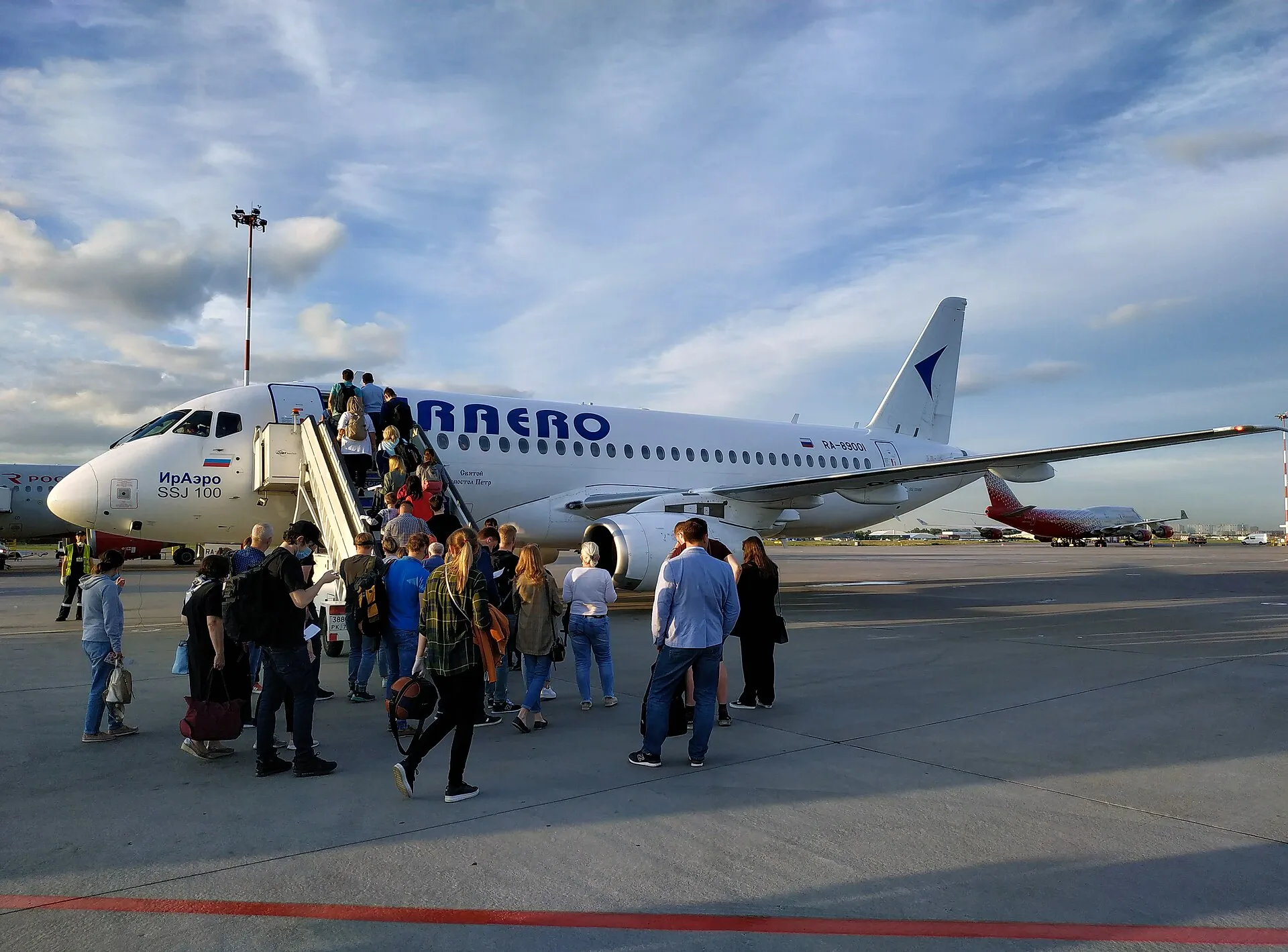
The first commercial operator of Superjet was Armavia in 2011. The aircraft then entered the fleets of Russian airlines, including the major carrier Aeroflot. The regional type can connect cities directly or carry passengers to a large interchange hub. For both schemes, it is important that the airline can maintain a frequent schedule and quickly fix technical malfunctions.
Real operation showed that the aircraft program does not end with obtaining a certificate. The park requires spare parts, engine repairs, trained specialists and a working service at airports. When the support network is uneven, the availability of aircraft for the schedule changes. This is not a characteristic of wing geometry, but an important part of the history of any regional type, which makes many short flights.
It is useful for the passenger to distinguish the original Superjet from the future or updated SJ-100 configuration. Outside, they retain the overall architecture, but the composition of the systems and the engine may be different. The layout of the seats depends on the airline; in the cabin for five seats in a row, the choice of the side and the location of the toilets are especially noticeable. For a particular flight, it is more important to look at the layout of the board and the schedule than to focus on the maximum advertising capacity.
For comparison
Location Superjet 100 among other aircraft
Russian models in the catalog belong to several independent tasks and generations. Tu-204, Tu-214 and Il-96 were created at the end of the Soviet period and later used in passenger and special aviation. Regional Il-114 chose a turboprop scheme. The Superjet 100 became a later jet program for relatively short routes, and the SJ-100 continues it with a changed system composition and engine. MC-21 belongs to the class of new medium-haul airliners. These programs can not be combined into one line of characteristics: they differ in the size of the cabin, role, engines and degree of readiness. Yak-130 generally refers to the military training of pilots and requires a separate approach to comparison.
In the history of each program, you need to distinguish between the first flight, certificate, the beginning of serial production and a real passenger flight. These events can be separated by years. For the updated version of the test of the original aircraft does not automatically prove the readiness of new engines and systems. This approach is especially important when reading information about the MC-21, SJ-100 and Il-114-300: the timing of deliveries was repeatedly announced in advance, and the technical stages must be evaluated according to the inspections actually performed. For older types, the exact modification and purpose of the board is more important - the passenger Tu-214 or Il-96 differs from a special aircraft on a close platform. Even when size fits the route, an airline needs sustainable service and spare parts availability.
The original Superjet 100 belongs to the regional jet class and uses SaM146 engines. On the route, its value depends not only on the number of seats, but also on the frequency of flights, the length of the lane, the turnaround time and the technical readiness of the park. The late SJ-100 program changes the composition of the systems and provides a different engine; it can not be considered a simple change in coloring of the already operated SSJ100. In the statistics and technical description of the two versions, the boundary between the confirmed experience of the original aircraft and the results of the tests of the updated configuration should be maintained.
Where it flies
Airline operators
Examples of current or historically notable operators of the model and its variants:
Fleets change. Check the aircraft type and seat map on the airline's official website before your flight.
Updates
News Superjet 100 on Telegram
New deliveries, routes and events with the participation of Superjet 100 are published in the Telegram channel at legkoenebo.
Open the Telegram channel