
Helicopters
Inexpensive helicopters: models, service life and real cost of ownership
R22, R44, R66 and Bell 505: capacity, maintenance costs and remaining life. Why the purchase price does not determine the cost of ownership.
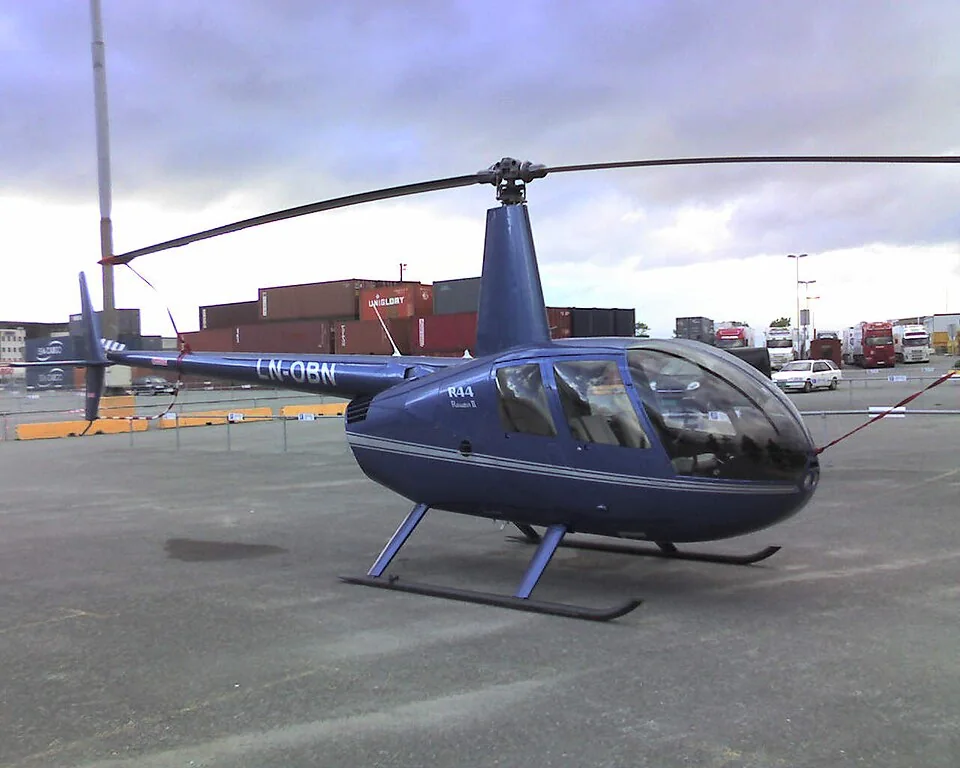
A small helicopter can look affordable compared to large corporate aircraft. However, the amount in the ad only answers the question of purchase. Once the aircraft is handed over, the owner will need a home base, maintenance, insurance and a trained pilot. It is these costs that determine whether the purchase will remain reasonable after a few seasons.
Comparing inexpensive models is useful to start with a task. Dual training, family trips and small group transport require different cabins and payloads. The cheapest aircraft on the list may be too cramped, while the more expensive one may be overkill. Let's look at several common options and a way to estimate the budget without promises of a universal flight price.
Start with passenger numbers and the route
The Robinson R22 seats two people, including the pilot, making its role in initial training and single-passenger flights clear. The R44 Raven I and Raven II have four seats, while the turbine-powered R66 has five. The Bell 505 also seats a pilot and four passengers. Those figures describe the layout; they do not guarantee that any group can be carried with full fuel tanks.
For a trip of several adults along with luggage, a weight calculation is needed. The list of seats does not say anything about how much fuel it will be possible to take on a particular flight. Therefore, the comparison begins with the usual composition of passengers and their belongings. Then they check the range of the site, site conditions and the required fuel supply. The aircraft is selected for a repeating task, and the rare exceptional flight is considered separately.
R22: compact entry into helicopter aviation
The two-seater cabin of the R22 sets fairly clear boundaries for use. If there is an instructor and a student on board, there are no more empty seats. For a person who wants to train and then fly with one companion, this may fit the plans. For a family of several people, the same format will require a different solution, even if the purchase price seems particularly attractive.
The small size does not eliminate the cost of basing and documentation. Even a compact aircraft needs to be maintained, inspected and protected from adverse storage conditions. When comparing offers, it is useful to find out what is included in the sale: equipment, a set of operational documents, service history and remaining life. The same model name does not mean the same technical condition of two copies.
R44: more seats and a wider range of uses
The four-seater Raven I and Raven II allow for a wider range of travel than a two-seater. But it is important for the buyer not to mix versions of the family. For example, the R44 Cadet trainer has a different configuration: two seats and space for cargo. An advertisement with a large "R44" sign requires a modification to be specified, rather than an automatic transfer of the characteristics of the adjacent proposal.
Increasing the interior makes sense if the additional seats are actually used. For predominantly solo flights, a more spacious cabin may provide little practical benefit. But with regular trips with passengers, the value appears immediately. It is worth considering not the cost of one seat in the catalog, but the ability to complete a regular trip without splitting the group and complex additional logistics.
Turbine models: different operating requirements
The R66 uses a Rolls-Royce RR300 turbine engine. It and the Bell 505 frequently appear in comparisons of light turbine helicopters. Useful criteria include cabin arrangement, the equipment fitted to the particular aircraft and local maintenance support, as well as overall capacity. Moving to a turbine model does not automatically make operating costs lower.
The entire support chain is important to the owner. If a familiar workshop services one model nearby but another has to be shipped far away, transportation and downtime become part of the budget. It is worth getting answers in advance about spare parts, scheduled work and appointment deadlines. Having a beautiful interior does not compensate for the situation when a helicopter waits for weeks for the necessary part or specialist.
Why old prices are misleading
In aviation round-ups, the year in the headline can be updated more quickly than the prices in the text. A basic new helicopter, a used aircraft and a self-build kit are different purchases. Listing their prices together and calling the lowest figure the best-value helicopter is misleading. Establish exactly what the seller will provide for the quoted amount.
Even an official cost estimate has a date and a set of assumptions. For example, a published 2025 operating-cost estimate for the R44 Raven II separated fixed costs, direct costs and an overhaul reserve, assuming 500 flying hours a year. That is a useful budget structure, but it is not a current hourly rate for every owner in every country. Local prices, insurance terms and other costs can differ.
Annual utilisation changes the hourly cost
Some costs continue while the helicopter is not flying. To illustrate the arithmetic, assume an annual bill of 1.2 million roubles for basing and other fixed services. At 100 flying hours a year, that contributes 12,000 roubles to each hour. At 300 hours, it contributes 4,000. This is a hypothetical calculation, not an estimate of market prices.
Fuel and associated usage costs are added separately. Therefore, the low price per hour in the promotional material can be explained by the large estimated flight hours. For a private owner with rare flights, the outcome will be different. It is wise to create several scenarios: the expected season, a less active year and a period when the aircraft is temporarily unavailable. Then the sensitivity of the budget to actual use is visible.
Remaining service life matters more than fresh paint
Helicopter components have their own history. A small total flight time does not mean that all major work has the same amount of time left. Not only hours are taken into account, but also calendar dates, operating conditions, replacements performed and documentation requirements. Thus, the R22 materials include intervals of 2,200 hours or 12 years for relevant work and components; They cannot be applied to all parts of all helicopters.
The pre-purchase technical review should explain what significant costs are expected after the transaction. A good question for the seller sounds not only like “how many flights has the aircraft flown,” but also like “what needs to be accomplished in the coming years.” The answer is needed in documents linked to a specific aircraft. Fresh upholstery and a clean interior show the appearance, but do not replace such an inspection.
Self-build kits are a separate category
The lists of cheap helicopters include self-assembly projects. Their initial price may only apply to part of the future device. The buyer still has work to do, checking for completeness and registration within the framework of the applicable rules. The cost of time, tools and additional equipment should be taken into account right away. Comparing a kit to a finished production aircraft without these costs creates a false economy.
In the United States, the amateur-built category is associated with constructing the major portion of an aircraft for education or personal recreation. It is a specific approval framework that cannot automatically be applied in another country or to commercial transport. Before discussing a project’s price, establish how the finished aircraft will be registered and operated. Being able to assemble it and being able to make the intended flights are separate questions.
How to make a short list
A useful comparison table starts with the same scenario: number of people, baggage, annual flying hours and location. For each aircraft, the bid price, available equipment, upcoming major work, and service conditions are then recorded. If some line is not yet known, it is left as a question for verification, rather than replaced with an optimistic number from the general selection.
After this, it becomes clearer what the owner is really paying for. One needs a compact training helicopter, another needs a four-seater cabin, and the third needs a turbine aircraft for regular tasks. Affordability comes from matching routes and predictable costs. The lowest purchase price makes sense only when it is backed by a technically understandable aircraft capable of carrying out exactly your trips.