
Helicopters
Corporate helicopters: matching cabin comfort to the mission
How are the cabin dimensions, route and capabilities of a corporate helicopter related? We look at five platforms and explain why the interior is only part of the choice.
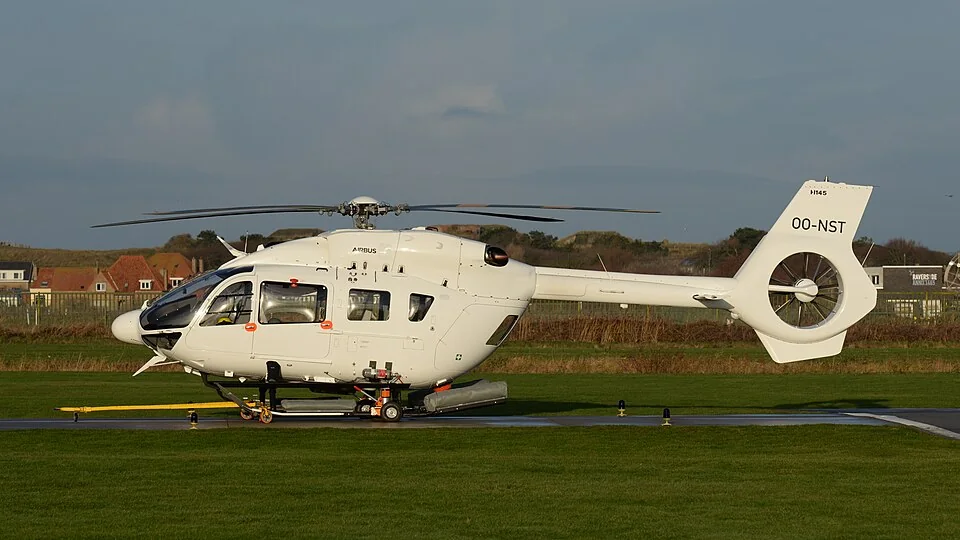
A private helicopter is valued above all for its ability to shorten the ground leg of a journey. It can link an airport with an urban heliport, a country residence or another authorised landing site. An attractive cabin, however, does not make an aircraft suitable for a particular route. Cabin dimensions, passenger numbers, baggage weight, landing-site characteristics and support arrangements matter far more than where the model sits in a luxury ranking.
Corporate aviation encompasses very different platforms: the compact Airbus ACH145, the larger ACH160 and ACH175, the heavy Sikorsky S-92 Executive and the Bell 525 programme. Treating them as five versions of the same aircraft would be misleading. Rather than rank them, we examine the questions that explain the purpose of each class and help readers assess a helicopter description without relying on advertising claims.
Start with the mission, then consider the cabin
Let's imagine two trips of the same distance. In the first, you need to pick up four passengers from the airport and deliver them to a country house. In the second, a large delegation with suitcases flies, and part of the journey passes over water. The distance is the same, but the requirements for the aircraft, crew training, equipment and fuel reserves may vary. Therefore, the choice begins with a list of ordinary tasks, and not with the longest trip that may one day be needed.
The accessibility of the final site is also important. A helicopter does not receive permission to land in any convenient place only due to its ability to take off vertically. We need suitable dimensions, permissible load on the surface, free directions of approach and the necessary approvals. For a yacht deck, the limitations of the deck itself and the conditions of its use are additionally important. A aircraft that is perfect for an airfield may be too big for another destination.
Space is measured not only by the number of seats
Catalogs often indicate the maximum number of passengers. For a corporate interior, this figure says little about the in-flight experience. Some seats may give way to a table, wider seats or cabin equipment. The location of luggage, the distance between rows, the height of the doorway and the ability to conveniently walk to your seat differ. The same external dimensions allow for several options for using the internal volume.
The Sikorsky S-92 Executive is indicative. For the S-92 family, the manufacturer indicates a cabin height of about 1.83 metres; ten passenger seats are considered in a separate corporate configuration. This scale gives more freedom of layout, but at the same time means a transition to a large aircraft. You cannot transfer its capacity, maintenance costs or site requirements to a light corporate helicopter. The ability to stand in the cabin is a specific advantage of space, not a universal proof of superiority.
ACH145: a compact option for corporate travel
The ACH145 family belongs to Airbus's offer for private and business transport. The approach itself is interesting here: using a relatively small class helicopter for regular trips of a small group. When evaluating such an aircraft, it is more useful to check how comfortable it is to sit with real luggage and how long the entire journey from door to door will take than to compare photographs of seats. It is the repeated driving that shows the practical value of the configuration.
Compactness does not cancel calculations. Even if the site appears large enough in the photograph, its suitability is subject to the limitations and operating conditions of the flight. An interior with fewer seats also does not mean that all the free space can be filled with heavy luggage. The load remains related to the fuel mass and acceptable centre of gravity. The corporate layout changes the comfort of seating people, but does not free the aircraft from technical limitations.
ACH160 and ACH175: more cabin space
The ACH160 and ACH175 expand choice to larger cabins and more equipment options. For the ACH160, Airbus shows several seating arrangements, including combinations of individual seats and a rear bench. This is reminiscent of an important feature of corporate aviation: the model name describes the platform, but the actual passenger experience creates a specific cabin. Two helicopters of the same family can differ markedly in terms of furnishings, number of seats and available space.
When comparing these aircraft, it makes sense to consider not only the overall length of the cabin, but also the areas that passengers actually use. Where are the bags, is it possible to reach the necessary things, is it convenient to communicate across the aisle, how is the lighting arranged? The answers depend on the chosen interior. A larger platform provides additional capabilities, but at the same time requires suitable infrastructure and operational organization. A large interior is useful when its benefits are regularly in demand when traveling.
Bell 525 and the role of digital control
Among the features of the Bell 525 program, the manufacturer highlights digital fly-by-wire control. For the passenger, the abbreviation fly-by-wire itself does not say anything about the size of the seat or the quality of the finish. Its meaning lies elsewhere: the pilot’s commands pass through the electronic control system, and the behavior of the aircraft is associated with embedded algorithms. Such technology should be evaluated in conjunction with documentation, crew training and specific configuration, and not as a stand-alone guarantee of a comfortable flight.
When reading descriptions of new programs, it is necessary to distinguish between the declared capabilities, certified characteristics and delivery conditions of a particular aircraft. A beautiful interior design does not confirm that this particular configuration is already available to any customer. The same applies to the promised range and list of equipment. Information about a specific aircraft, its approvals and equipment is more important than the advertising image of the family. This principle is equally useful for a new program and for a long-used model.
Why range alone cannot identify a winner
Range depends on the conditions used to calculate it. Technical specifications may assume different speeds, payloads, fuel reserves and weather. A figure without that context cannot guarantee a route. Comparing the range of one helicopter without reserves against another helicopter’s operational flight plan produces an impressive but meaningless table. A valid comparison needs the same mission and clearly defined assumptions.
Routes over water, refuelling options and the availability of an alternate landing site also affect planning. A corporate route can look short on a map while placing particular demands on equipment and operating arrangements. The reverse is possible too: a high published range may be of little use on repeated short trips. Boarding convenience, availability to schedule and ground-team performance may then matter more. The maximum range figure alone does not determine a helicopter’s usefulness.
Noise, vibration and conversation: assess them in flight
Comfort in a helicopter consists of several sensations. It is affected by noise, vibration, temperature, visibility, seating arrangement and ability to talk. Different models and configurations solve these problems in different ways. It is impossible to reliably compare the acoustic environment from photographs. Even a spectacular finish will not tell you how convenient it will be to work with a laptop or communicate with the passenger opposite during a regular route.
Communication on board requires the same specificity. The mention of Wi-Fi may mean the local network of the cabin, and the presence of satellite equipment does not yet describe the tariff, coverage and available data transfer speed. It is useful to distinguish between an installed system and an ongoing service. For a short flight, sometimes the opportunity to talk calmly is more important than a wide range of multimedia. A comfortable interior corresponds to the actual habits of passengers, and not to the longest possible list of options.
Cost of ownership continues after purchase
The price of the aircraft is only one part of the cost. Operation includes crew, training, parking, maintenance, insurance and organizational work. Specific amounts depend on the country, mode of use, condition of the aircraft and terms of contracts. Therefore, comparing published price tags from different years without a description of the configuration is not enough. The price of a new aircraft, a used helicopter and a custom interior project answers three different questions.
Finally, service availability affects how reliably the helicopter fits into the owner's schedule. It is important where the necessary work is carried out, how the supply of parts is organized and who provides replacement for the aircraft during downtime. For regular corporate travel, these are the circumstances that link beautiful technology to a functioning transportation system. A suitable helicopter is one whose capabilities, infrastructure and actual load are consistent with each other on the majority of the planned routes.