
Business aviation
Business jet for a family trip: how to evaluate the cabin, luggage and route
How to evaluate a business jet for a family trip: seating arrangement, child seat, stroller, rest and route confirmation.
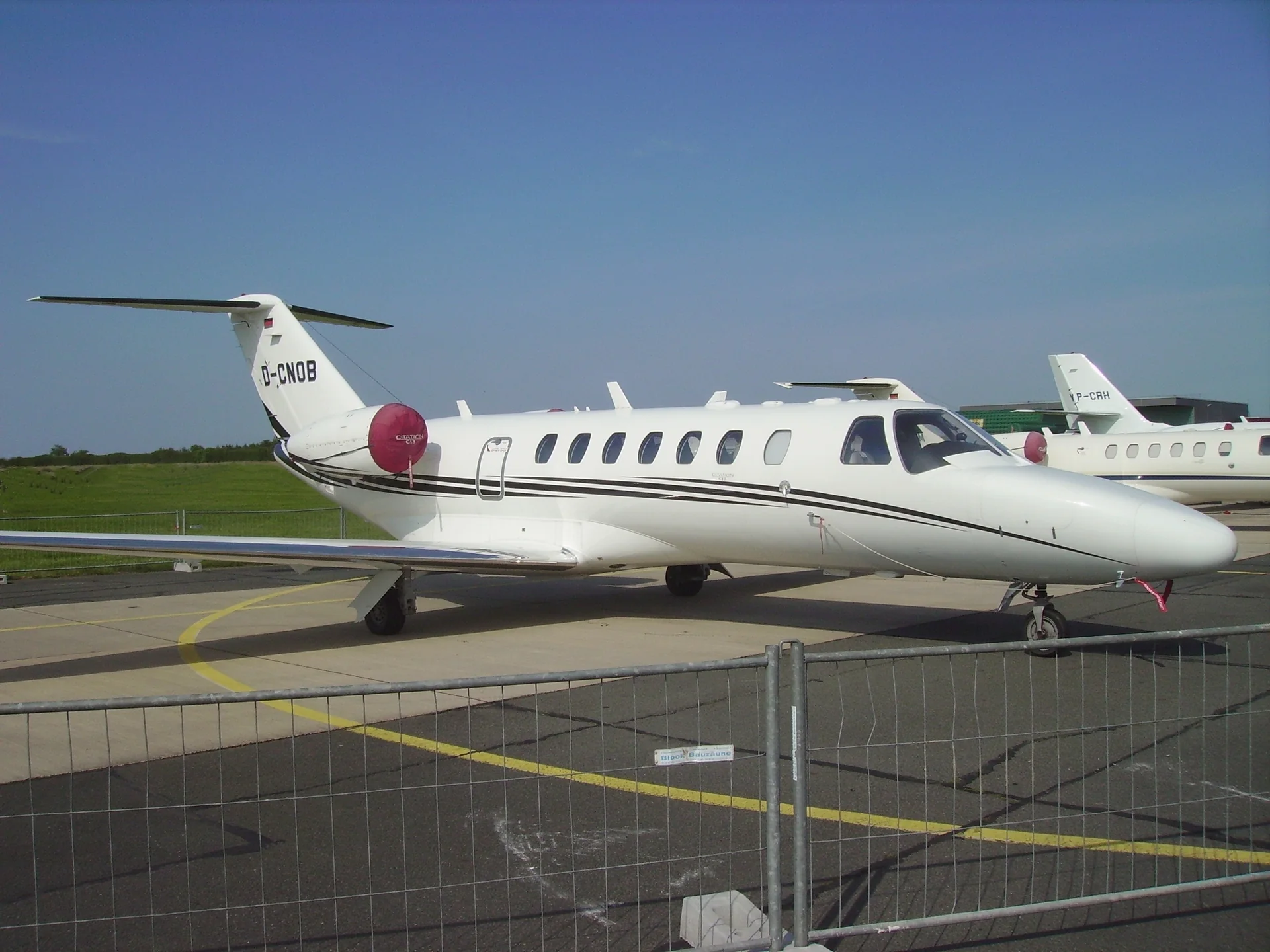
A family trip changes the demands on an aircraft. For a business meeting for four adults, four comfortable seats and a small amount of luggage may be sufficient. On vacation, the same group size can mean a baby, a stroller, extra gear, and the need to spend your time in-flight differently. Therefore, the number of seats remains only an initial characteristic. It is important to understand how a particular cabin will perform throughout the entire trip, not just during boarding.
There is no universal rating of the “best family jets”: a short flight and an overnight route have different requirements. Instead of choosing based on the prestige of the model, it is useful to analyze the hypothetical trip of two adults, a child and an older relative. Let's say a group needs a four-hour flight, a stroller and several suitcases. This is a fictitious scenario that allows you to see the relationship between the cabin, loading and ground parts without being tied to the commercial offer of a particular company.
First you need to imagine the whole day
The journey begins before the aircraft door closes and ends after baggage collection. Travel time to the airport, waiting, boarding and transfer after arrival can be just as important as the cruising leg. If your child requires a routine, the whole day should be taken into account, not just the flight time. At the same time, a private flight also depends on the weather, airport operations and the availability of the aircraft: an individual schedule does not eliminate external restrictions.
On a hypothetical trip, an early departure may seem convenient for adults, but require the entire group to wake up too early. A later option, on the contrary, can lead to an inconvenient arrival. There is no one right answer here. It is helpful to compare door-to-door times and allow for a reasonable allowance for ground procedures. The choice of aircraft becomes part of the overall organization, and not a separate search for maximum comfort in the air.
The interior layout is more important than the total number of seats
The words "eight passengers" do not indicate how the seats are arranged. The seats can be oriented in different ways, and some of the seats can be on the sofa. You need to understand where each participant will sit during takeoff and landing, who will be next to the child and how convenient the passage is. A photograph of a cabin with tables removed does not always give a complete picture of the space in actual use.
A clear request relates to a specific aircraft: seating chart, current photographs and confirmed equipment. Aircraft of the same model can have different interiors. An updated interior also does not necessarily mean a new layout that suits this particular group. Therefore, it makes more sense to compare each passenger's seats and access to the desired areas than to transfer the impression of an advertising image to all aircraft with the same name.
The child’s place requires separate approval
When using a child restraint, it must be confirmed in advance that it is suitable for aviation and compatible with the specific seat. Markings, dimensions, mounting method and manufacturer's instructions are important. International aviation organizations recommend a suitable approved restraint system in a separate location. Specific rules and acceptable options vary by country and carrier, so please check with the actual operator prior to travel.
The presence of a spacious sofa or free seat is not such confirmation. Separately, it is necessary to agree on where an adult can be nearby and whether the installation will interfere with the passage. It is more convenient to solve these issues using the interior layout and device parameters than to discuss them for the first time at the gangway. At the same time, everyday comfort does not replace safety requirements: the ability to sit comfortably during a calm flight and the acceptable position during takeoff refer to different conditions.
The stroller checks not only the volume of the compartment
The luggage compartment is measured by volume, but the item must still fit through its opening and fit with the rest of the things. A folded stroller, a long sports case and a soft bag of the same volume occupy space differently. Therefore, the operator needs dimensions and weight, not just the number of pieces of luggage. For a non-standard item, it is useful to prepare in advance a clear description or photograph of its folded state.
In our example, the group may have plenty of space in the cabin, but face a stroller restriction. Replacing a large suitcase with several compact bags sometimes changes the problem, but the solution must be confirmed for a specific aircraft. It is also important to check baggage availability during the flight. What is located in the external compartment cannot be automatically considered accessible at the passenger's request after takeoff.
Items in the cabin must be separated from the main luggage
For a child and an accompanying adult, some items are required more often than others. But storage next to the seat must be in accordance with the designated areas and instructions of the crew. The free aisle is not an additional luggage compartment. Therefore, it is useful to divide things in advance into those that are necessary in the cabin and those that can be put away before arrival. This helps to form a realistic idea of the actual free space.
The same logic applies to adult work supplies. A laptop, toys and food can simultaneously occupy the tables, which looked spacious in the photo. The cabin should be assessed in terms of usage: who is working, who is relaxing and how people move between places. Several different activities create more layout requirements than simply having the same number of passengers in the same mode.
Relaxation doesn't always mean a separate bedroom
In the descriptions of the cabin there are references to folding seats and berths. It is necessary to find out exactly how they are organized and how many ordinary places remain after the transformation. The same space can be used for eating, relaxing or sitting, but not necessarily for both. Therefore, the declared number of beds should not be mechanically added to the number of passenger seats.
For a four-hour trip, a quiet place to rest may be more important than a full bedroom. On a long night route the requirements will be different. Instead of a general promise of “you can sleep,” it’s more useful to get a diagram of a specific configuration and understand how it relates to other passengers. In this case, the admissibility of using the converted seat in different phases of the flight is determined by the crew and the envisaged operating conditions of the cabin.
Assess the lavatory and service arrangements separately
A bathroom in a small jet can differ significantly in space and privacy from the solution in a large cabin. It is important for the family to understand its location and access in advance. Don't draw a conclusion from the line "on board toilet" alone. Likewise, having an onboard galley does not mean the same equipment, storage capacity and cooking capabilities. The specific package determines which services are actually available.
On a hypothetical trip, it is enough to agree in advance on simple meals and a clear procedure for service. It is not necessary to turn a flight into a complex gastronomic scenario. It is more important that the selected options suit the passengers and the conditions on board. If the group has special requirements, these will be communicated to the organizer in advance for confirmation. The general formulation “individual menu” does not replace the agreed composition, storage method and real possibility of serving.
Confirm the non-stop route with the actual payload
An aircraft's rated range is not a promise to fly any route with any number of people and things. The calculation is affected by load, weather, selected route and operating conditions. Therefore, range comparison is only useful as a first guide. For a specific family trip, operator confirmation is required based on the actual assignment. It is especially important to understand in advance whether staging is being considered as an option.
Sometimes a larger aircraft solves several issues at once, but increasing size is not a universal goal. For one route, a convenient airport is more important, for another, luggage storage and rest are more important. A good proposal makes these connections explicit. A family business flight becomes convenient when specific places, things and stages of the trip are confirmed. It is this consistency, not the name of the largest jet available, that determines the quality of travel for the entire group.