
Helicopters
Helicopter hydraulics: how a small control input moves a large rotor
Pump, servos and swashplate: how hydraulics help control the main rotor and how it differs from autopilot.
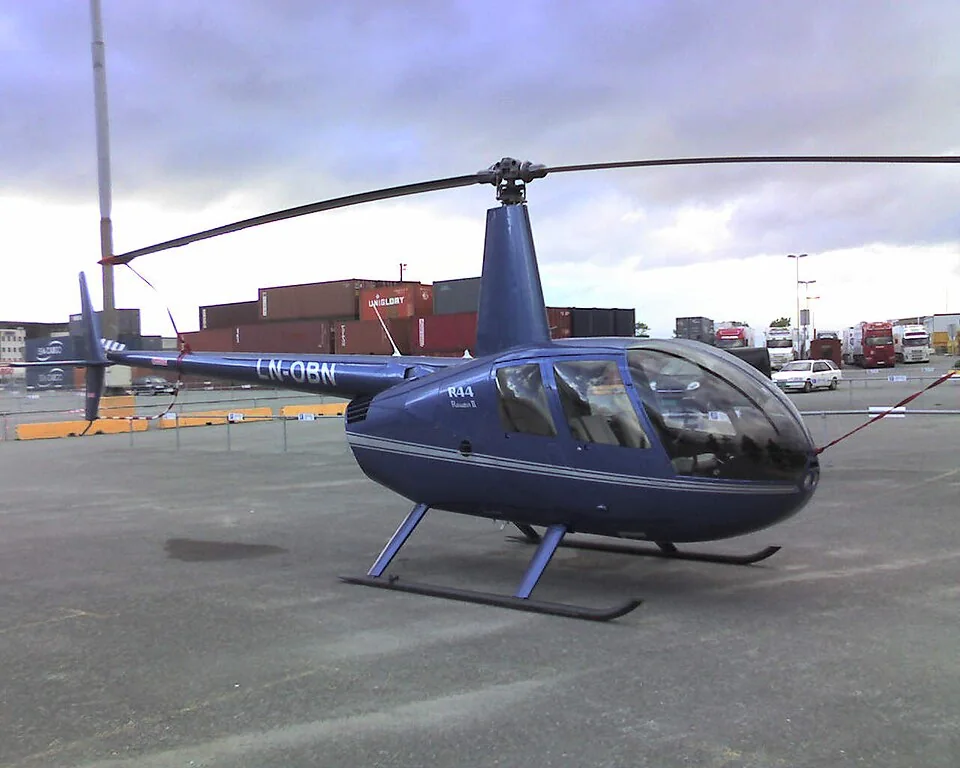
The pilot moves the control stick a few centimetres, and the operation of the large main rotor above the cockpit changes. Between these events there is a whole system of rods, hinges and actuators. On many helicopters, part of the required force is generated by hydraulics: pressurized fluid helps move control parts that are subject to significant loads.
This is neither a separate motor driving the blades nor an autopilot. The hydraulic system supplies force in response to commands from the flight controls. To understand its role, trace the command from the pilot’s hand to a change in blade pitch, then consider why hydraulic circuits and redundancy arrangements vary between helicopters.
What needs to be changed on the rotating blade
A main rotor blade acts as a rotating wing. Lift depends on its angle of attack: the angle between the blade’s chord and the relative airflow. The controls change blade pitch, which affects that angle. Collective pitch changes the pitch of all blades together; cyclic pitch varies each blade’s pitch according to its position around the rotor disc. This lets the helicopter alter both the magnitude and direction of rotor thrust, rather than merely changing rotor speed.
In a common scheme, commands are transmitted through a swashplate. It has elements associated with the stationary part of the aircraft, and elements that rotate with the rotor. The movement and tilt of this assembly is transmitted to the blades. The principle itself can be imagined without complex mathematics: the system must set the position of rotating parts, while remaining connected to the controls in the stationary cabin.
Why is one mechanical connection not enough?
Control rods can transmit motion, but rotor-related loads still have to be overcome. On a small helicopter, the designer may be able to use a mechanical arrangement with manageable control forces. As loads increase, moving and holding the controls through muscle power alone becomes harder. Hydraulic assistance keeps the required pilot effort reasonable without making the pilot continually oppose every force in the system.
The analogy of a car's power steering helps to understand the general idea, but not the entire device. The helicopter is controlled through several interconnected channels, and the behavior of these channels is determined by the specific design. Therefore, it is incorrect to set a simple boundary like “hydraulics appear after the fourth passenger seat.” Cabin capacity in itself does not determine the control scheme or the amount of effort.
Pump, fluid and actuator
The pump creates a flow of working fluid. Pressure arises in the system when there is resistance to this flow; the required limits are supported by the appropriate devices. The fluid flows to the actuators, where pressure acts on the piston. If you direct the flow into the desired cavity, the piston will move and create a force on the associated control element.
In its simplest explanation, force is determined by the pressure and area of the piston. A larger area under the same pressure allows for greater force, but requires a larger volume of fluid for the same movement. The designer selects the dimensions and performance for the load and the required operating speed. This is a compromise between strength, speed, weight of equipment and placement options inside the helicopter.
How the servo follows the command
The servo drive combines flow control and power movement. The pilot's command changes the position of the control element, the fluid is directed to the actuator, and its output part begins to move. Feedback helps stop movement when the desired position is reached. Therefore, a serviceable drive does not continue to push the rod indefinitely after a small movement of the handle.
The separation of command and force action explains why a small amount of force on the control can be combined with a large load in the mechanism. The pilot sets the change, and the energy part of the work is provided by the system. Moreover, accuracy depends not only on pressure. Backlash, valve condition, friction and response speed are also important in how the aircraft responds to commands.
Example on Robinson R44
The R44 hydraulic system description lists the pump, reservoir, lines, and three servos. The pump is driven from the main gearbox. Each of the three actuators is connected to one of the rods supporting the main rotor swashplate. This diagram shows that the presence of hydraulics is possible in a relatively small four-seater helicopter.
The example also separates rotor drive from control assistance. The gearbox transmits power and drives the hydraulic pump, but hydraulic fluid does not replace the mechanical transmission that turns the rotor. The hydraulic system has a different task: reducing the force needed at the flight controls. Other helicopter types may divide these functions differently and use a different set of components.
Why do you need a tank and filter?
The working fluid returns to the system after completing its task. The reservoir provides the necessary supply and participates in the organization of circulation. Filtration helps retain contaminants that could affect the performance of precision components. A small valve can control a lot of force, so the condition of the fluid is of great importance even when the system looks perfectly fine from the outside.
Hydraulic fluid cannot be considered just any oil of the right color. Its properties must match the requirements of the equipment, seals and temperature range. Maintenance includes checks specified in the specific aircraft documentation. The important takeaway for the reader is that the reliability of a power drive depends on many small components, not just a powerful pump and durable tubing.
What does a hydraulic accumulator provide?
In some schemes, a hydraulic accumulator is installed - a device capable of storing pressure energy. Often, a compressible gas separated from the working fluid is used for this. When conditions change, margin helps keep the system operating within the capabilities of a particular device. Its purpose and capacity are determined by the design, so the same word in the description of two helicopters does not guarantee the same reserve of action.
An accumulator is not an unlimited energy source. If pump supply stops, the stored energy is finite. It can be thought of as a small energy buffer, useful during a transient event but unable to replace the main source indefinitely. The aircraft’s operating manual defines its precise capabilities; they cannot be inferred simply from the presence of an accumulator.
One circuit and several independent systems
If control of a large aircraft is impossible without power assistance, redundancy becomes especially important. Such helicopters can use several independent hydraulic systems. Independence is needed so that a certain malfunction in one circuit does not simultaneously take away all the provided control capabilities. Simply placing two pumps side by side is not enough if their operation depends on a common vulnerable part.
Therefore, when evaluating a design, energy sources, lines, actuators, and fault isolation methods are considered. From the outside, this work is almost invisible to the passenger. But it is precisely this that explains why a complex aircraft has a lot of equipment that seems superfluous in normal flight: part of its value is revealed when the system deviates from the normal state.
Hydraulics and automatic control
The stabilization system or autopilot solves another problem: it determines what control changes are needed for the selected mode. Hydraulics provide the force necessary to perform them. These functions can interact, but the presence of hydraulic power in itself does not mean that the helicopter can maintain altitude, heading, or hovering without constant pilot input.
It is useful to separate three questions: who forms the command, how it is transmitted, and what physically moves the mechanism. The command can be given by a person or automation; transmission can be mechanical or electronic; the actuating part can use hydraulic energy. This separation helps to read descriptions of modern helicopters without confusing the autopilot, fly-by-wire controls and amplifiers.
Why you can’t generalize the consequences of failure
Loss of hydraulic assistance has different consequences on different helicopter types. Some retain mechanical control with increased pilot effort; others rely primarily on an independent backup circuit. Neither “the helicopter can always be controlled by hand” nor “any pressure loss causes immediate loss of control” is a valid general statement without specifying the aircraft and the failure.
That is why crews study the diagram of their aircraft and its actions from its manual. The popular explanation helps to understand the purpose of the parts, but does not replace the procedures for flight. Hydraulics make operating heavy and loaded machinery practical; Reliability is achieved through a combination of appropriate design, maintenance, condition monitoring and crew training for the specific characteristics of a particular helicopter.