
Helicopters
Helicopter engines: how the piston design differs from the turboshaft
Pistons, gas generator, free turbine and gearbox: how the engine transmits power to the rotor and why operating mode is important.
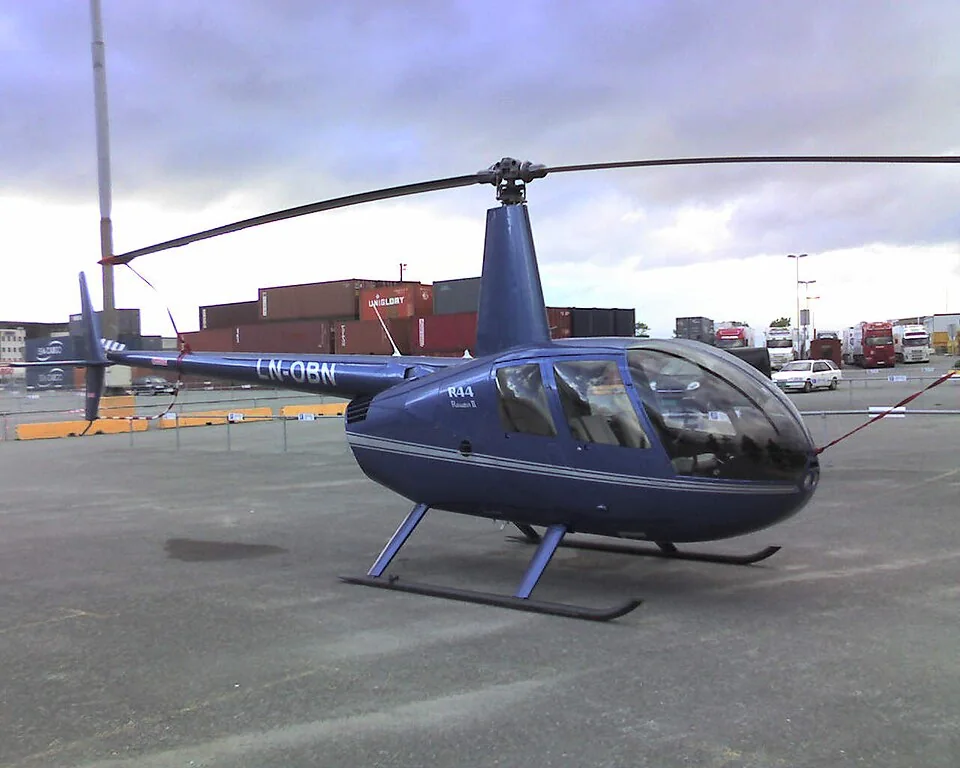
Two small helicopters may look similar on the outside, but inside they have completely different engines. In one, fuel burns in the cylinders, pistons rotate the crankshaft, and the transmission transmits movement to the rotors. In another, a continuous flow of hot gas turns turbines. Both solutions drive the rotor, but do so in different ways and have different maintenance requirements.
To understand the differences, it is more useful to trace the path of energy than to simply compare the power in the advertising table. The engine, gearbox and main rotor form a connected system. The aircraft's capabilities are determined by this entire chain, as well as its weight, flight conditions and permissible modes. Therefore, the word “turbine” by itself does not explain the capacity, range, or available load of a helicopter.
Why does a helicopter need shaft power?
The main rotor creates aerodynamic force due to the movement of the blades relative to the air. In normal flight with the engine running, this requires maintaining rotation and overcoming resistance. The engine transmits mechanical power through the transmission. In the classic single-rotor design, part of the power is also sent to the tail rotor, and another part is required by the units and other systems.
Therefore, a helicopter gas turbine engine is usually called a turboshaft engine. Its main useful work is removed from the output shaft. In a passenger jet aircraft, the engine primarily produces thrust, which moves the aircraft forward. The similarity of the thermodynamic process does not mean the same role: the helicopter rises due to the work of the rotor, and not because the jet from the exhaust pipe pushes it upward.
How a piston engine works
In a piston engine, the energy of burning fuel is converted into the movement of pistons. The connecting rods transmit this movement to the crankshaft, which rotates and transmits power further. The operation of the individual cylinders is coordinated so that the engine can continuously drive the load. In aviation, opposed designs with cylinders on both sides of the crankcase are common: this arrangement helps to obtain a relatively small unit in height.
Light helicopters do not use piston engines for lack of other technologies. For a certain weight and purpose, the cost of equipment, fuel consumption, availability of maintenance and accumulated operating experience are important. A small training aircraft does not need to have the same power plant as a transport helicopter. The solution is chosen according to the task, and not according to the principle “the more complex, the better.”
What does the Robinson R44 family show?
The R44 serves as a clear example of a piston helicopter. Different variants use six-cylinder engines from the Lycoming family: Raven I uses a carburetor system, Raven II uses fuel injection. The difference concerns the method of fuel supply and related operating features. It doesn't turn one of these engines into a gas turbine: in both cases, pistons do the work.
The name of the engine model also does not replace information about its installation on the helicopter. The manufacturer may limit the available power compared to the capabilities of the base unit. For the entire aircraft, cooling, transmission load and service life are important. Therefore, when comparing characteristics, it is necessary to distinguish between the power of the engine itself and the permitted modes of the power plant in a particular aircraft design.
What happens inside a gas turbine
In a turboshaft engine, the compressor raises the pressure of incoming air. Fuel is added in the combustion chamber, and the hot gases pass through turbine stages. Part of the extracted energy drives the compressor; another part supplies the output shaft. Unlike a piston engine’s successive power strokes in individual cylinders, this process maintains a continuous flow through the engine’s main components.
A separate engineering challenge is to keep parts operational at high temperatures and speeds. This requires suitable materials, cooling, lubrication and control of modes. The externally compact unit contains complex parts with precise clearances. That is why the small size of the engine does not mean that it is easy to manufacture or that it can be serviced without special training.
What does a free turbine mean?
In many helicopter engines, the gas generator and power turbine are not mechanically connected by a common rigid shaft. The gas generator creates a flow that acts on a separate power turbine. It transmits power to the transmission. This architecture is called a free turbine: the word "free" describes mechanical independence, rather than the absence of load or operating restrictions.
An example is the RR300 mounted on a Robinson R66. In the R66 documentation it is described precisely as a turboshaft engine with a free turbine. At the same time, the speed of the gas generator, power turbine and main rotor are different values. If the device shows the percentage of rotation speed, it is necessary to understand which element of the system it relates to; the same number of percentages does not mean the same revolutions.
Why the engine and rotor turn at different speeds
A gas turbine works efficiently at rotational speeds far higher than a large rotor can use. A reduction gearbox sits between them, changing the relationship between rotational speed and torque so the engine can drive the rotor. Power transmission involves losses, but the gearbox makes practical operation of the two components together possible.
The transmission has its own limits. A more powerful engine does not by itself authorise transmitting any amount of power to the rotor. Gears, shafts, bearings, hubs and blades are designed for specified loads. A powerplant upgrade therefore requires an assessment of the entire aircraft: extra capability in one component may be unusable because another component reaches its limit first.
Takeoff and continuous power
The characteristics often give several power values. One applies to long-term work, the other is allowed only in a certain mode and for a limited time. These numbers cannot be added together or selected as the maximum to describe any flight. The modes are set by documentation and are part of the engine and helicopter limitations.
This explains why tables from different sources sometimes appear inconsistent. One author indicates the rated power of the engine, another indicates the installation limitation, and the third indicates short-term operation. A correct comparison begins with the name of the mode and conditions. Without this, a difference of tens of horsepower may describe different measurement rules, and not the actual superiority of one aircraft over another.
Heat and altitude affect available performance
Helicopter performance is affected by air density. When it decreases, the conditions for generating force by the main rotor change, and it may become more difficult for the engine to provide the necessary power within permissible temperatures and speeds. Therefore, flying by the sea in cool weather and working at a high altitude site in the summer are different tasks for the same aircraft.
The power reserve helps only within the entire system. It is impossible to infer the permissible load in advance from the name of the engine or the number of passenger seats. To do this, use the characteristics of a specific helicopter, taking into account the conditions. In practice, it is the combination of engine, rotor and mass that determines what tasks an aircraft can perform in a given place and on a given day.
Why use two engines?
Two engines can provide the required total power and certain capabilities if one of them fails. But the presence of a second engine does not mean that the helicopter will retain any characteristics under any load. The ability to continue flight depends on the mode, altitude, temperature, weight and how the aircraft is designed and approved.
In addition, two engines do not double all the elements of a helicopter. Common components may remain in the system, such as transmission or rotor parts. Therefore, assessing reliability requires understanding the entire architecture. The simple opposition “one engine is bad, two engines are good” hides the differences between tasks, designs and intended operating conditions.
How to compare powerplants meaningfully
It is useful for the reader of the catalog to consistently clarify the type of engine, number of engines, permitted modes and features of a particular modification. Then you should look at the weight of the aircraft and its characteristics in the expected conditions. This makes it clear why a light piston helicopter is suitable for some tasks, while a more complex turbine aircraft is needed for others.
Costs are also related to the entire system: in addition to fuel, scheduled work, the condition of components and the availability of specialists are taken into account. The engine cannot be selected separately from the helicopter in the same way as a household appliance based on power on the box. Its value is determined by how well it is matched to the rotor, transmission and the actual work the aircraft has to do.