
Fighter aircraft / F-CK-1
AIDC F-CK-1 Ching-kuo
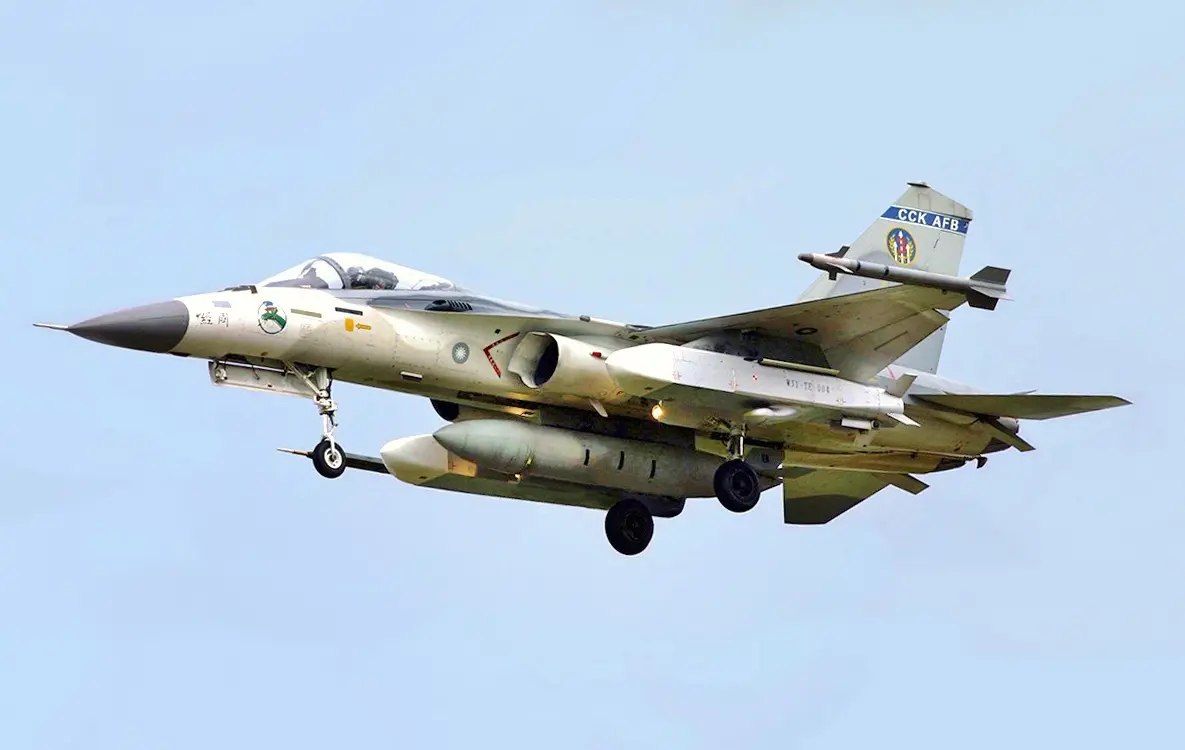
The AIDC F-CK-1 Ching-kuo is a Taiwanese air-defence fighter developed under the Indigenous Defense Fighter programme. Its first prototype flew in 1989, and the fleet was later upgraded.
Development
History
The AIDC F-CK-1 Ching-kuo was developed as Taiwan's own air-defence fighter. Known as the Indigenous Defense Fighter, it emerged when obtaining new foreign combat aircraft was difficult. According to the manufacturer, the An-Hsiang programme divided work among airframe, engine, avionics, and missile projects. The first prototype was rolled out in 1988 and flew on 28 May 1989. That event began a lengthy test effort rather than marking the immediate deployment of every production aircraft.
The aircraft has two engines and a compact airframe intended for the protection of island airspace. This mission relies on the joint operation of radar, weapons, communications, and ground control. Published maximum speed alone says little about how quickly a pilot receives target information or how reliably the aircraft can work within a group. Equipment also varies with version. Early prototypes, production machines, and upgraded examples should not be treated as one unchanging configuration.
The F-CK-1 programme was industrially important for AIDC. The company gained experience manufacturing a combat aircraft and integrating several complex systems developed in parallel. The successful maiden flight was followed by testing at different points in the flight envelope and correction of problems discovered along the way. Production then had to deliver consistent quality across many aircraft and support them in service. Operational introduction required trained crews, spare parts, and procedures, not just a public ceremony.
After the initial production run, an upgrade programme began. The manufacturer lists an improved radar, digital avionics, a new flight-control computer, and provision for additional fuel tanks in its description of the F-CK-1 C/D. Upgraded single-seat and two-seat prototypes flew in 2006 and 2007 respectively. These dates must not be confused with the first flight of the original F-CK-1 in 1989. The existence of an upgraded prototype also does not mean that an entire fleet was converted immediately.
The Ching-kuo's principal role concerns interception and patrol. Its employment depends on conditions, airfield readiness, supplies, and coordination with the wider air-defence system. Public sources can offer differing estimates of aircraft numbers and weapons fit. A precise claim needs to identify the time and variant concerned. Particular care is needed with the abbreviation IDF: in this context it means Indigenous Defense Fighter, not a promise that every aircraft in the programme has the same capabilities.
The F-CK-1 illustrates how national defence requirements can lead to an indigenous fighter and a later modernization effort. Its aerodynamic shape and maiden-flight date are only part of the story. Building a network of engineers, test crews, and maintenance units mattered as well. A reliable account distinguishes the original aircraft from upgraded C/D versions and describes documented service milestones without unsupported comparisons with foreign types.