
Fighter aircraft / Mirage III
Dassault Mirage III
The Dassault Mirage III grew from a French programme for a light, fast interceptor during the 1950s.
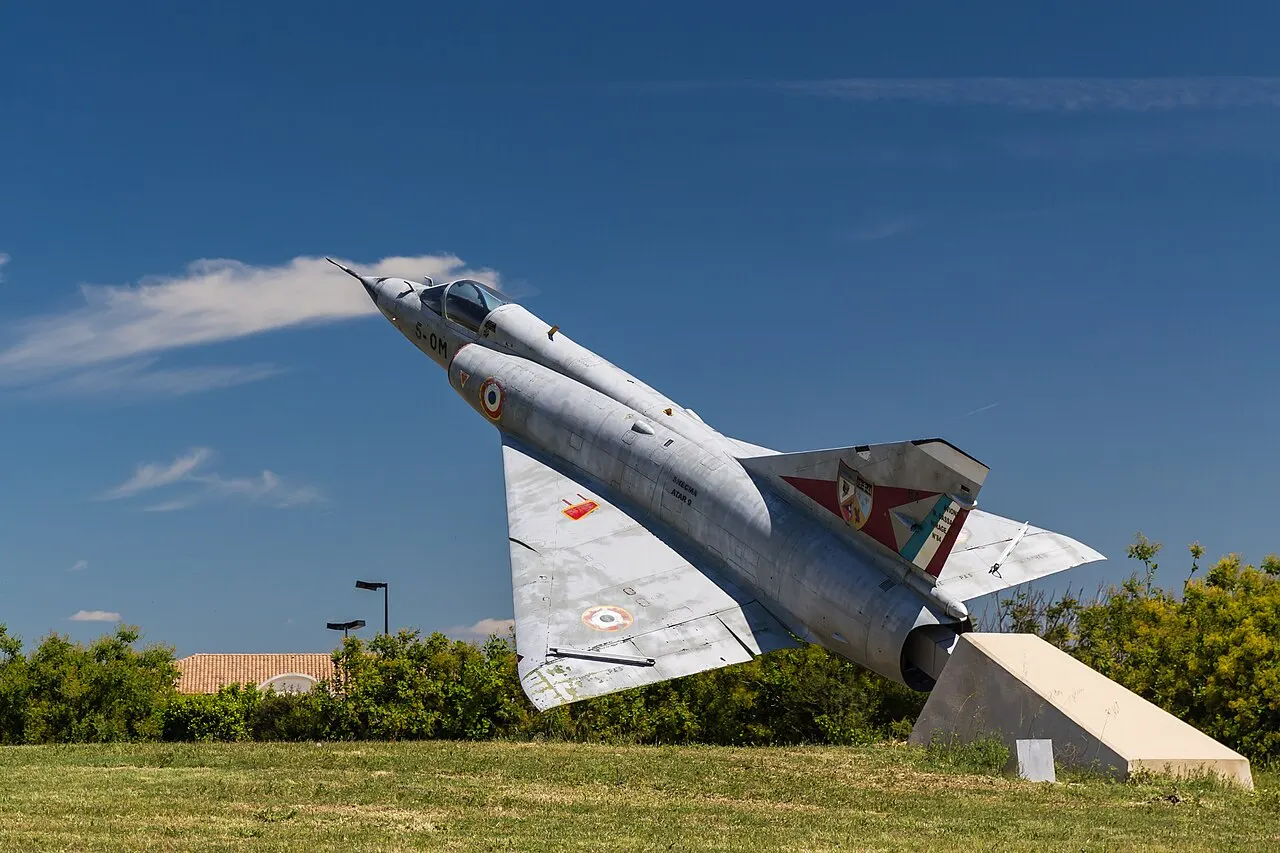
Development
History
The Dassault Mirage III grew from a French programme for a light, fast interceptor during the 1950s. Its designers chose a delta wing and gradually expanded the possibilities of the original concept. The Mirage III 001 prototype first flew on 17 November 1956. Testing showed the scheme's potential at high speed, and the aircraft later became one of the first Western European fighters to reach roughly Mach 2. Production variants entered French service and were exported widely.
The delta wing suited fast, high-altitude flight but brought trade-offs during takeoff and landing. In the early interception role, rapid climbing, radar detection, and guided missiles were important. Later development produced versions for surface attack and photographic reconnaissance. The Mirage IIIC, IIIE, and IIIR differed in equipment and purpose, so one set of specifications cannot describe them all. Export aircraft gained further changes to meet customer requirements.
France was not the only operator. Israel, Australia, Switzerland, South Africa, and other countries acquired Mirage IIIs. Aircraft appeared in conflicts across different regions with different opponents and basing conditions. Israeli experience is often prominent in accounts of the type, but it does not represent every service history. Effectiveness depended on tactics, pilot training, ground guidance, and the specific version being flown.
French industry built substantial numbers of Mirage IIIs and developed related projects. The Mirage 5 placed greater emphasis on low-altitude attack, while later aircraft benefited from experience with the delta-wing formula. Introducing the fighter required airfields, trained technicians, and dependable supplies of engines and instruments. Export customers had to think beyond buying airframes to maintaining them over decades of service.
The Mirage III has a distinct place in jet history as a successful French supersonic export fighter. Its value was not confined to records: it proved flexible enough for several missions and national configurations. Each expansion of role, however, required new equipment and changes in tactics. The aircraft's story shows how a successful aerodynamic layout can support a large international family without making every member technically identical.