
Fighter aircraft / Rafale
Dassault Rafale
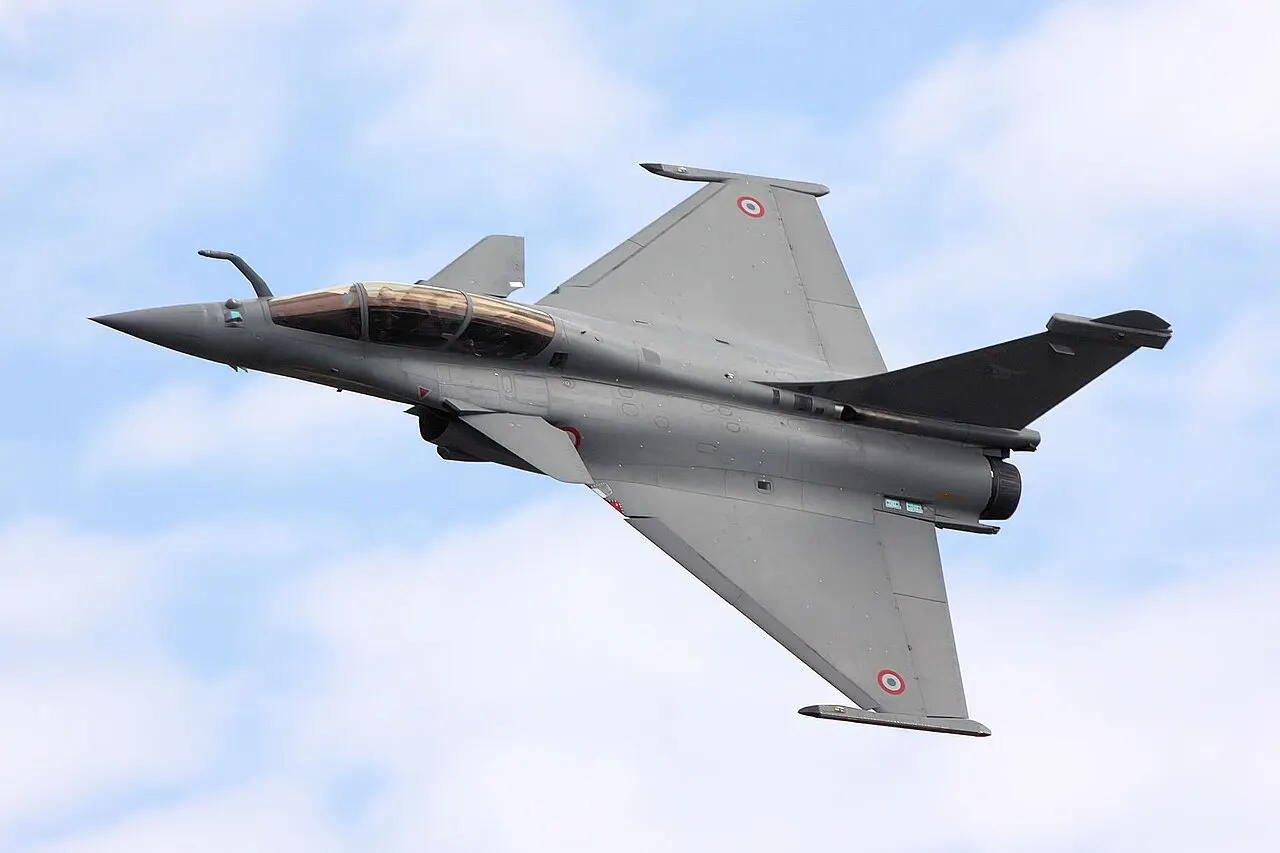
Dassault developed the Rafale in France as a multirole fighter for both the air force and naval aviation.
Development
History
Dassault developed the Rafale in France as a multirole fighter for both the air force and naval aviation. When French requirements diverged from those of the future Eurofighter partners, French industry continued with its own design. The Rafale A technology demonstrator first flew on 4 July 1986. Production aircraft required further development and testing, particularly for carrier use. The programme aimed to replace several older types with one platform able to perform different missions according to its equipment and weapons.
The Rafale has two engines, a delta wing, and canard foreplanes. Electronic flight controls enable this aerodynamic arrangement across different flight conditions. The family includes the single-seat air force Rafale C, two-seat Rafale B, and carrier-based Rafale M. The naval aircraft received changes necessary for arrested landings and service at sea. These differences affect weight, maintenance, and sortie planning even where major systems and outward appearance remain similar.
The fighter is intended for air combat, attacks on land and maritime targets, reconnaissance, and other assignments. Sensors, communications, and electronic protection help the crew work in a crowded environment. Capabilities depend on the upgrade standard: later aircraft received different software, weapons, and equipment. Any list of Rafale functions should therefore identify the configuration involved. No sensor or missile guarantees a mission outcome without training, planning, and support.
The Rafale entered French air force and navy service and later attracted export customers. Operational introduction required training facilities, engine support, and a dependable supply of weapons. Carrier aviation also demands landing skills, deck-crew organisation, and attention to weight limits on individual sorties. For land-based units, range, aerial refuelling, and cooperation with other aircraft are important. One platform can perform several roles, but the conditions of each role remain distinct.
The Rafale story illustrates France's decision to retain an independent combat-aircraft development capability. Its multirole character was built through successive integration of new systems rather than appearing complete in one step. Comparing it with another fighter only by maximum speed or the number of external stations is inadequate. Practical value depends on the actual configuration, trained crews, aircraft availability, and the wider air force's ability to sustain operations over time.