
Fighter aircraft / Lightning
English Electric Lightning
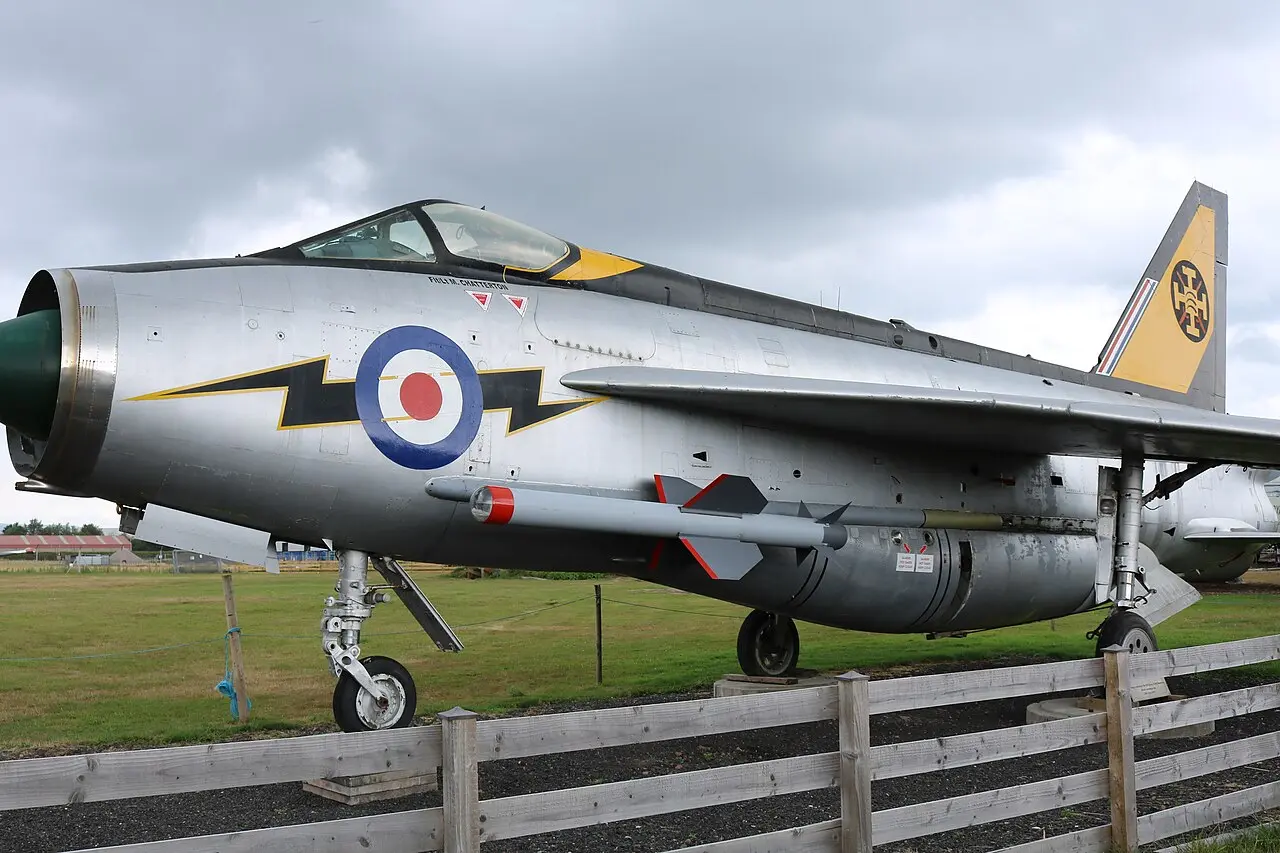
English Electric developed the Lightning to intercept aircraft approaching British airspace at high speed.
Development
History
English Electric developed the Lightning to intercept aircraft approaching British airspace at high speed. The experimental P.1 flew in 1954, while the P.1B prototype of the future fighter first flew on 4 April 1957. Operational service followed only after extensive testing of weapons and control systems. Lightning became the Royal Air Force's first fighter able to operate routinely at supersonic speeds and remained an important air-defence aircraft through the Cold War.
Its most unusual design feature was a pair of engines arranged vertically inside the fuselage. This kept the body narrow but made the internal layout and access to the powerplants more complicated. The wing had pronounced sweep. Designers emphasised acceleration and climb because an alert interceptor needed to reach a target's altitude quickly. Limited fuel capacity was a significant operational constraint. Later versions attempted to ease it through added tankage and changes to the airframe, but range remained central to planning each mission.
Lightning formed part of a wider air-defence network. Ground radars detected approaching aircraft, controllers directed the fighter, and its crew completed the interception using onboard equipment. Radar, guns, missiles, and other systems varied between the first F.1 and later F.6. A capability quoted for one version must be checked against the equipment of that particular aircraft. High speed helped an interceptor reach its target, but speed alone could not replace reliable guidance, prepared bases, and trained maintenance crews.
RAF Lightnings operated beyond Britain, including deployments in Europe, the Middle East, and the Far East. Some squadrons later converted to the Phantom, yet the Lightning remained on the front line much longer than many early observers expected. The final RAF front-line interceptor was officially retired in 1988. Exported aircraft had their own configurations and service histories, so British dates and equipment should not simply be applied to every aircraft carrying the name.
Lightning illustrates an era when rapid climb toward a bomber was among a fighter's defining requirements. Its powerful engines and distinctive arrangement made it memorable, while its long career also depended on repeated upgrades. As missiles, radar, and tactics advanced, the limitations of the original concept became more apparent. The aircraft is therefore best understood as a particular stage in British air-defence development, rather than a universal model for all jet fighters.