
Fighter aircraft / EF-2000
Eurofighter Typhoon
The Eurofighter Typhoon emerged from a joint programme involving the United Kingdom, Germany, Italy, and Spain.
Development
History
The Eurofighter Typhoon emerged from a joint programme involving the United Kingdom, Germany, Italy, and Spain. During the 1980s these countries sought a new fighter to replace ageing aircraft while preserving domestic aerospace expertise. Reaching a shared design was difficult because operational requirements and industrial interests differed. France ultimately pursued the separate Rafale programme. The first Eurofighter prototype flew on 27 March 1994, while deliveries to operational air forces began in the following decade.
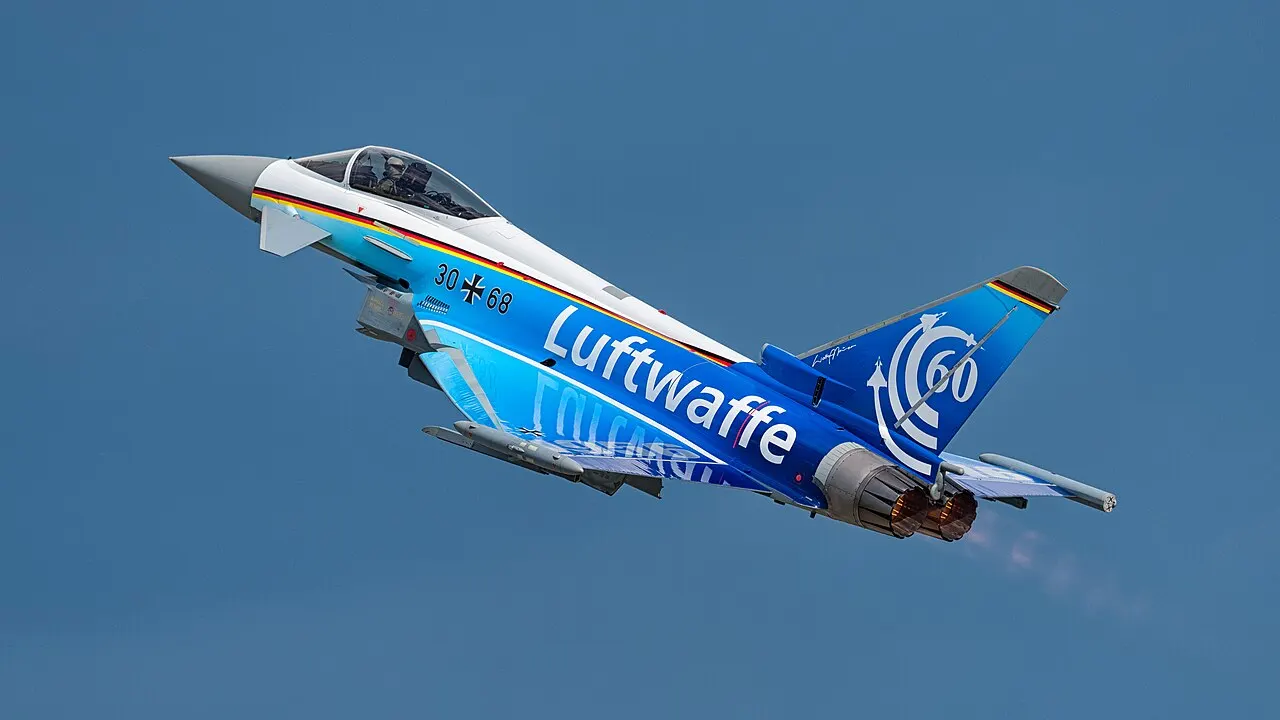
Typhoon uses two engines, a delta wing, and canard foreplanes. Electronic flight controls help exploit the agility of this arrangement. The aircraft was initially associated chiefly with air superiority and quick-reaction air defence. Over time, operators expanded its ability to attack surface targets and integrated new missiles, bombs, and sensors. An early service aircraft and a later upgraded Typhoon therefore do not have exactly the same range of missions.
Manufacturing work was divided among companies in several countries. This sustained national aerospace industries but made agreement on changes and deliveries more complicated. Aircraft were produced in stages known as Tranches, while separate enhancement packages introduced new capabilities. Comparing versions requires attention to the country, production batch, and upgrades performed. Fighters with a similar outward appearance may differ in radar, software, and approved weapons.
Operators use Typhoon for alert duty, interception, patrol, and strike missions. The Royal Air Force, for example, progressively added tasks previously performed by other aircraft. Export customers also acquired the fighter beyond the four partner nations. Its effectiveness depends on more than speed or manoeuvrability: crews need training, compatible communications, spare parts, and dependable ground support. Common procedures and information exchange are especially important during allied operations.
Eurofighter's history illustrates both the advantages and difficulties of multinational aircraft development. A shared project distributed costs and preserved industrial capacity, but major updates required agreement among several governments. Typhoon has remained an evolving platform rather than a fixed 1990s design. Its significance combines a European production partnership, air-defence service, and a gradual move toward a wider set of combat roles.