
Fighter aircraft / G.91
Fiat G.91
Fiat G.91 was a light Italian jet developed for tactical strike and reconnaissance.
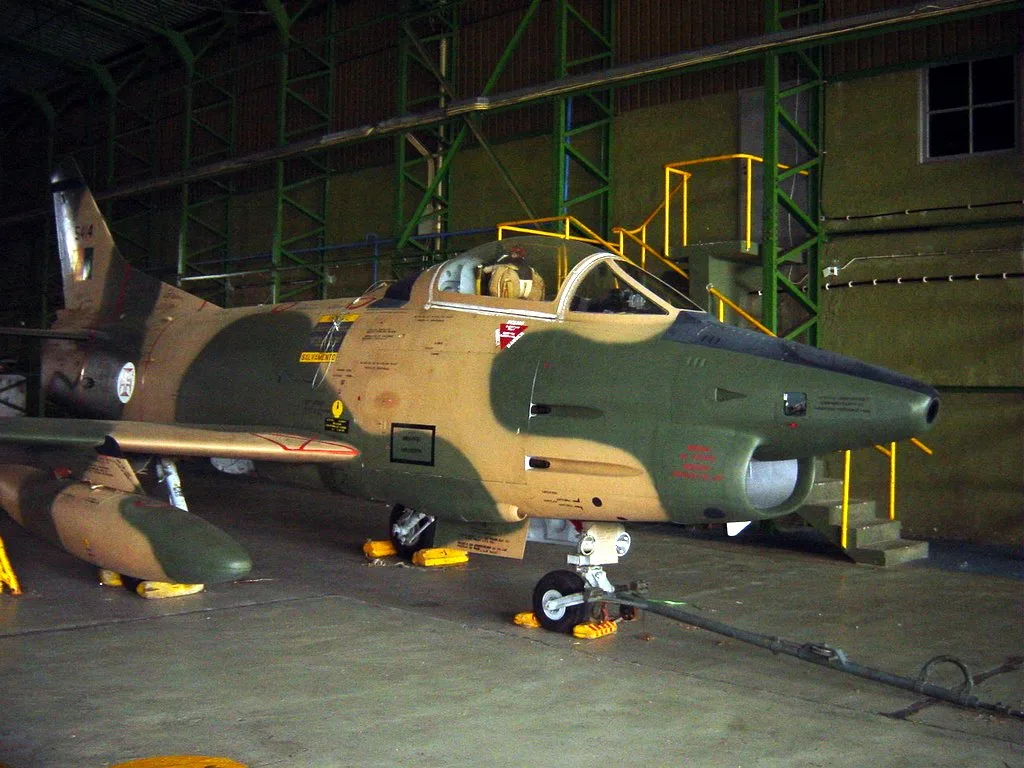
Development
History
The Fiat G.91 emerged in Italy from a postwar NATO requirement for a light tactical aircraft. Military planners wanted a machine for ground support and reconnaissance that could be easier to operate from dispersed sites than larger jet fighters. The prototype first flew on 9 August 1956 near Turin. Winning an international competition did not make the G.91 a common aircraft for every NATO member, but several European air forces eventually adopted it.
The original G.91 was a single-engine jet with a swept wing. Its relatively modest size reflected the initial idea of affordable, mobile tactical aviation. The ability to use a short operating site nevertheless depended on more than the aircraft itself. Ground units needed spare parts, fuel, communications, and trained personnel. Requirements for weapons and reconnaissance equipment changed as the project developed, so performance and equipment claims have to be tied to a particular version.
G.91R aircraft carried equipment for reconnaissance tasks and could attack targets on the ground. Italy operated the type in its own air force. The German Luftwaffe also acquired it and arranged licensed production. Portugal became another operator, using aircraft in different geographical and military circumstances. National equipment and tactics varied, making it misleading to describe all G.91 service in one broad statement. Some aircraft also supported training and display flying rather than front-line attack missions.
The later G.91Y had two engines and a substantially changed design. It retained part of the name and the broad concept, but it was not merely a revised single-engine aircraft with identical performance. Comparisons must distinguish the G.91R, training versions, and G.91Y. Service stretched across decades during which weapons, training standards, and the needs of ground forces evolved. The advantages of a light aircraft also had to be weighed against limits on payload and range.
The G.91 story illustrates the difficulty of turning a shared NATO competition into one standard fleet. The technical winner proved useful to particular operators, while other countries selected different solutions. Its place in aviation history rests on more than figures in a specification table: operating demands, tactical missions, and industrial cooperation all shaped the result. A precise account of an individual aircraft should identify its national version, engine, reconnaissance equipment, and period of service.