
Fighter aircraft / F-16
General Dynamics F-16 Fighting Falcon
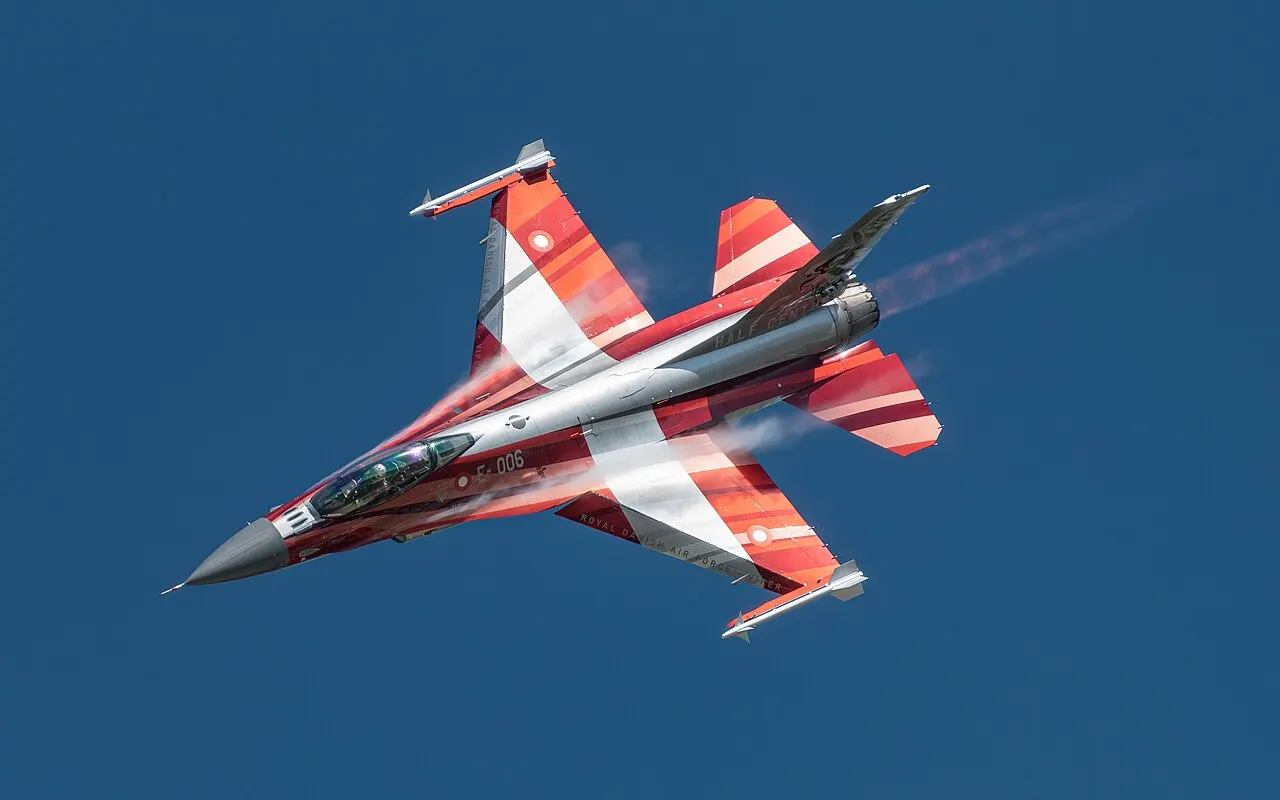
The F-16 Fighting Falcon is an American single-engine multirole fighter with many variants and upgrade blocks.
Development
History
The General Dynamics F-16 Fighting Falcon is an American single-engine multirole fighter developed as a relatively light and agile aircraft. Its origins lay in the search for a machine able to perform effectively in air combat at smaller size and cost than a heavy fighter. The YF-16 prototype first flew in 1974, and production aircraft entered United States Air Force service near the end of that decade. Over time the original concept expanded as equipment for ground attack and other missions was added.
A central F-16 feature is its fly-by-wire control system, which sends pilot commands electronically rather than relying only on traditional mechanical links. The design produced a highly responsive aircraft, but its effectiveness depends on the coordinated performance of aerodynamics, engine and onboard systems. A cockpit with good visibility helps the pilot watch the surrounding airspace. Radar, weapons and navigation equipment changed throughout the programme. An early F-16A, a later F-16C and a recent export version cannot be described with one fixed list of instruments.
As a multirole aircraft, the F-16 can perform interception, protection and strikes against ground targets when suitably equipped. Preparation differs from mission to mission. Weapons, external fuel tanks and specialist equipment affect range, weight and maneuverability. A heavily loaded aircraft behaves differently from a lightly equipped fighter. Pilot training, communications and support from other units also influence results. A single published speed or radius figure cannot explain the practical value of the aircraft.
F-16s were produced in large numbers for the United States and many foreign operators. The programme gained successive upgrade blocks with different electronics, engines and weapons. Some countries modernized aircraft already in service to extend their usefulness. Production and development passed from General Dynamics through corporate changes to Lockheed Martin. That history explains why sources from different periods name different manufacturers for members of the same family.
The Fighting Falcon's place in aviation history comes from combining a relatively compact platform with a broad range of tasks. It was not merely a smaller F-15; the programmes answered different requirements. The F-16 showed how a multirole fighter could evolve for decades through changing systems and armament. A precise account of an individual aircraft should state its variant, block and operator, otherwise features from several eras become mixed together.