
Fighter aircraft / Hunter
Hawker Hunter
The Hawker Hunter emerged in Britain from a postwar need for a faster jet fighter.
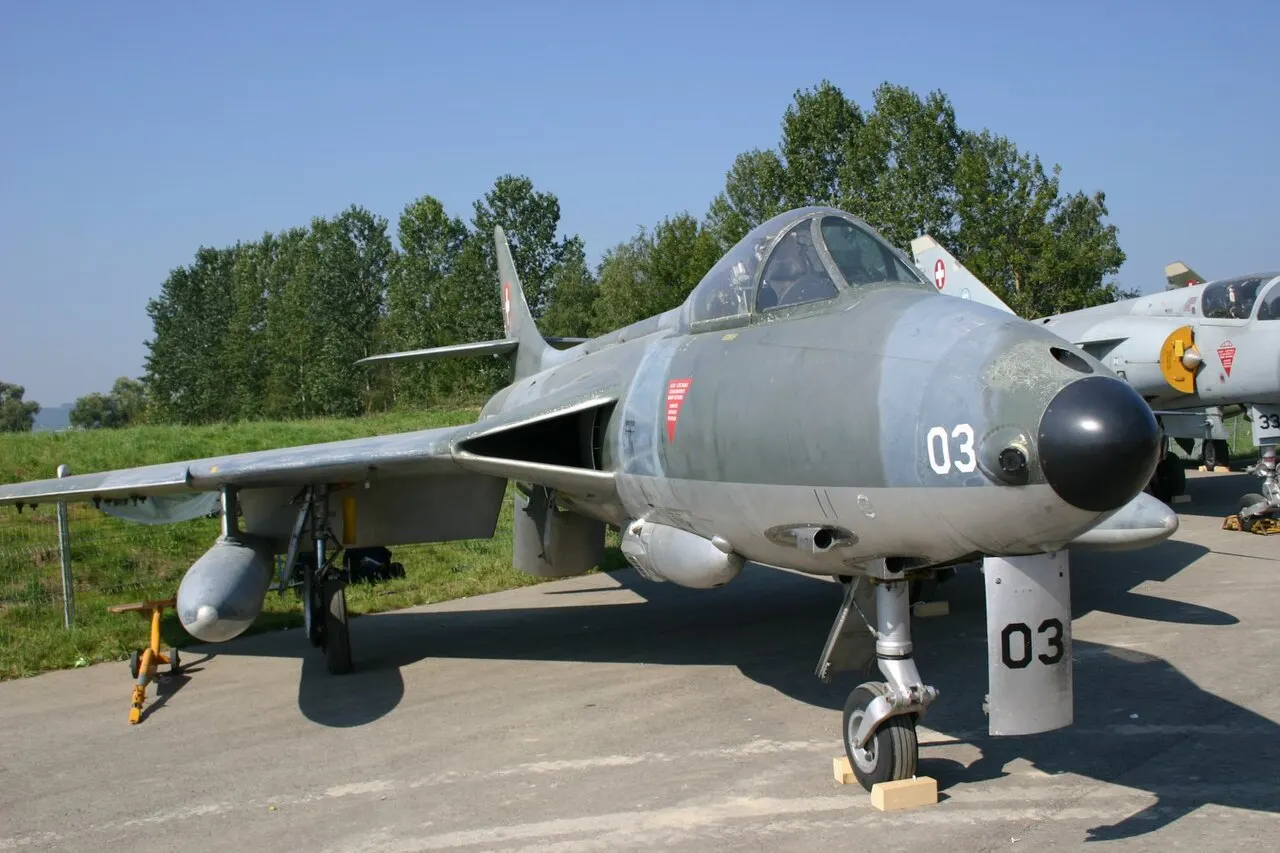
Development
History
The Hawker Hunter emerged in Britain from a postwar need for a faster jet fighter. The P.1067 prototype first flew on 20 July 1951 with Neville Duke at the controls. It was designed for the Royal Air Force, but later proved useful in several other roles. The aircraft's long history involved repeated changes and extensive exports. No single set of performance figures accurately describes every Hunter that was built.
The design combined a swept wing, one jet engine, and four cannon in the nose. Its smooth fuselage and wing lines distinguished it from earlier British straight-wing aircraft. During development, engineers worked through handling, fuel, and armament issues. Later production series received changes to engines, controls, and equipment. The F.6, for example, differed from the F.4, while two-seat training versions needed a different cockpit layout. These distinctions matter whenever the family is discussed as a whole.
Hunter initially served as a day fighter. As aviation technology changed, some aircraft were adapted for attacks on ground targets. External tanks increased ferry flexibility, while bombs and rockets offered a means of supporting forces below. That does not mean every early Hunter carried the same stores or had identical attack equipment. What an aircraft could do depended on its exact version, national modifications, weapons, and the training of its crews.
RAF Hunters operated both in Britain and overseas. Numerous other countries in Europe, Asia, and the Middle East also acquired the aircraft. Across these air arms, Hunters flew training, patrol, reconnaissance, and combat missions. British display teams used the type for formation flying, reflecting its respected handling qualities, although an airshow record says little about combat effectiveness. Export service continued after the aircraft had left the RAF's principal fighter role, and different fleets retired it at different times.
Hunter occupies a place between the first postwar jet fighters and later supersonic aircraft. It was not developed to meet the same requirement as the Lightning, so comparing their top speeds alone reveals little about their intended jobs. The Hunter lasted because its design could support several versions and because operators could maintain and update their fleets. Accurate description of an individual aircraft requires its production mark, country of service, and period of use, rather than the family name alone.