
Fighter aircraft / KF-21
KAI KF-21 Boramae
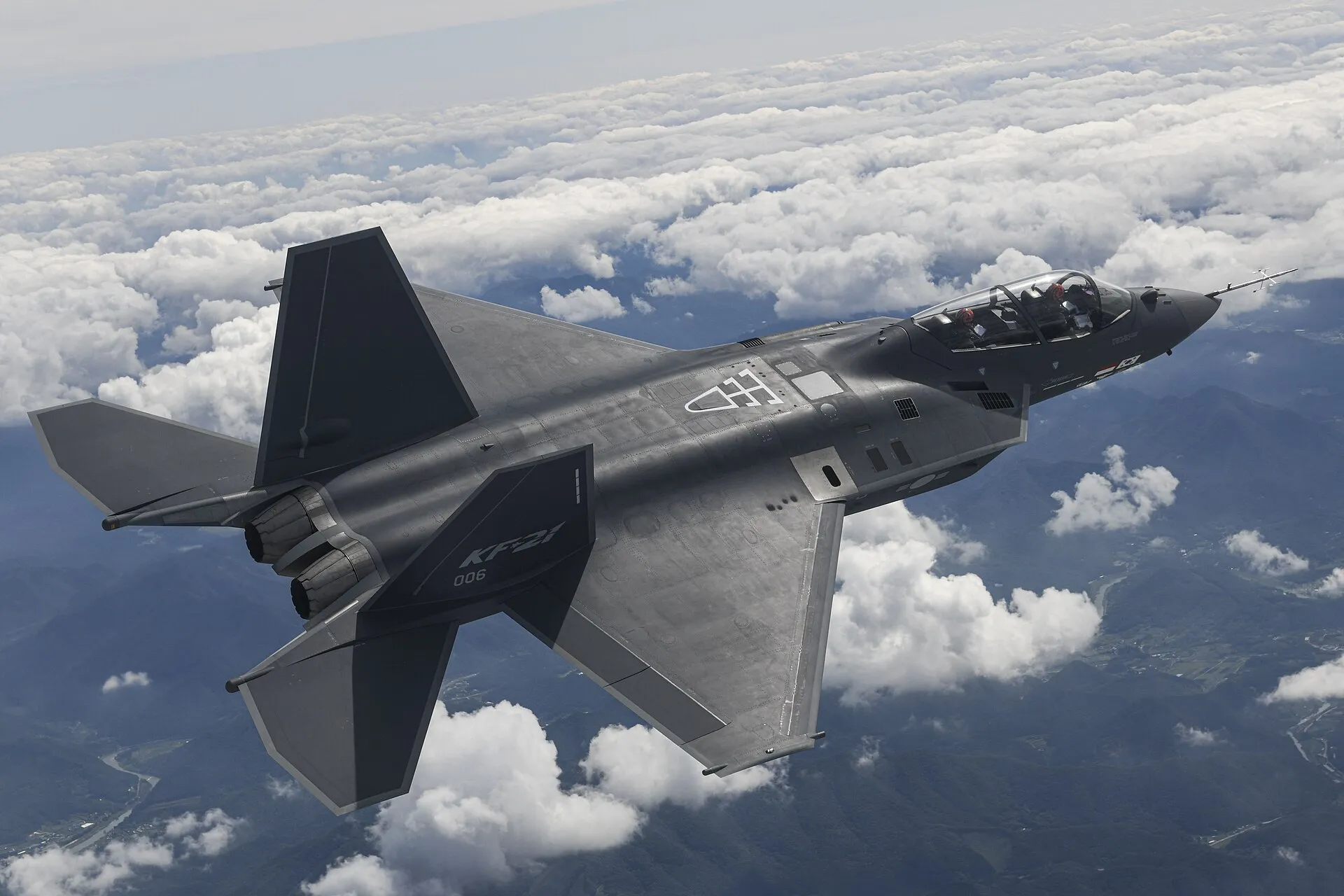
The KAI KF-21 Boramae is a South Korean twin-engine fighter. After its first flight in 2022, the programme completed flight trials, and the baseline Block I received final combat-suitability approval in 2026.
Development
History
The KAI KF-21 Boramae is a South Korean fighter developed as part of an effort to build more of the country's combat aircraft industry at home. The programme was conceived to replace some ageing aircraft and establish a basis for more independent production. Korea Aerospace Industries leads construction with government and industrial partners. Indonesia has also participated in international cooperation around the project. The first prototype flew on 19 July 2022, beginning an extended period of testing in the air.
The KF-21 has two engines and an external shape designed with modern demands for aerodynamics and observability in mind. Its appearance alone does not prove a particular level of low observability from every direction or at every radar frequency. Sensors, communications, data processing, and weapons matter as much to the combat system as airframe shape. An active electronically scanned array radar was developed for the programme, with testing and integration forming separate tasks. Public information does not reveal every operating mode of the equipment.
In 2024, South Korea's defence acquisition agency announced the start of initial production. The decision came while testing was still under way, which is common in large programmes with staged evaluation. In January 2026, the agency reported completion of the main development flight-test programme. In May, it announced final combat-suitability approval for the baseline KF-21 Block I. These milestones mean different things. A prototype flight, a manufacturing contract, and approval of a defined configuration are separate stages.
The first production Block I standard is focused primarily on air-to-air missions. Expanded air-to-surface capability belongs to later development plans. Expected features of future versions should not be attributed to the configuration already tested. Planned delivery dates and actual numbers handed over also need to be distinguished. Even after approval, squadrons still require pilot training, maintenance arrangements, and experience operating the aircraft routinely.
The KF-21 is notable for the scale of its domestic industrial network as well as its flight performance. Building a modern fighter has required flight controls, radar, engines, test infrastructure, and quality management for series production. Public debate often compares it with foreign aircraft using a generation label, but such labels conceal differences in specific sensors, weapons, and readiness. Sound comparisons require defined configurations and evidence obtained under comparable conditions.
The Boramae story now runs from a flying prototype to a production programme and formal completion of tests for its baseline variant. By late 2026 it is more than a paper concept, while large-scale squadron service and further versions remain separate stages. A reliable account records when each event occurred, separates Block I from future variants, and avoids substituting promotional expectations for documented test results.