
Fighter aircraft / F-35
Lockheed Martin F-35 Lightning II
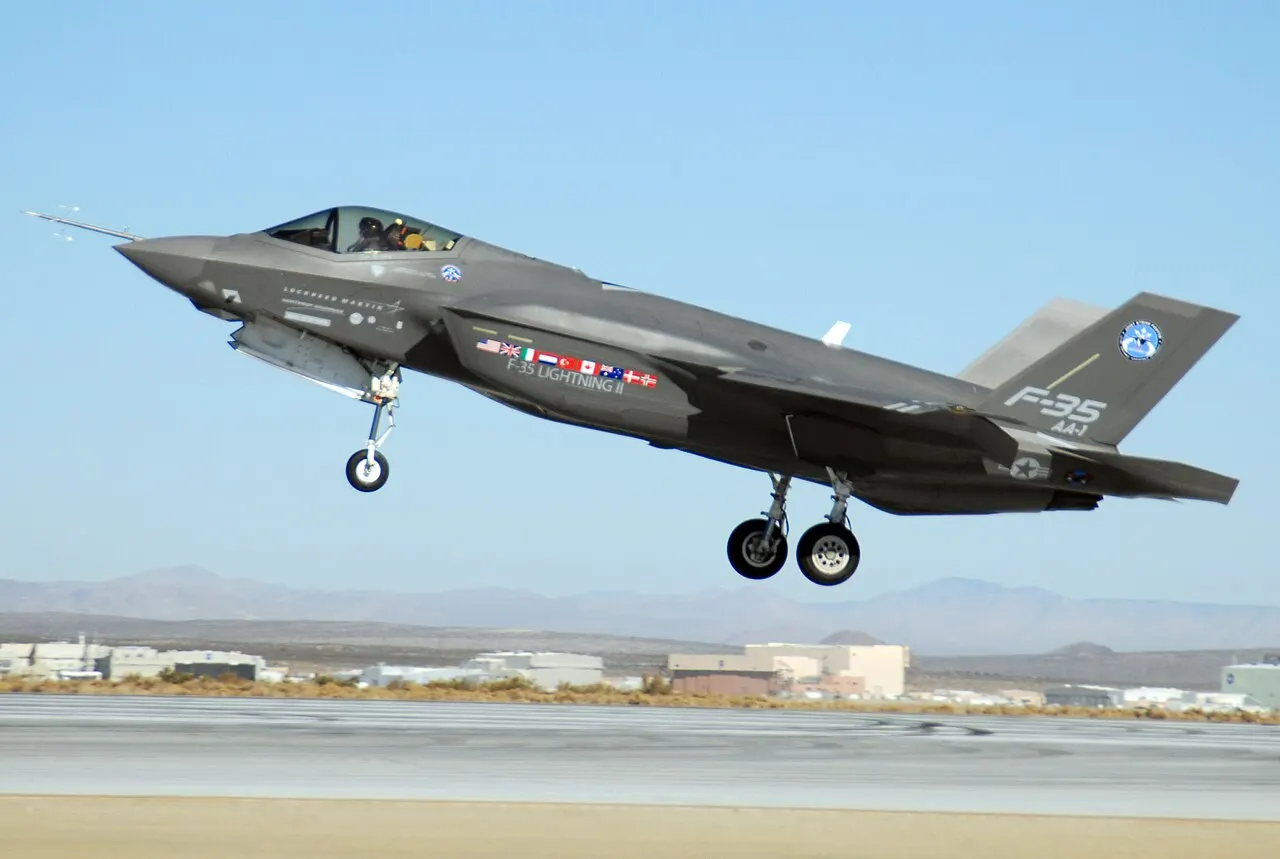
The F-35 Lightning II was developed as a family of multirole fighters for armed services with different basing requirements.
Development
History
The F-35 Lightning II was developed as a family of multirole fighters for armed services with different basing requirements. The Joint Strike Fighter programme combined a conventional runway aircraft, a short-takeoff and vertical-landing aircraft, and a carrier aircraft within one development effort. Lockheed Martin's team won the competition in 2001, and the first F-35 flew in December 2006. Shared technology made joint development possible, but the three principal versions are not identical airframes carrying different labels.
The F-35A uses ordinary airfields and conventional takeoff and landing. The F-35B adds a shaft-driven lift fan and a swivelling engine nozzle for vertical recovery and operations from ships without catapults. With a useful operational load, it normally takes off after a short run rather than rising vertically. The F-35C is built for catapult launches and arrested landings; its wing and landing gear address the demands of carrier operations. These differences affect weight, fuel, maintenance, and flight planning, so a specification for one variant should not be treated as a specification for the whole family.
Low observability and the integration of sensor data shape the aircraft's combat role. Its systems combine information from radar, electro-optical sensors, and other participants into a more coherent picture for the pilot. A helmet-mounted display presents essential flight and targeting information without requiring the pilot to look repeatedly at separate panels. The intended benefit is faster interpretation of a complicated environment, not the removal of uncertainty: identification, electronic interference, and communication still matter in every operation.
The fighter can attack airborne and surface targets. Internal weapon carriage preserves the low-observable configuration, while external stations provide a different loadout when the mission permits it. The F-35 can also share information with other aircraft and forces, making it part of a wider combat network. How well that works depends on compatible equipment, secure links, crew training, and the particular mission. A single headline measure such as top speed says little about those combined capabilities.
Developing three versions together, integrating extensive software, and coordinating international production made the programme lengthy and complex. Operators have had to introduce new training, ground support, coating maintenance, and continual system updates alongside the aircraft themselves. Its significance therefore lies as much in how air forces organise and sustain a connected fleet as in the design of an individual fighter. Evaluating the type also requires attention to operating costs, spare parts, readiness, and the pace at which new functions reach deployed aircraft.