
Fighter aircraft / F-15
McDonnell Douglas F-15 Eagle
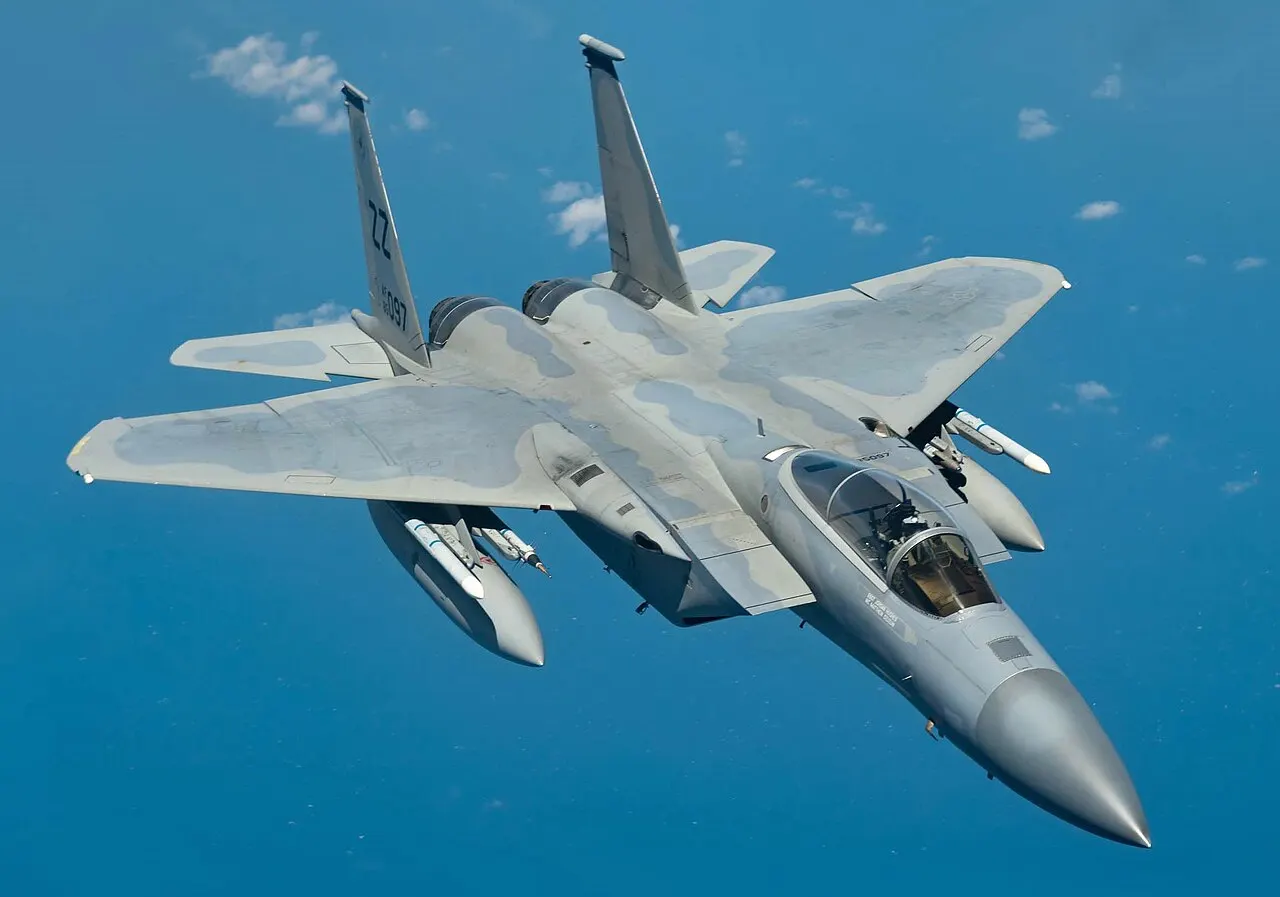
The F-15 Eagle is an American twin-engine air-superiority fighter with a long history of upgrades.
Development
History
The McDonnell Douglas F-15 Eagle is an American twin-engine fighter developed primarily for air superiority. In the late 1960s the United States Air Force sought an aircraft combining a powerful radar, substantial range, high speed and maneuverability. The answer was the Eagle, with a large wing, two engines and enough thrust to recover energy quickly in air combat. The F-15A first flew in July 1972, and operational units began receiving the aircraft during the middle of the decade.
The fighter was designed as a system in which airframe, engines, radar and weapons support one another. Radar helps detect and track a target, while missiles provide engagement options at different distances. A pilot must still fly the aircraft, interpret the situation and cooperate with other forces. Strong thrust relative to weight and modest wing loading give the F-15 its acceleration and maneuvering qualities. Actual results in combat depend on far more than the aircraft alone: crew training, information from supporting units and conditions of a particular mission all matter.
The early single-seat F-15A and two-seat F-15B trainer led to the F-15C and F-15D. Improvements involved fuel capacity, onboard systems and armament. The later F-15E Strike Eagle was adapted for attacks on ground targets. It belongs to the same family but has a different mission and equipment fit. Performance or features of an F-15E should not simply be assigned to an early F-15A. Upgrades can also change individual aircraft within one lettered series.
Eagles have served the United States and foreign air forces. The aircraft has appeared in operations in the Middle East and elsewhere, but a list of conflicts is only part of its history. Routine service matters too: alert duty, training, readiness, electronics upgrades and weapons integration. Long-term operation required continued structural maintenance and adaptation to changing needs. The ability to evolve helped the family remain relevant long after its first flight.
The F-15 helped define the heavy air-superiority fighter of its generation. Two engines and generous performance margins gave the platform room for modernization. It was never meant to replace every class of combat aircraft, however; its original task differed from that of a lighter multirole fighter. An accurate comparison should identify the particular F-15 variant and period of service rather than combine several stages of the programme into one imaginary aircraft.