
Fighter aircraft / МиГ-17
Mikoyan-Gurevich MiG-17
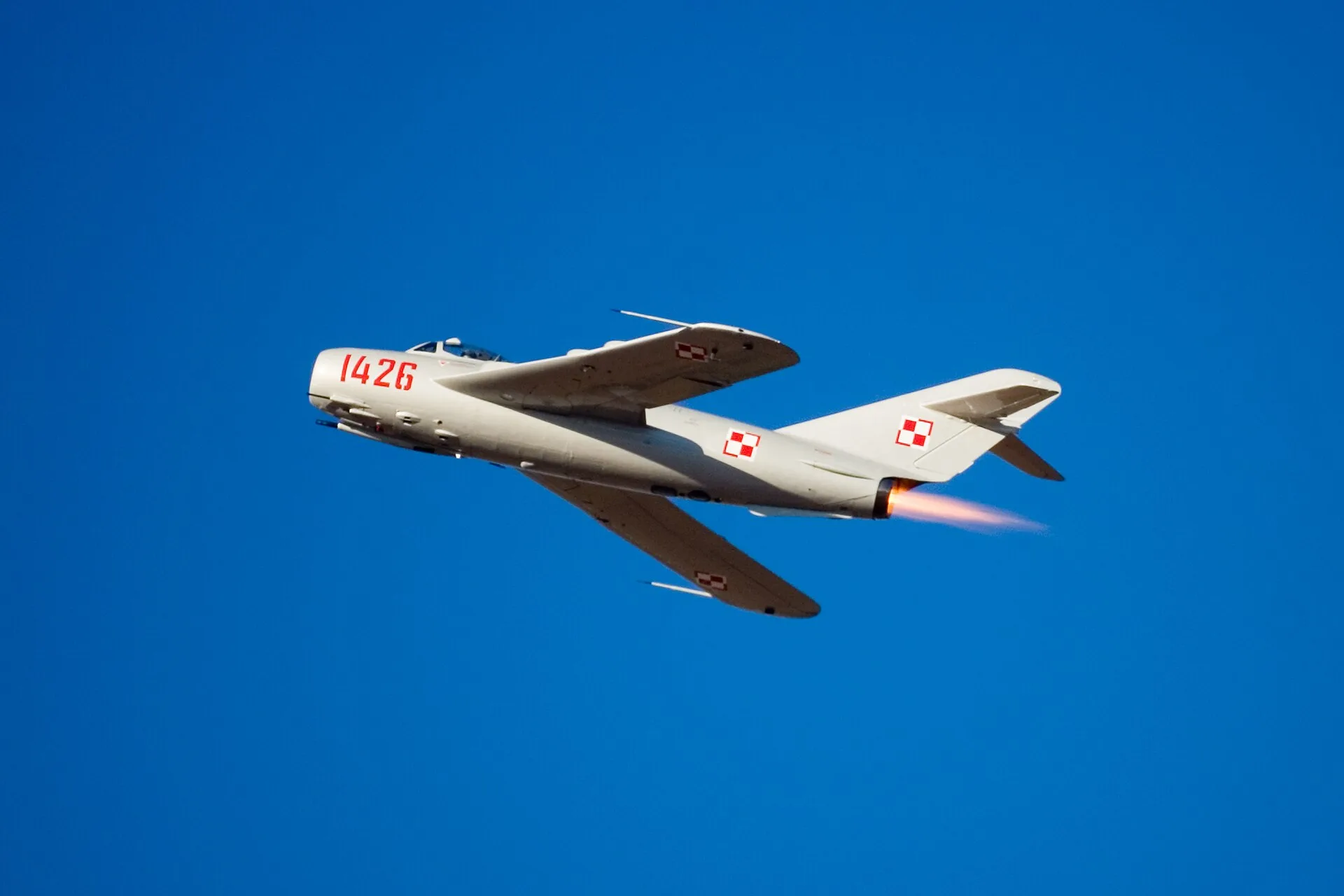
The MiG-17 was developed by the Mikoyan design bureau from the MiG-15 as Soviet aviation sought better handling near the speed of sound.
Development
History
The MiG-17 was developed by the Mikoyan design bureau from the MiG-15 as Soviet aviation sought better handling near the speed of sound. Its prototype first flew on 26 July 1949. The family resemblance can be misleading: the wing geometry changed and the airframe was refined for more dependable flight at higher speeds. Production aircraft entered service in the early 1950s and became widespread among the fighters of that period.
Early MiG-17s were day fighters with cannon armament. Later models gained afterburning engines, while interceptor versions received radar and guided missiles. These changes broadened their tasks but added weight and maintenance demands. Comparisons should distinguish the first MiG-17, the MiG-17F, and all-weather versions: their instruments, ability to find targets, and weapon options were different. Development also changed the training required for pilots and ground crews.
The type was built in large numbers in the Soviet Union and under licence elsewhere, including Poland and China. Exports helped many air forces adopt jet fighters, but local designations and alterations make the variant history complicated. For a receiving country, introducing the MiG-17 meant more than acquiring aircraft. Suitable airfields, engine support, pilot instruction, and spare parts were all necessary. These conditions affected readiness at least as much as the performance figures in factory documentation.
The MiG-17 became especially well known during the Vietnam War. Newer American aircraft were faster, but the MiG could exploit turning ability in close combat and operate with guidance from the ground. Success depended on surprise, altitude, fuel, and tactical discipline. The Vietnamese experience does not show that an older fighter was generally superior to newer aircraft; it shows how suitable tactics and a local air-defence system could make it dangerous to a powerful opponent.
MiG-17s also appeared in other regional conflicts, while training and secondary use continued after supersonic designs arrived. The aircraft's historical role lies in the transition from early jet fighters toward machines able to operate more confidently near transonic speeds. It is an example of substantial development from a successful starting point: a familiar-looking airframe acquired different aerodynamics, new equipment, and a long international career.