
Fighter aircraft / МиГ-19
Mikoyan-Gurevich MiG-19
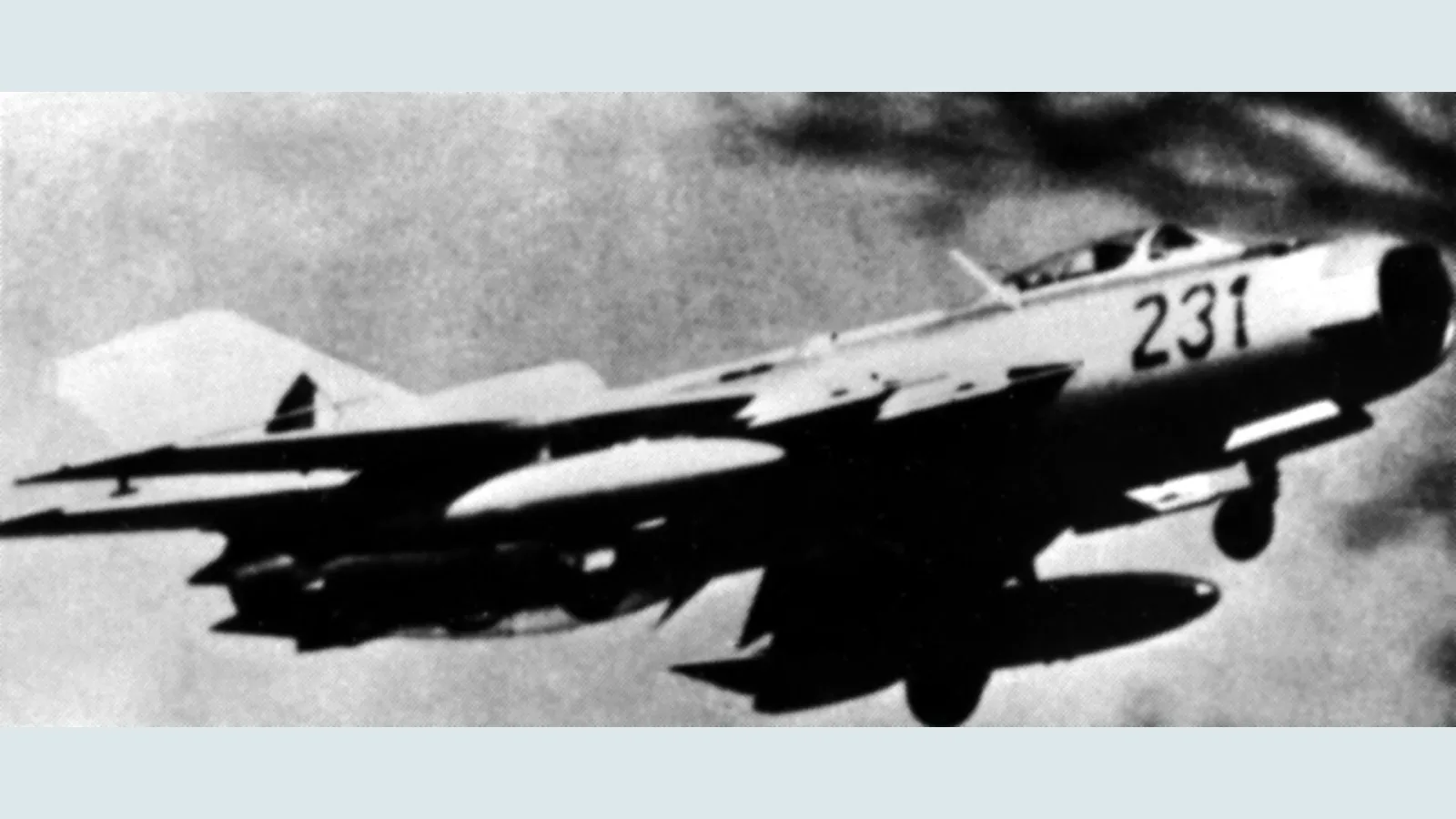
The MiG-19 was the first Soviet production fighter designed for supersonic flight in level conditions.
Development
History
The MiG-19 was the first Soviet production fighter designed for supersonic flight in level conditions. Development took place in the early 1950s, when demands for speed and altitude were growing faster than the capabilities of earlier aircraft. Experimental members of the programme flew from 1952, and the pre-production SM-9 made its first flight in January 1954. Production MiG-19s entered units in the middle of the decade. The type marked a transition from the transonic MiG-17 toward a faster generation of combat aircraft.
The fighter used two engines, a swept wing, and cannon armament. Twin engines supplied the needed thrust but increased fuel use and maintenance work. Early versions were mainly intended for daylight combat, whereas MiG-19P and MiG-19PM interceptors received equipment for finding targets and different weapon arrangements. These distinctions matter: not every variant carried the same weapons or had the same ability to operate at night and in cloud.
High speed did not remove operational constraints. Supersonic flight brought new demands in handling, navigation, and pilot preparation, while fuel capacity limited time available near the target. Ground crews had to learn new engines and systems. In Soviet air defence, the MiG-19 served when interception relied on radar posts, command centres, and alert crews working together. The aircraft formed part of that network rather than solving the entire defensive problem on its own.
MiG-19s were exported and built under licence. Chinese members of the family became known as the J-6, while local versions were produced in Czechoslovakia. Aircraft took part in regional conflicts, but equipment and operating circumstances varied widely among users. Details about one country or series cannot safely describe every MiG-19. Several air forces kept the type after newer fighters appeared because replacing a fleet also required money, training, and infrastructure.
The MiG-19 occupies a distinct place between early jets and mass-produced supersonic aircraft such as the MiG-21. It showed that flying beyond the speed of sound had to be combined with adequate range, manageable controls, and an effective weapons system. Its history is an example of engineering compromise: a gain in speed came with more demanding operation and a search for new ways to employ the aircraft in regular units.