
Fighter aircraft / МиГ-21
Mikoyan-Gurevich MiG-21
The MiG-21 was conceived as a light, fast fighter at a time when air forces expected brief interceptions and rapid approaches to a target.
Development
History
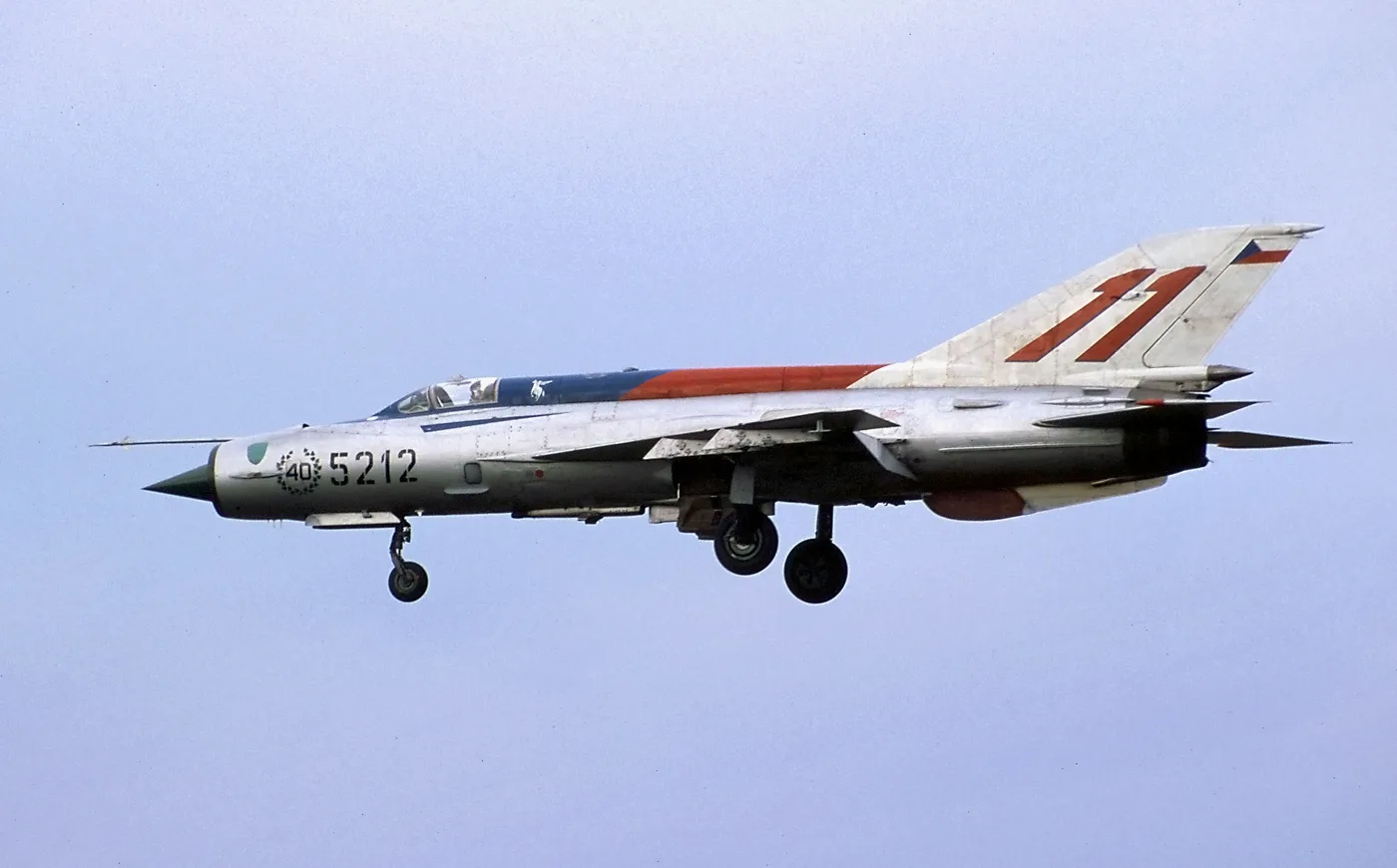
The MiG-21 was conceived as a light, fast fighter at a time when air forces expected brief interceptions and rapid approaches to a target. Experimental designs with different wing shapes flew during the mid-1950s; the delta-wing solution established the familiar appearance of production aircraft. Early versions entered service around the turn of the decade. A nose intake, thin wing, and relatively small airframe helped deliver high speed, but also limited internal fuel and space for equipment.
The MiG-21 family changed throughout a long production life. The early MiG-21F-13 was a comparatively simple day fighter. Later models gained radar, different engines, additional weapons, reconnaissance equipment, and two-seat training capability. The MiG-21bis represented a later stage, while some countries continued updating their fleets after that. Published figures for range, sensors, or missiles must therefore be tied to a particular version rather than applied to every MiG-21.
The type was exported far beyond the Soviet Union. It served in Europe, Asia, Africa, and the Middle East, with licensed manufacture in India and elsewhere. China's J-7 grew from the design but followed its own development path. Widespread use reflected more than speed: a compact aircraft could be integrated into large air-defence and tactical aviation systems. Successful service still required trained crews, suitable bases, repair capacity, and dependable spare-parts supply.
In Vietnam, MiG-21s fought American fighters while operating with guidance from the ground. Members of the family also appeared in Arab-Israeli conflicts and wars in South Asia. Results varied considerably. Limited fuel, cockpit visibility, and the capability of early electronics could restrict a pilot, while speed and small size offered advantages when tactics suited the aircraft. Comparisons with an opponent become misleading when they ignore the specific variant and circumstances of an engagement.
The MiG-21's long career made it a symbol of twentieth-century supersonic aviation. It was not a fixed design but a platform repeatedly adapted for new missiles, instruments, and missions. Its history shows both the strength and the limits of a mass-produced, relatively simple solution. Modernisation can extend useful service, but cannot entirely remove constraints set by the original aircraft's dimensions, range, and layout.