
Fighter aircraft / МиГ-35
Mikoyan MiG-35
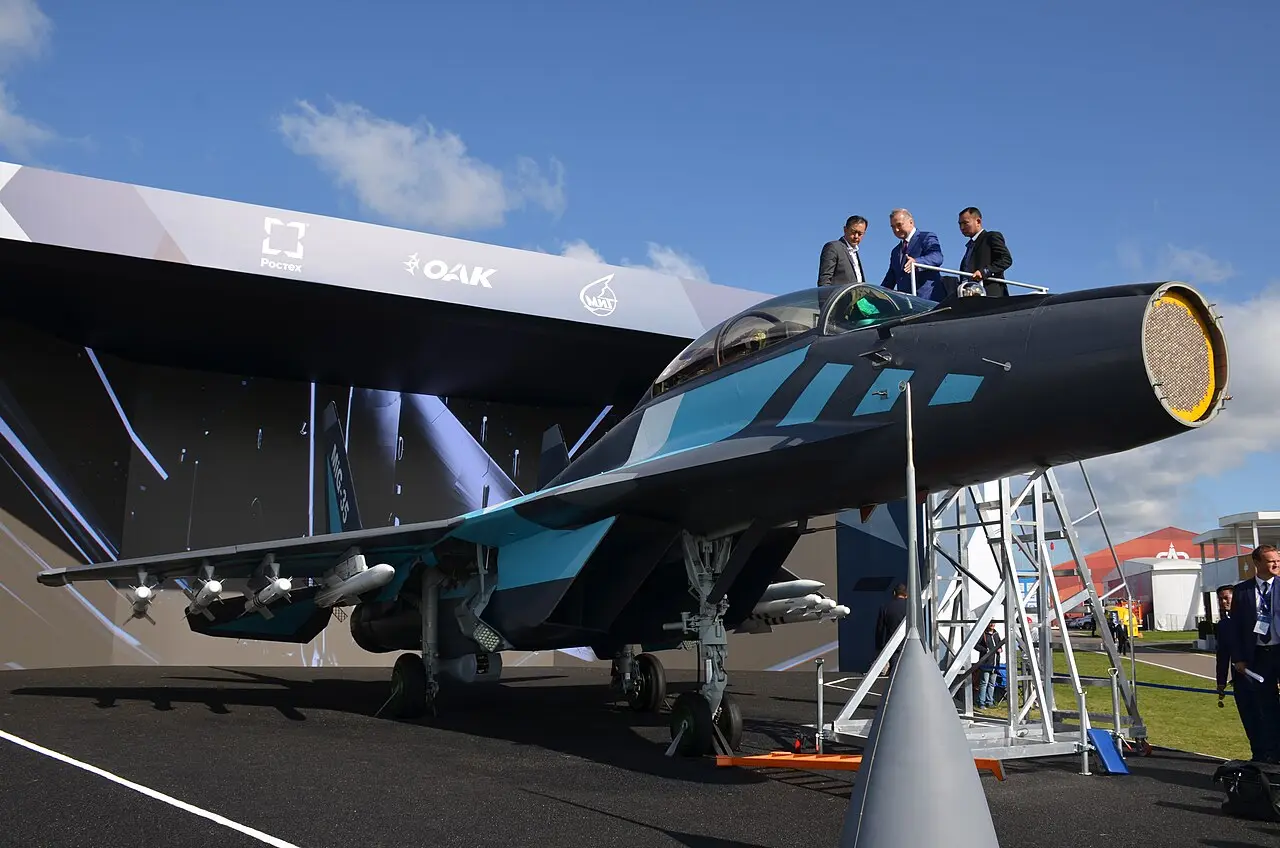
The MiG-35 is a development of the MiG-29 family intended to cover a wider range of combat missions.
Development
History
The MiG-35 is a development of the MiG-29 family intended to cover a wider range of combat missions. It draws on solutions tested in the MiG-29M and carrier-based MiG-29K, but has its own development programme and equipment. Aircraft using the MiG-35 designation underwent flight testing during the 2010s, with a new prototype flying in late 2016. Its history needs to be kept distinct from that of the original MiG-29, which appeared decades earlier.
The designers sought greater practical versatility. The fighter is intended to use missiles against airborne targets and guided weapons against surface targets. Changes involve sensors, cockpit displays, communications, and maintenance features. Demonstration and production configurations may differ in radar and other equipment. Consequently, a performance claim associated with one prototype should not automatically be assigned to every MiG-35.
The twin-engine arrangement retains a clear link with the MiG-29. For an operator, thrust and manoeuvrability are only part of the picture: fuel capacity, range, access to information, and dependable ground support also matter. A modernised cockpit helps a crew manage different mission types, but results still depend on pilot training and available communications. Carrying a particular missile or targeting pod also requires the relevant equipment, testing, and supply arrangements within an actual unit.
The MiG-35 was developed partly as an export offering. In that setting it has been compared with foreign fighters and upgraded MiG-29s. Such comparisons need to include more than the purchase price: spare parts, engine repair, instruction, weapons, and service life all shape the cost of operating a fleet. Public procurement plans have changed over time, so fleet totals and order status should be checked for a specific date rather than treated as fixed features of the design.
The MiG-35's significance lies in an effort to extend and reinterpret a platform created for late-Cold-War requirements. It illustrates how new instruments and weapons can broaden the tasks of a familiar airframe, but also how difficult it is to move from a test aircraft to a large, sustained operational fleet. A sound assessment rests on a verified configuration and real support arrangements, not a generation label or an impressive display flight.