
Fighter aircraft / F-86
North American F-86 Sabre
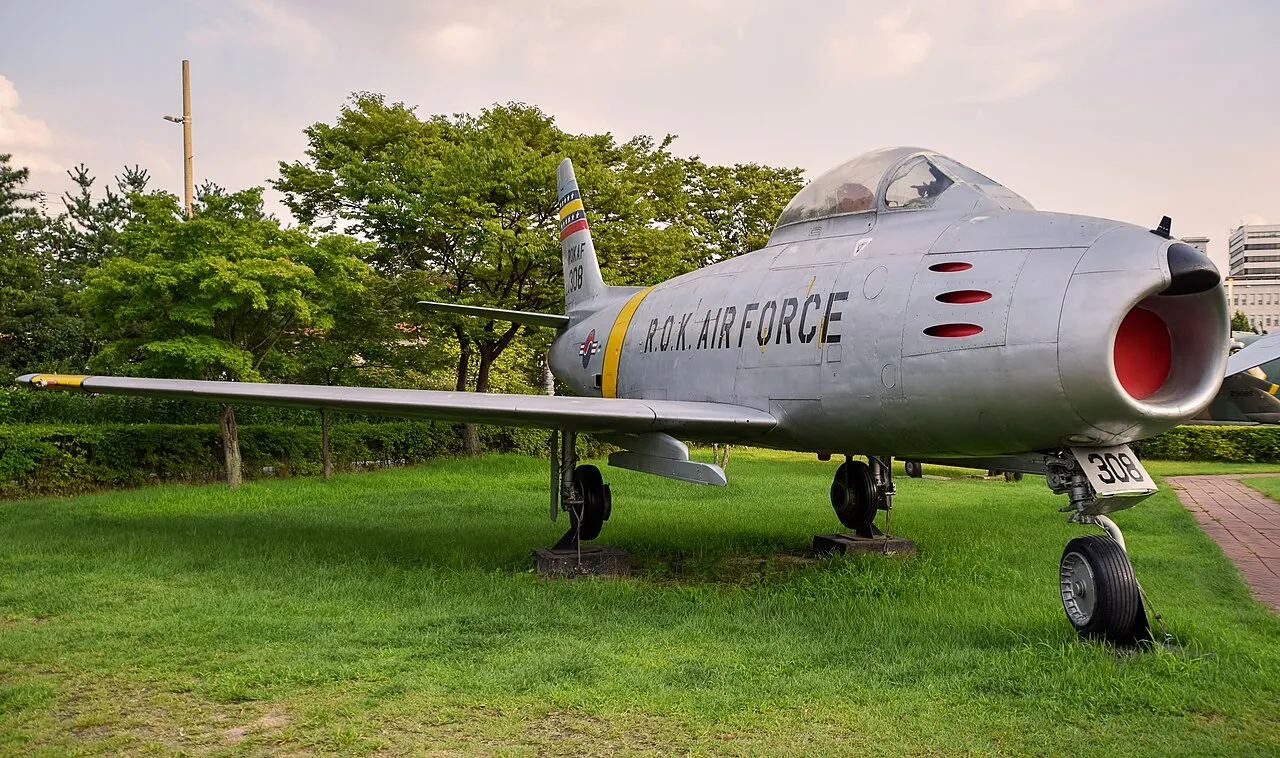
North American's F-86 Sabre became one of the first American jet fighters with a swept wing to be built in large numbers.
Development
History
North American's F-86 Sabre became one of the first American jet fighters with a swept wing to be built in large numbers. The prototype flew in October 1947, while designers and air forces were still learning how to operate near new speed and altitude limits. Wing sweep helped reduce drag as the aircraft approached the sound barrier. The Sabre looked unlike wartime piston fighters, but a pilot's fundamental task remained familiar: find an opponent, gain position, and use weapons during a brief attack opportunity.
The F-86A and later day-fighter versions used a single jet engine and machine-gun armament. Wings, controls, sights, and engines changed as development continued. Not every aircraft called a Sabre was technically the same: the all-weather F-86D had a different nose and weapon system, while the later F-86H was better suited to strike work. Specifications and combat experience therefore need to be tied to a particular variant rather than assigned indiscriminately to the whole family.
During the Korean War, the F-86 became the main American opponent of the MiG-15. The Soviet-designed fighter threatened bombers and escorts, prompting a rapid deployment of Sabre units. Many engagements took place at high altitude in an area known as MiG Alley. The two aircraft had different advantages in climbing, diving, visibility, and armament. Outcomes also depended on pilot experience, ground communication, fuel state, and tactical position; neither design alone determined every encounter.
The Sabre's career extended beyond Korea. Many countries built or operated versions, including locally produced aircraft and adaptations. For allied air forces, it provided a transition from early straight-wing jets toward more advanced supersonic fighters. The size of the fleet also required training systems, spare-parts supply, and continuing upgrades. Climatic conditions, available infrastructure, and operational priorities varied among the nations using the type, producing different service histories.
The importance of the F-86 cannot be reduced to disputed counts of aerial victories. It demonstrated the value of a swept-wing jet fighter in a major conflict and helped shape tactics for later air combat. Faster aircraft eventually replaced it in frontline squadrons, but the Sabre remained useful where its capabilities still met local needs. Its long career reflects a balance of technology, reliability, and adaptability across several generations of operators.