
Fighter aircraft / Tornado ADV
Panavia Tornado ADV
Panavia Tornado ADV was a long-range interceptor developed for British air defence.
Development
History
The Panavia Tornado ADV was developed as a long-range interceptor for the Royal Air Force. It grew from the multinational Tornado programme, but its intended missions differed considerably from those of the strike aircraft. British planners wanted a fighter able to patrol for extended periods and detect approaching aircraft at considerable distance. The first ADV prototype flew on 27 October 1979. Development then moved through the interim F2 to the better-known production F3.
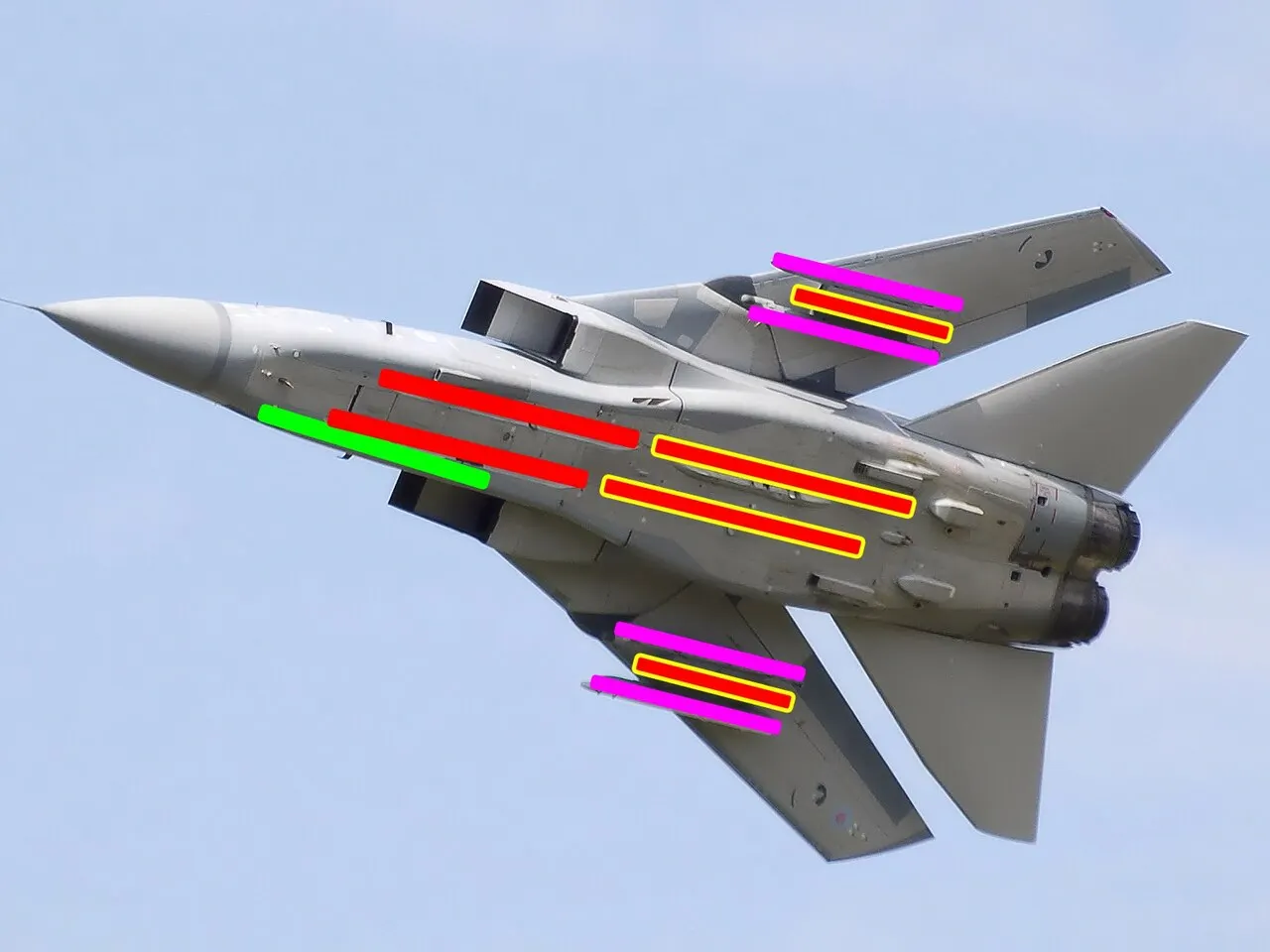
The aircraft retained two engines, a two-person crew, and variable-sweep wings. Its forward fuselage was redesigned around the Foxhunter radar, while additional fuselage length provided space for air-to-air missiles carried beneath the aircraft. The arrangement combined endurance with the ability to reach a target quickly. Nevertheless, the ADV should not be described as a strike Tornado carrying different missiles. Its systems and mission required separate flight testing, crew preparation, maintenance, and tactics.
Early service was complicated by delays in the radar programme. The first F2s did not possess all the abilities later associated with the F3. Instruments, engines, and weapons changed as the design matured. Air defence remained the main task, including interception at night and in poor weather. Practical effectiveness depended on more than the radar's nominal reach: ground surveillance, communications, alert bases, and coordinated control all formed part of the interception system.
The ADV served primarily with Britain and was also acquired by Saudi Arabia. Italy used aircraft of the type as an interim air-defence solution. British F3s received upgrades during their service life, making it misleading to give every aircraft the same equipment list. Eurofighter Typhoon gradually replaced the F3 in RAF fighter units. Other strike variants of the Tornado had a separate operational history and should not be confused with the interceptor merely because they shared the family name.
The ADV illustrates how an existing aircraft platform can be adapted to a particular national requirement. Its central purpose was long-range interception within a wider defence network, rather than equal suitability for every form of fighter combat. Any fair assessment needs to separate the original design objective, difficulties encountered during early development, and the capabilities of later upgrades. That distinction matters especially when discussing F2 and F3 aircraft together under the broad Tornado name.