
Fighter aircraft / J-15
Shenyang J-15
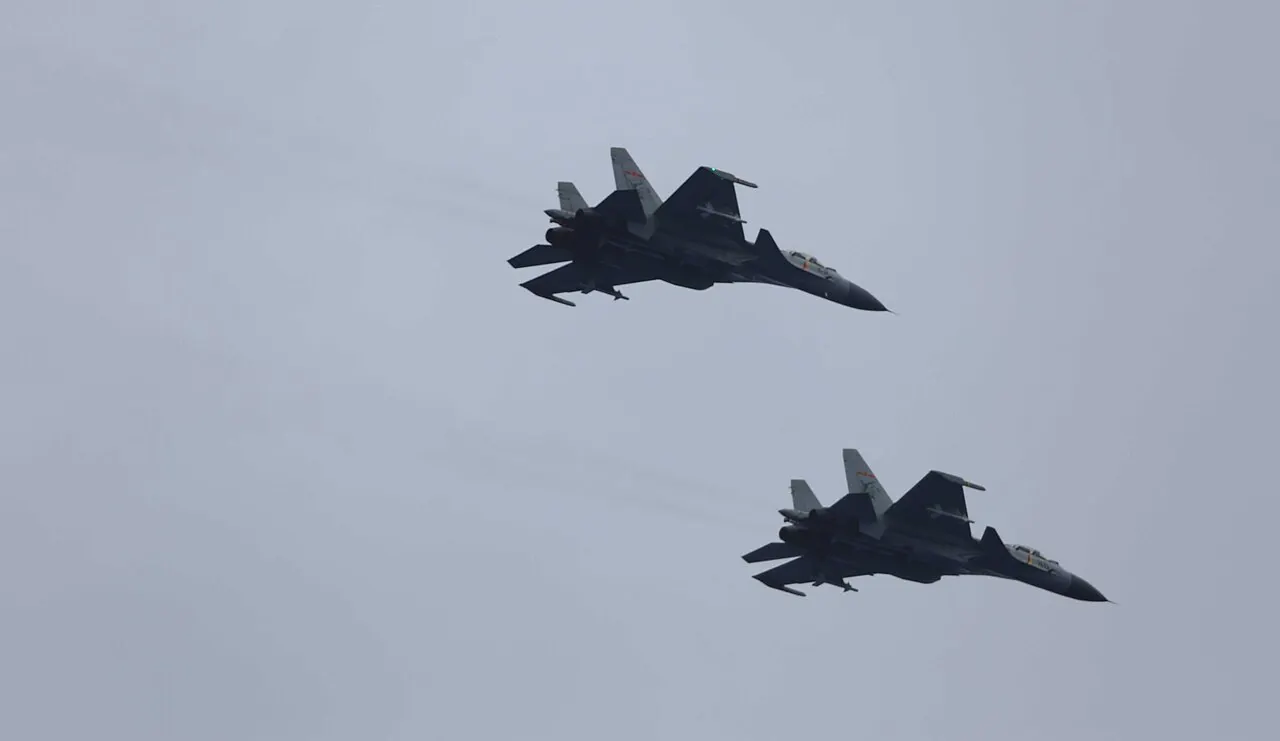
The Shenyang J-15 is a carrier-based fighter of Chinese naval aviation. It first flew in 2009; trials aboard Liaoning followed later.
Development
History
The Shenyang J-15 is a carrier-based fighter operated by China's naval aviation. It emerged as the country prepared its first aircraft carriers and learned to conduct flights from a ship at sea. The aircraft belongs to the large twin-engine lineage associated with the Su-27, but carrier operations required structural changes and a different training system. The J-15 first flew in 2009. That milestone marks aircraft testing, not the beginning of fully established carrier service.
A carrier fighter must withstand loads that differ from ordinary land-based operations. Shipboard use calls for strengthened landing gear, an arresting hook, folding wing sections, and equipment compatible with the ship's landing system. Aircraft on China's early carriers took off from a ski-jump rather than a catapult. The launch method affects permissible takeoff weight under specific conditions. A comparison of weapons load without considering wind, fuel, temperature, and launch method is therefore incomplete.
In November 2012, a J-15 made test takeoffs and landings aboard Liaoning. This was a separate milestone after the prototype's first flight. Pilots and deck crews had to master the precise approach, arresting gear, aircraft movement on a crowded flight deck, and emergency procedures. Naval aviation is a system of ships, pilots, maintainers, controllers, and backup plans, rather than one aircraft type alone. Every part of that system affects the regularity and safety of flight operations.
After the initial trials, J-15s supported aircrew training and the formation of a carrier fighter force. Reports later described a developing family, including versions intended for catapult launch and specialized electronic-warfare aircraft. Those designations should not be conflated with the early ski-jump J-15s. Both equipment and operating conditions change. Public images of new variants do not always establish their complete systems fit or their readiness for widespread service.
The J-15 can provide air cover for a naval group and perform other missions within the capabilities of its particular version. A carrier aircraft works in restricted space, faces a marine environment, and depends on the ship's operational schedule. Published flight performance figures do not capture all of these constraints. Effective employment also depends on trained personnel, maintenance at sea, and coordination with other fleet assets.
The J-15 matters as the first widely documented Chinese carrier fighter with which the navy progressed from experimental landings toward a regular embarked air wing. Its history shows the difference between producing a flying prototype and learning to sustain aircraft operations at sea. A reliable account distinguishes early and later variants, identifies documented testing milestones, and avoids treating undisclosed details of armament or combat effectiveness as verified facts.