
Fighter aircraft / Су-15
Sukhoi Su-15
The Su-15 was developed by the Sukhoi bureau as a Soviet interceptor in the early 1960s.
Development
History
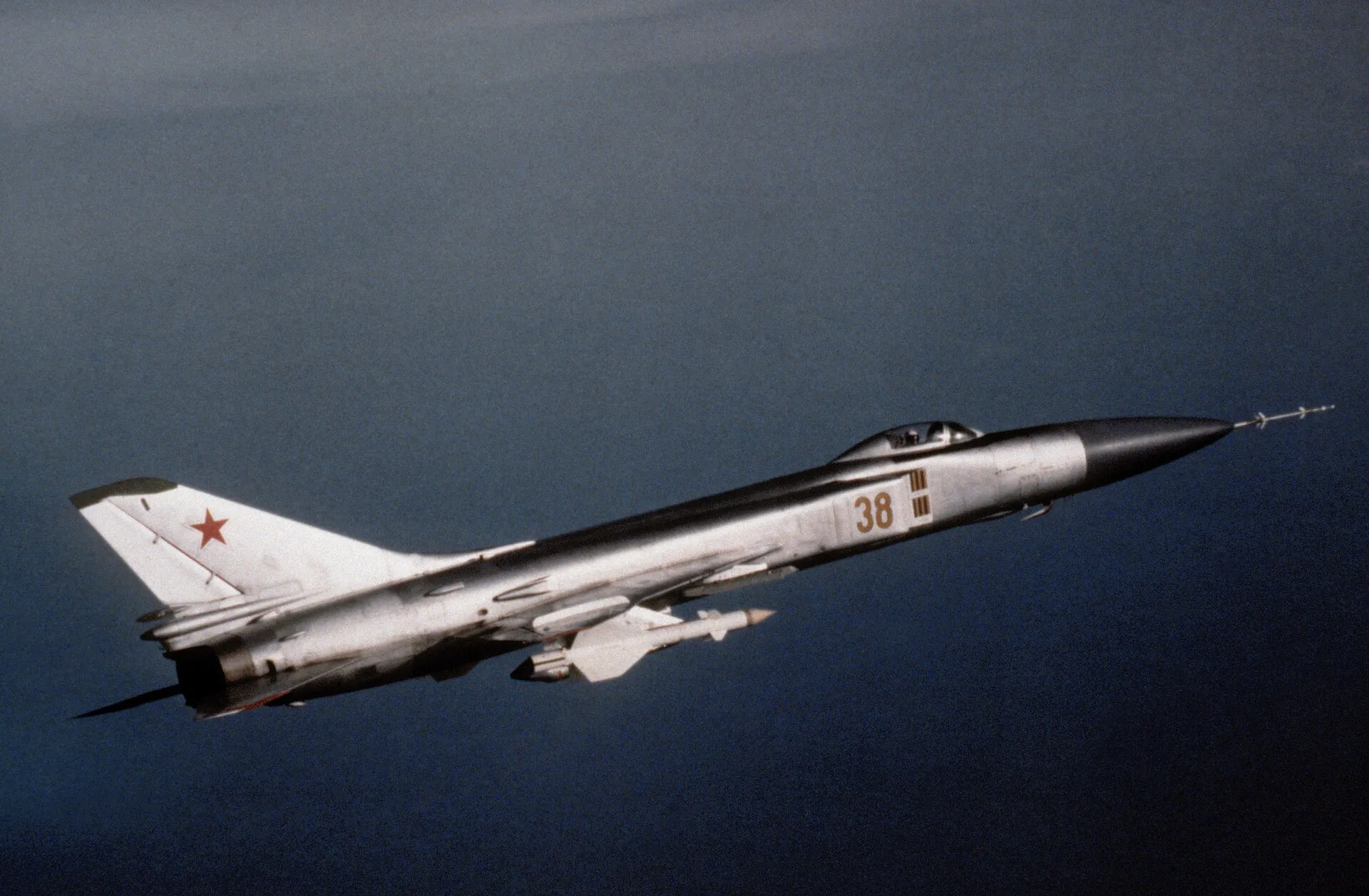
The Su-15 was developed by the Sukhoi bureau as a Soviet interceptor in the early 1960s. Its purpose was to defend airspace against high-altitude targets while operating under guidance from the ground. The T-58 prototype first flew on 30 May 1962, followed by further refinement before air-defence units received the aircraft. It replaced earlier interceptors that were struggling with new demands for speed, altitude, and operation in difficult weather. This Su-15 should not be confused with an unrelated experimental Sukhoi aircraft of the same designation from 1949.
Two engines and the delta wing of early models supported fast flight and rapid climbing. The wing shape was later modified, while equipment was updated. Onboard radar, missiles, and instructions from ground control formed a combined interception system. The aircraft had to reach the right area, find the target, and use its weapons within a limited window. Capability depended on the radar and missiles of the particular version, so different Su-15 production series did not have identical performance.
The Su-15TM became the best-known later variant, gaining a revised nose and improved instruments. Two-seat trainers were also produced to help crews learn the demanding aircraft. Service required constant readiness: alert pilots, working engines, communication with control stations, and rehearsed launch procedures. Speed was useful only when detection and trained personnel were available. The aircraft's mission remained narrow compared with the multirole fighters that came later.
The Su-15 formed part of Soviet air defence for many years. Its history is chiefly one of alert duty and interceptions rather than extensive attacks on ground targets. A few famous incidents involving airspace violations should not stand for the whole service record: ordinary sorties included training, escorting, and readiness checks. Understanding the aircraft's place requires attention to air-defence procedures and the technical constraints of its period.
The type was gradually withdrawn during the 1990s as newer aircraft and systems took over. It remains a clear example of a specialised Cold War interceptor. Its structure, weapons, and operating methods were organised around a principal task: reaching an airborne target in a defined area as quickly as possible. The aircraft's story is therefore inseparable from ground radar, command posts, and the system of continuous alert that supported it.