
Fighter aircraft / Су-27
Sukhoi Su-27
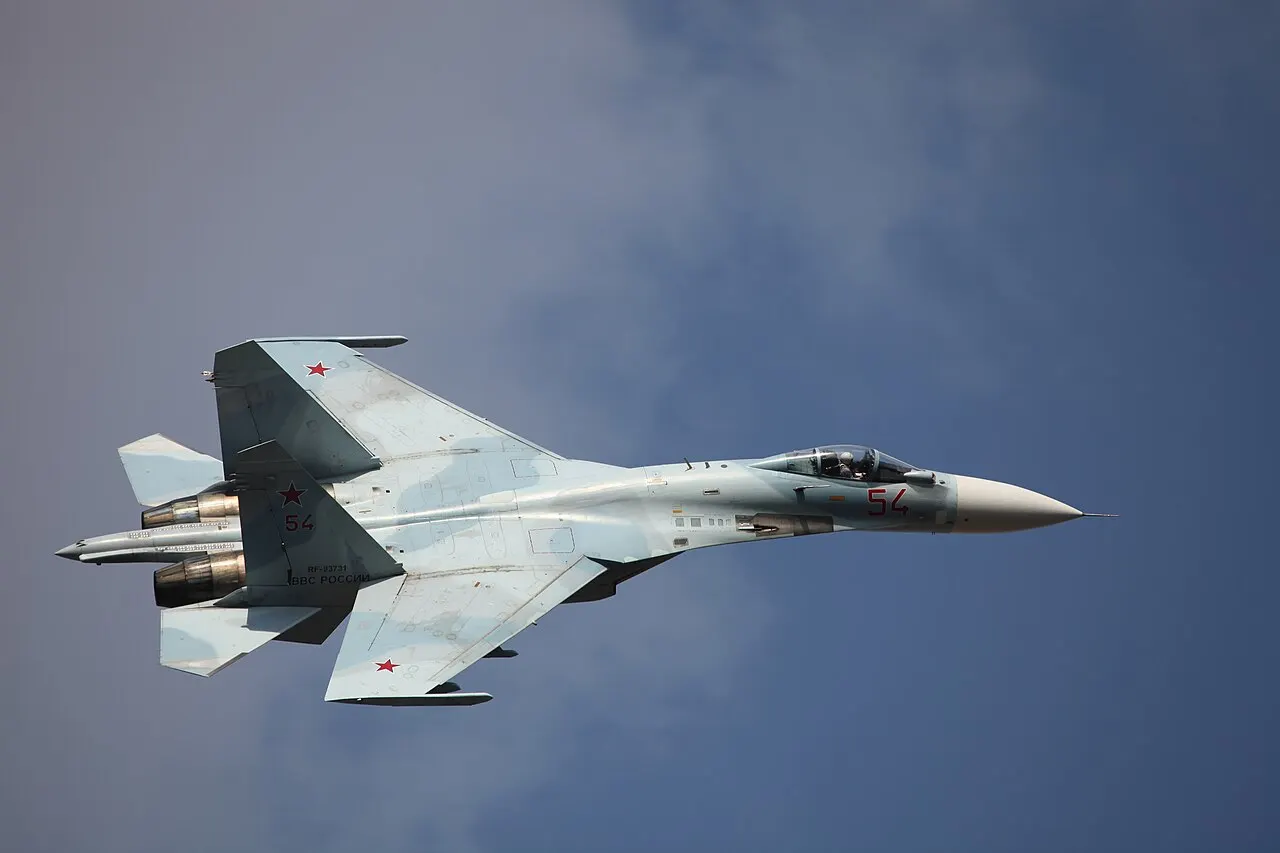
The Su-27 was developed in the Soviet Union as a heavy fighter for air superiority.
Development
History
The Su-27 was developed in the Soviet Union as a heavy fighter for air superiority. Its programme ran alongside the lighter MiG-29, because the two aircraft were intended for different ranges and assignments. The first T-10 prototype flew on 20 May 1977. Testing showed that the original arrangement did not fully meet requirements, and the design underwent major revision. The production Su-27 should therefore not be treated as a simple copy of that early prototype, although the relationship is clear.
Two engines, a large wing, and an integrated airframe gave the aircraft the range and manoeuvrability required for long flights and air combat. Its control system helped pilots use the aerodynamic possibilities of the design. Radar, electro-optical equipment, and several classes of missiles formed the core of its combat equipment. Display manoeuvres made the Su-27 widely known, but operational effectiveness also rests on target detection, communications, pilot preparation, and aircraft condition.
Production Su-27s began reaching Soviet units in the mid-1980s. They served in fighter aviation and air-defence formations. Long range mattered for patrolling extensive areas, but the large aircraft required suitable bases and technical support. The two-seat Su-27UB supported pilot training and retained many combat capabilities. Differences between trainer and single-seat versions need attention when describing equipment and mission roles.
After the Soviet Union dissolved, aircraft remained with several successor states, while export versions reached other countries. The Su-30, Su-33, Su-34, and Su-35 developed from the Su-27 foundation for different combinations of missions. They should not all be described as identical versions of the original fighter: carrier use, strike work, and new systems demanded substantial changes. China's J-11 is also related to the family but has its own production and development history.
The Su-27 became the foundation of a large aircraft line that remained important after the Cold War. Its original long-range air-superiority mission explains its size and layout. Later models demonstrate the growth potential of such a platform, while reinforcing the need to examine each version individually. The Su-27 story also shows how flight-test results can force a deep redesign of a promising project before it enters widespread service.