
Military helicopters / SA 319
Aérospatiale Alouette III
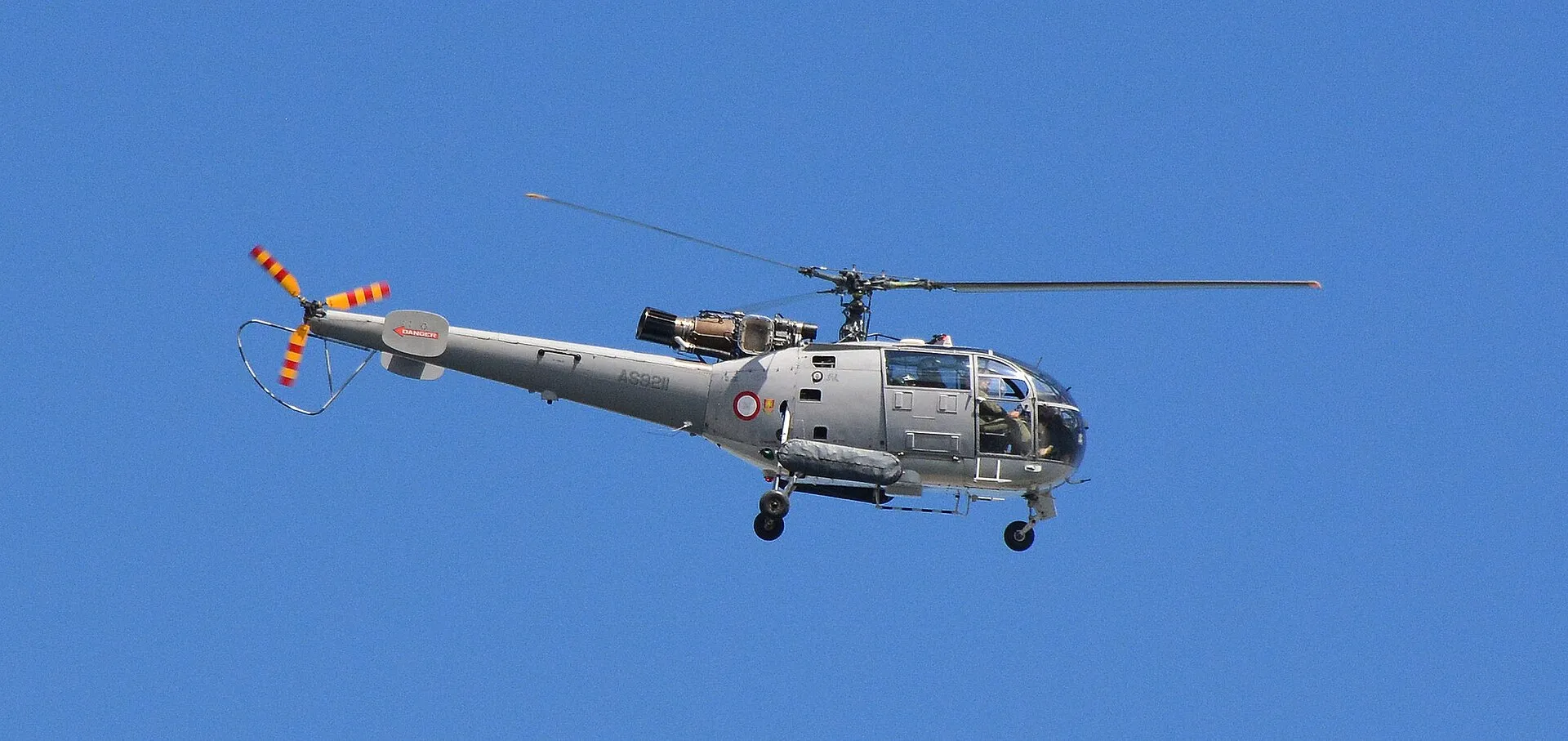
The Alouette III is a French light turbine helicopter used widely for liaison, rescue, and military support duties.
Development
History
The Alouette III is a light French helicopter developed by Sud Aviation for a broad range of civil and government tasks. Military users valued its ability to operate from small sites, carry specialists, and perform observation or rescue work. The basic design dates from the late 1950s, but a long career produced many variants and national differences. Its general history should not be turned into one unchanging specification for every aircraft built.
The SA 3160 prototype first flew on 28 February 1959. Airbus also describes high-altitude trials in the mountains, where the helicopter demonstrated takeoff and landing capability in difficult terrain. In 1960 a crew landed on Mont Blanc with six people on board. That episode demonstrates a particular achievement, not a guarantee that every Alouette III could always carry the same load in all weather and altitude conditions.
Rescue services benefited from good cockpit visibility, the ability to hover near inaccessible places, and relatively compact dimensions. Military units could use the helicopter for liaison, small cargo movements, medical evacuation, and observation. Some versions carried weapons, but that does not make the entire family attack helicopters. The work of a particular aircraft depended on installed systems, crew preparation, and its operating environment.
French naval aviation kept Alouette III in service for an especially long time. Airbus records that its last aircraft were withdrawn at the end of 2022 after roughly six decades of use. The maritime environment placed its own demands on maintenance, landing, and crew training. A naval helicopter should be distinguished from a mountain-rescue or civilian example of the same family.
Alouette III was built and used in several countries. Its international reach reflected a design that was straightforward for its time and adaptable to useful tasks. Licensed or nationally equipped aircraft, however, can differ in engines, instruments, and practical roles. An unidentified operator's photograph cannot prove that a specific weapons or shipboard package was fitted.
The helicopter's history illustrates the development of light rotorcraft as tools for reaching difficult places. Its significance rests not only on exceptional mountain demonstrations but also on decades of ordinary work by crews. A precise profile identifies the variant, country, and role. Then information about range, useful load, and equipment can be tied to an actual aircraft instead of an imagined all-purpose version of the family.