
Military helicopters / H225M
Airbus H225M Caracal
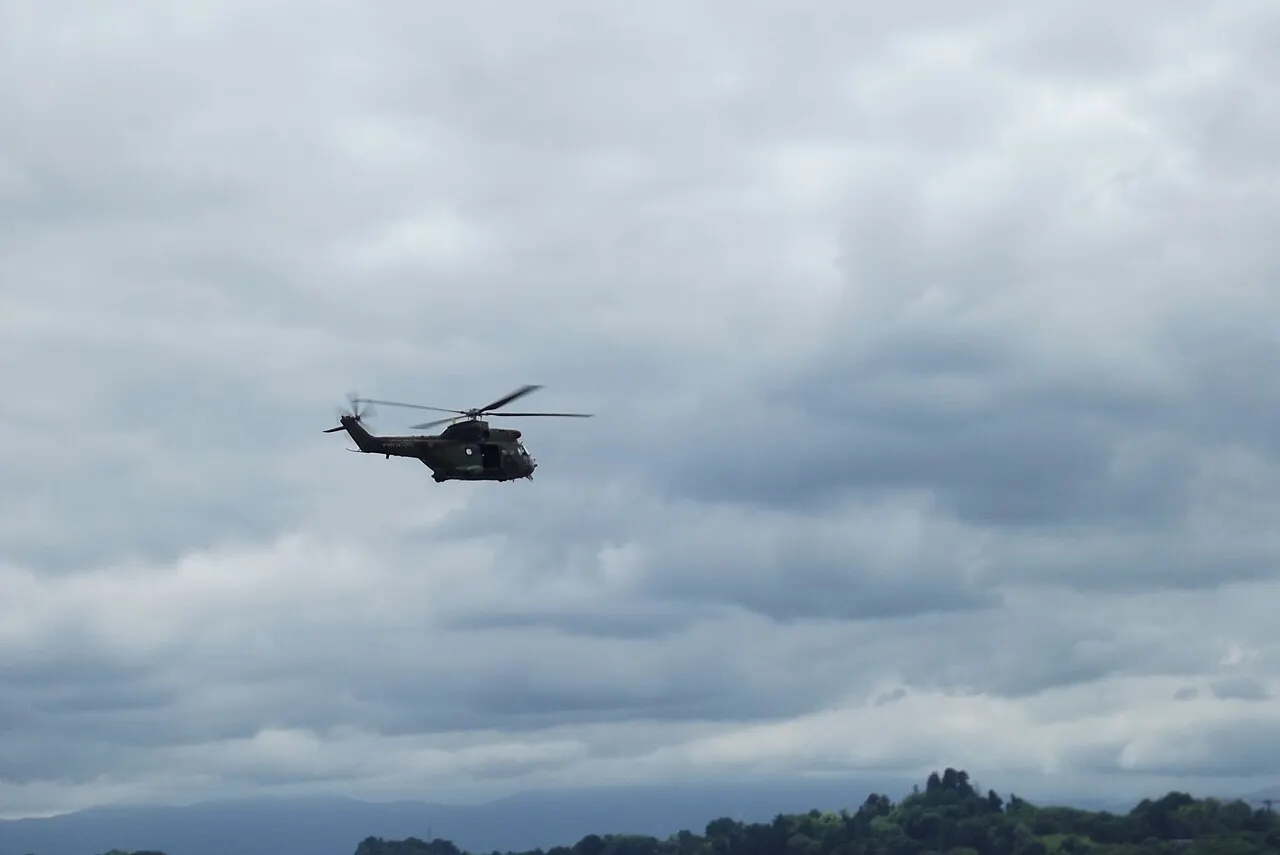
The H225M Caracal is a heavy Airbus multirole helicopter for tactical transport, combat search and rescue, and special operations.
Development
History
The H225M Caracal is a military member of Airbus Helicopters' family of heavy twin-engine rotorcraft. It was designed for missions requiring a useful combination of range, cabin space, and operation away from a conventional airfield. The name Caracal is often associated with aircraft in French military service, but other customers can choose different equipment. A profile should therefore separate the platform's potential from the fit carried by a particular country at a particular time.
Airbus lists tactical transport, medical evacuation, combat search and rescue, and special-operations support among the H225M's principal roles. Each mission demands a different plan. A transport flight emphasizes load and safe landing; a rescue mission emphasizes search, communication, and retrieving people from a difficult area. A spacious cabin permits varied tasks, but not every set of mission equipment can be installed and used at the same time.
Caracal has served French forces since the mid-2000s. Later deliveries incorporated updated observation and navigation systems. Airbus names Euroflir 410 and the Sigma inertial navigation system for newer French helicopters. That does not prove every early H225M carried those instruments. Upgrades occur in stages, while readiness for a particular mission depends on crew skills and technical support as well as the aircraft itself.
The helicopter can operate over land and in a maritime environment. Moving personnel, resupplying remote units, and evacuating casualties create different demands on fuel, cabin space, and route planning. Special operations additionally require communications, careful approach planning, and coordination with people on the ground. Published performance data should be read with their conditions in mind: fuel and external equipment alter the available payload.
International customers took the H225M story beyond France. Buyers select configurations for their own missions and may use different service names. A common airframe does not guarantee identical sensors, weapons, or protection standards. A photograph of one national aircraft should not be used to illustrate another version without checking its markings and external equipment.
The H225M shows how a heavy transport platform can become a multirole military tool. Its value lies in delivering people and equipment where ground access is difficult and in supporting rescues under demanding conditions. An accurate article identifies the operator and configuration before explaining which missions are actually supported by that version. This distinction is more useful than presenting every possible option as standard equipment on every Caracal.