
Military helicopters / Z-10
Changhe Z-10
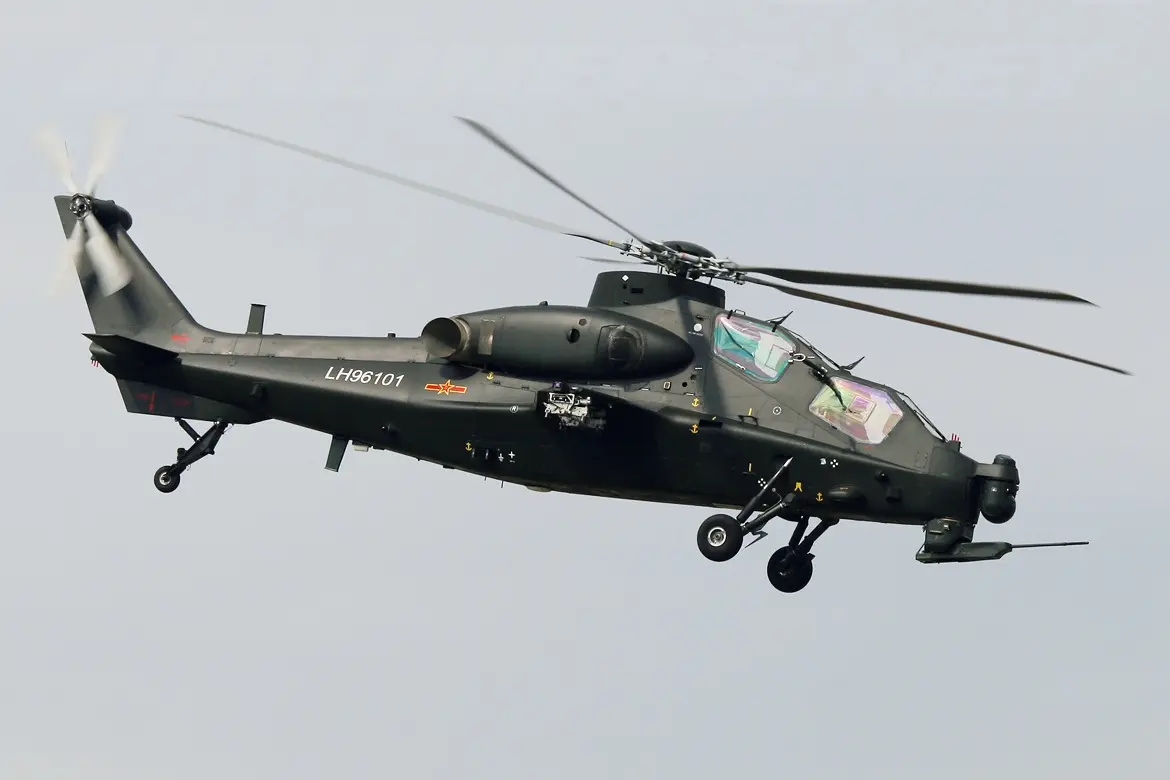
The Changhe Z-10 is a Chinese twin-engine attack helicopter designed specifically to support ground forces.
Development
History
The Changhe Z-10 is a Chinese twin-engine helicopter designed primarily as a specialized combat aircraft. Unlike the light multirole Z-9, its narrow fuselage and tandem crew stations are arranged for observation and weapons employment. Production is associated with Changhe, and the program became an important step in China's development of domestic attack helicopters. Demonstration aircraft and later export versions can differ from early service standards.
The central task of an attack helicopter is to support land units as circumstances change. Its crew must find and correctly identify objects, share information with other participants, and then use an appropriate response. Communications, visibility, and cooperation with ground forces matter. Any account of armament should be tied to a particular version: possible external stores are not a compulsory load on every sortie.
China's Ministry of National Defense calls Z-10 the country's first domestically developed dedicated attack helicopter. Official material shows the type in army aviation training, including flights at very low altitude. Such exercises prepare crews for demanding conditions. A published training photograph does not, however, reveal every protection system, sensor performance figure, or measure of combat effectiveness.
Combat helicopter design involves balancing fuel, protection, weapons, and maneuverability. Extra equipment weight can affect range and behavior at altitude. Crew workload also depends on instrument quality and coordination with nearby units. One advertised maximum speed or range therefore does not explain how useful Z-10 will be for a particular mission under particular conditions.
Z-10 is often compared with China's Z-19. They can complement one another but began with different priorities: Z-19 belongs to a light reconnaissance and attack line, while Z-10 is a more specialized attack design. Their difference should not be reduced to physical size alone. Sensors and weapons can change between domestic and export standards, and the features of a later upgrade should not be assigned to early aircraft.
The Z-10 matters to this catalog because it represents a dedicated Chinese combat-helicopter program. Readers benefit from separating its confirmed army-aviation role from uncertain claims about undisclosed capabilities. A useful article identifies the period, variant, and basis for each claim. That approach gives a clearer history than a list of promotional specifications without operational context.