
Military helicopters / Z-5
Harbin Z-5
The Harbin Z-5 is a Chinese version of the Soviet piston-powered Mi-4 and an early milestone in local helicopter production.
Development
History
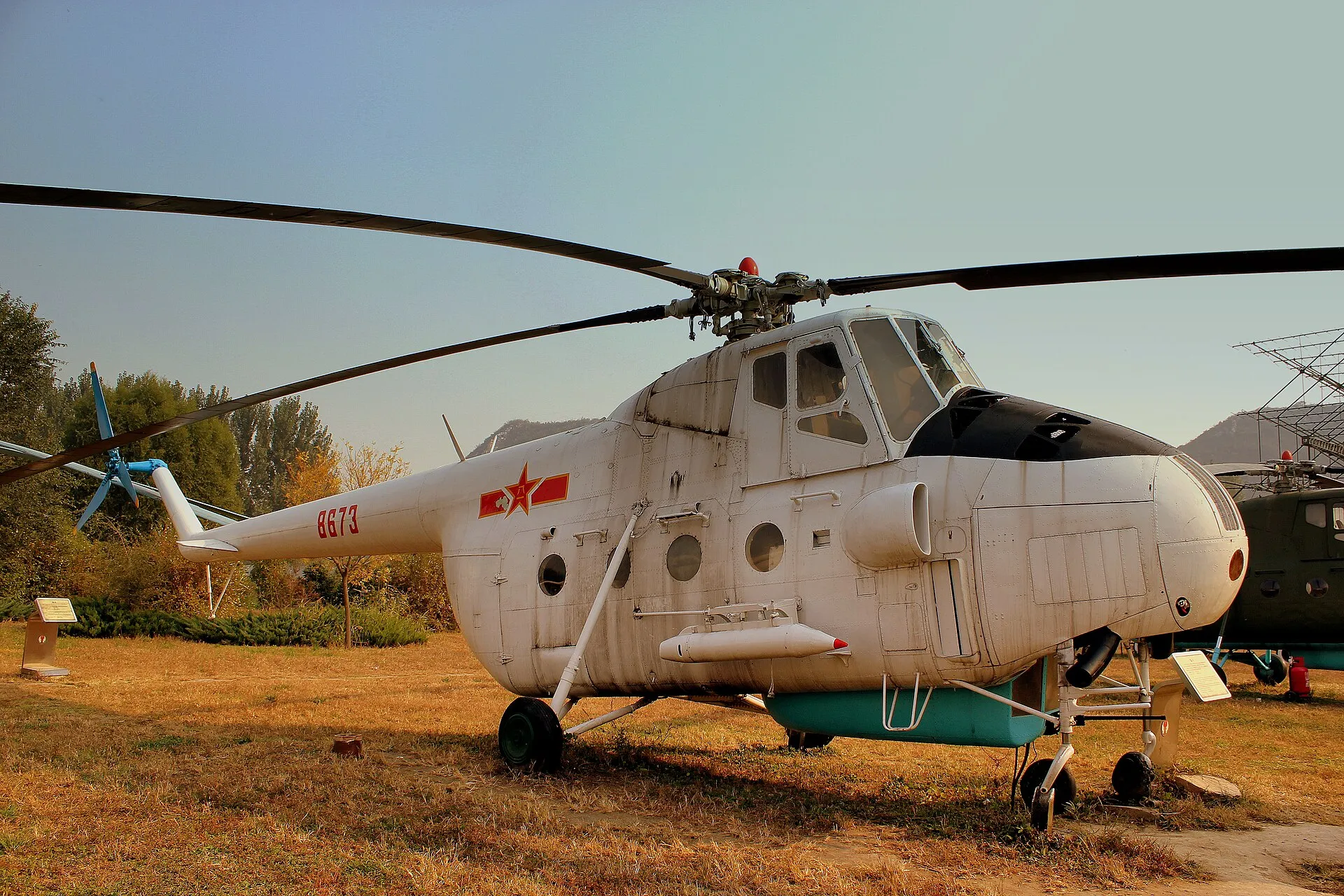
The Harbin Z-5 is a Chinese version of the Soviet Mi-4 produced during the formative period of China's aviation industry. Unlike later turbine-powered machines, it is a piston-engine transport helicopter. Its duties included carrying people and small loads, liaison, and other support flights. The relationship with Mi-4 is central to its design history, but Chinese aircraft have their own production, service, and maintenance story.
According to the Vertical Flight Society, the first Harbin Z-5 flew in December 1958. That date belongs to the Chinese version; the original Soviet Mi-4 had flown earlier. Combining the two program dates would be misleading. Local production required training workers, technicians, and aircrews. Z-5 therefore matters beyond a simple count of aircraft, because it helped build experience for later projects.
In the Mi-4 and Z-5 layout, a large piston engine sits in the forward fuselage, with the useful cabin behind it. This arrangement belongs to its era and differs from later helicopters with engines above the cabin. For a transport mission, crews had to account for load distribution, fuel, and the landing area's capabilities. Published carrying capacity depended on conditions and the particular version.
For military units, the helicopter could deliver people to places where an airplane was difficult to use. It could connect separate sites, supply remote posts, and assist in rescue work. Piston-engine equipment also needed careful maintenance and had limits at altitude, in heat, and under load. Placement in a military catalog is no reason to describe every Z-5 as a dedicated attack helicopter.
China's program drew on a foreign design and preceded newer Z-8, Z-9, and Z-20 families. Their later capabilities should not be applied backward to Z-5. A historical profile explains the technology and operating conditions of the late 1950s rather than comparing types through one modern performance number. Photographs of surviving examples also need checks on markings and identification.
Z-5 represents an early stage of Chinese helicopter manufacturing and shows how an adopted design became a school for production and operations. Its principal significance lies in transport and support work together with the experience it generated. Accuracy requires distinguishing the Soviet Mi-4 from the Chinese Z-5, naming the period, and avoiding the attribution of later upgrades to early aircraft.