
Military helicopters / Z-9
Harbin Z-9
The Harbin Z-9 is a Chinese twin-engine helicopter derived from the French Dauphin and built for utility and military missions.
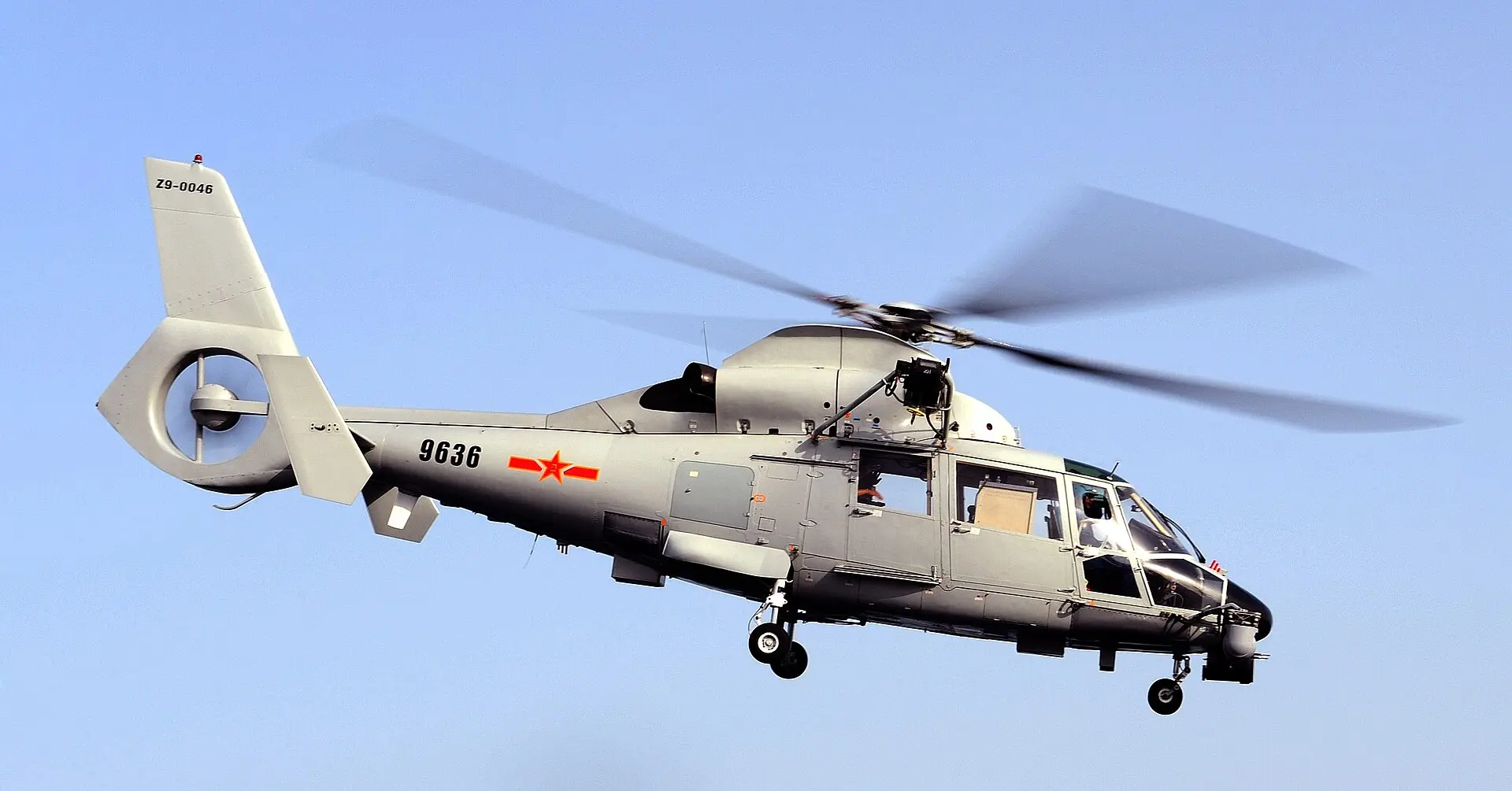
Development
History
The Harbin Z-9 is a Chinese multirole helicopter that grew from licensed production of the French AS365 Dauphin. The Harbin manufacturer mastered assembly and further development for domestic customers. China's civil aviation authority describes Z-9 as a light twin-engine machine derived from the SA-365N. That origin matters, but it does not mean every later Z-9 has exactly the same engines, instruments, and duties as the original French aircraft.
Early production helped establish manufacturing processes and a local support base. National changes and specialized versions followed as the program developed. The helicopter served in passenger movement, liaison, and support duties. Some variants were adapted for maritime work or armed missions. The designation Z-9 without a letter suffix therefore identifies the family, not a precise equipment fit.
For land aviation, a compact medium helicopter is useful for quickly carrying a small group or observer to a temporary site. Crews must consider load, fuel, and landing conditions. During reconnaissance, reliable communication with ground commanders matters as much as simply seeing an object. Weapons carried by certain variants add support options but do not turn all transport-configured aircraft into attack helicopters.
Maritime versions operate in a different environment. Shipboard use needs suitable equipment, protection against salt-water exposure, and training for landing on a small moving deck. Surveillance at sea can extend a ship's reach, while actual operating radius depends on weather, fuel, and the assigned mission. A photograph of a naval Z-9 does not establish the equipment installed on a land-based version.
The link with Dauphin can cause confusion in descriptions of Z-9. The Chinese series acquired its own production and service history. Variants may differ substantially in avionics and weapons while retaining a familiar outline. Similar-looking helicopters should not be compared using one maximum figure drawn from manuals of different years. A sound profile identifies the exact variant and operator.
Z-9 is important in Chinese helicopter industry history as a step from building a foreign design toward developing a national family. It also demonstrates how a general-purpose platform can be adapted for both army and naval work. Explaining those roles and variant differences is more informative than listing every possible weapon as standard on every aircraft ever built.