
Military helicopters / SH-2
Kaman SH-2 Seasprite
The Kaman SH-2 Seasprite is a shipboard helicopter that evolved from a naval utility aircraft into an anti-submarine LAMPS platform.
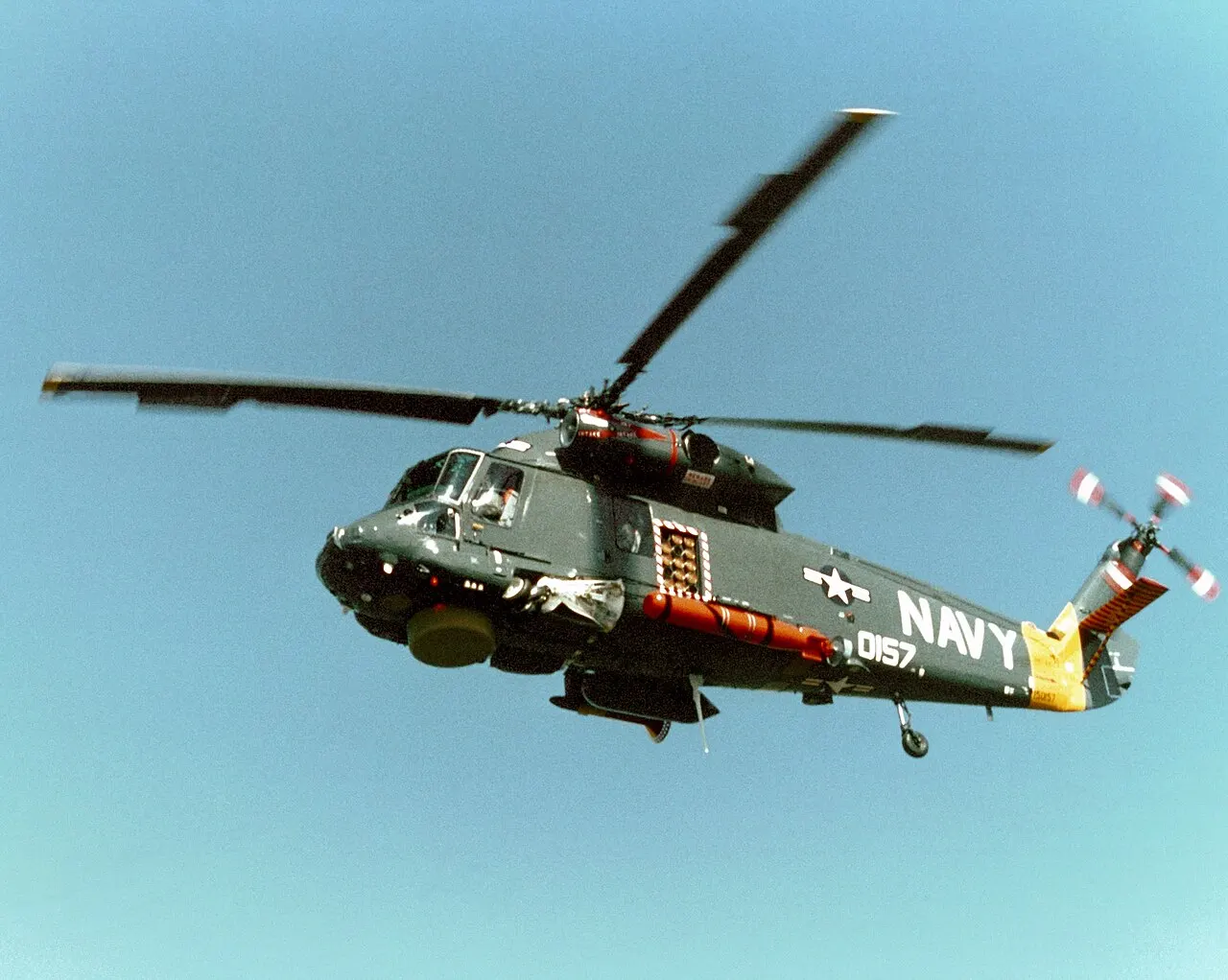
Development
History
The Kaman SH-2 Seasprite was a helicopter adapted for service from US Navy ships. Its story began before the anti-submarine variant. The original H-2 was a naval utility aircraft used for liaison, transport, and rescue. Later the platform became a shipboard helicopter within the LAMPS system, extending a frigate's or destroyer's observation capability. An early utility Seasprite and a later SH-2F should therefore not be treated as technically identical.
The H-2 prototype first flew in July 1959, and fleet deliveries began in the early 1960s. Naval aviation needed a helicopter able to work from a restricted deck and handle different missions as conditions changed. Shipboard service brought demands for stowage, maintenance, and coordination with the vessel's crew. The aircraft itself was only one part of a broader detection and response system.
Conversion to anti-submarine work changed the Seasprite's significance. The helicopter carried sensors and people beyond the ship's immediate line of sight, allowing them to investigate an area and return information. LAMPS linked the airborne and shipborne parts of the task. A submarine search depends on conditions, underwater acoustics, time, and data quality, so the presence of a helicopter never guarantees detection.
The SH-2D and SH-2F marked successive upgrade stages. Search equipment, communications, and the systems available to crews changed. The later SH-2G Super Seasprite developed the line further and served with other countries too. A G-standard capability cannot be assigned automatically to an early aircraft in an archive photograph. A sound model profile identifies its actual variant and period.
Beyond anti-submarine work, Seasprites could support search and rescue, personnel and supply movement, and other ship tasks. Flexibility mattered when a vessel had space for only a small number of aircraft. Every configuration nevertheless needed appropriate equipment and crew preparation. Cooperation with the deck team remained critical for launch, recovery, and maintenance at sea.
As newer shipboard helicopters developed, the SH-2's place in US service gradually changed. Its history shows how an existing utility platform became an extension of a ship's anti-submarine capability. Seasprite needs to be described by variant and function. A shared outline unites the family but does not explain the differences in sensors and weapons between early and late aircraft.