
Military helicopters / Ка-26
Kamov Ka-26
The Ka-26 is a light modular Kamov helicopter with coaxial rotors, primarily a civilian aircraft with interchangeable mission modules.
Development
History
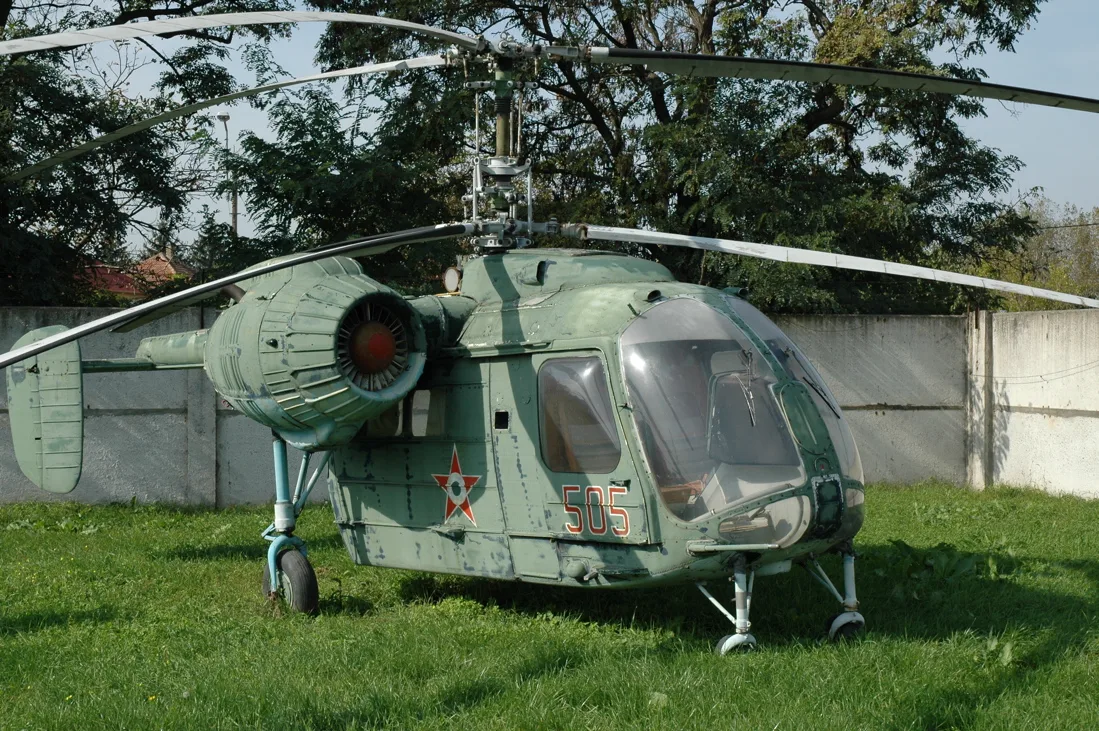
The Ka-26 is a light multi-role helicopter built by Kamov around an unusual modular arrangement. Behind the crew cabin was space for a replaceable unit: a passenger cabin, agricultural equipment, cargo platform, or other fit. One basic aircraft could therefore work in different seasons and for different customers. The Ka-26 was not a dedicated combat helicopter. In a military catalogue it is best understood primarily as an auxiliary platform.
The Ka-26 first flew in 1965. It continued Kamov's tradition of two coaxial main rotors turning in opposite directions. There was no conventional tail rotor, while a compact upper structure left an open work area behind the cockpit. Two piston engines and replaceable equipment defined its capabilities. The later Ka-226 inherited the modular idea but is a different aircraft with another powerplant.
The Ka-26 became especially known for agricultural work, which required frequent flights from small sites. Other configurations carried passengers or cargo and supported medical tasks. A replaceable module changed the mission without rebuilding the whole airframe. Installation time and ground preparation did not mean that all configurations were available during the same flight.
Auxiliary operators valued work away from a major airport and the ability to adapt to a task. Military or government users could employ a light aircraft for liaison, observation, or moving specialists if it had the suitable configuration. A Ka-26 profile should not invent attack weapons or assign it the figures of later turboshaft designs merely because its card appears among military helicopters.
Production and export gave the Ka-26 a broad operating geography. Modularity was useful, but installed equipment mass, fuel, temperature, and landing conditions still limited payload. Values for a passenger unit and agricultural gear differ. A photograph without a module shows the basic “flying chassis,” not a helicopter ready for every mission at once.
The Ka-26 matters as a flexible design centered on interchangeable work units. Its strength was using one platform for several civil and auxiliary roles. A precise profile identifies the fitted module, operator, and period. That explains the helicopter's real capability and prevents confusion with the Ka-126 or Ka-226, which developed the idea later.