
Military helicopters / Ми-35М
Mil Mi-35M
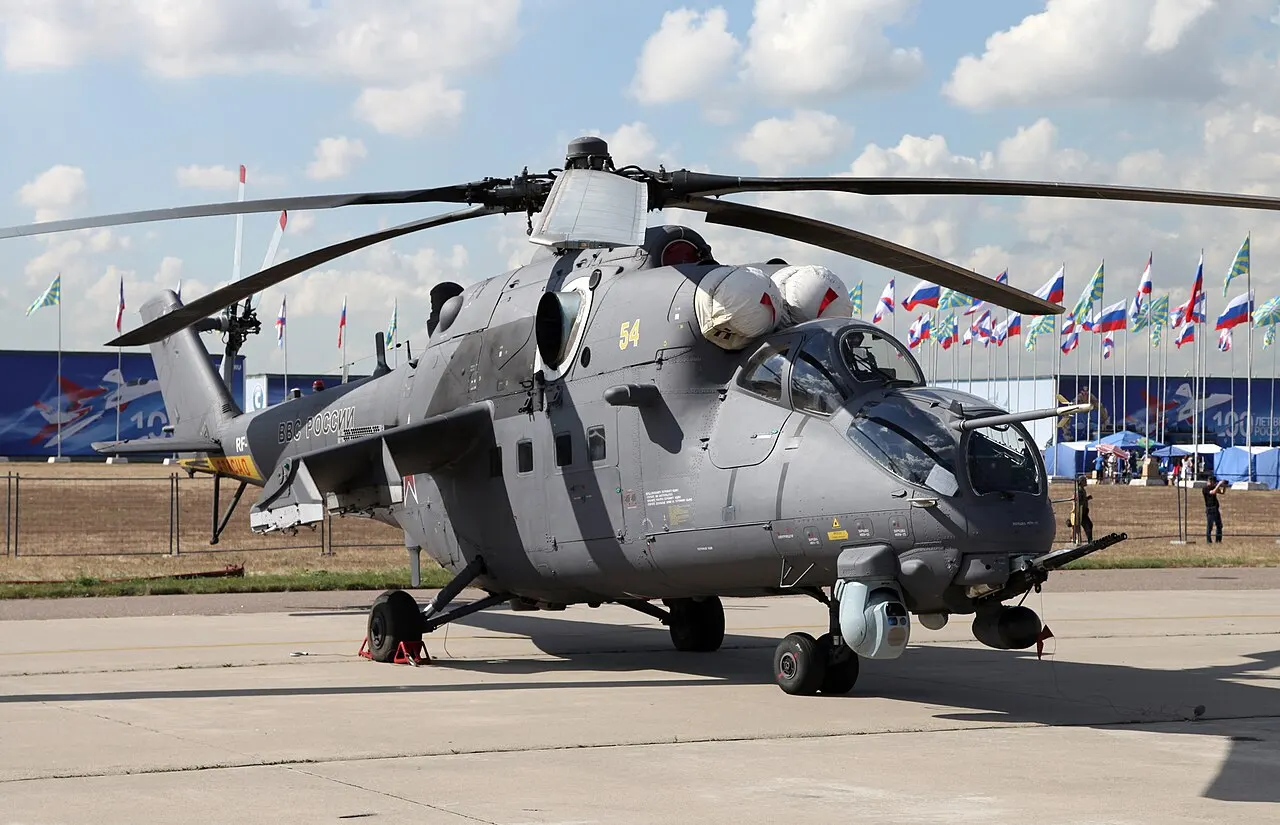
The Mi-35M is a major Mi-24-family upgrade with a shorter wing, X-shaped tail rotor, and revised equipment.
Development
History
The Mi-35M is a deeply reworked combat helicopter descended from the Mi-24 family. It retains the broad concept of an attack aircraft with limited room for people, but differs from older production versions in structure and equipment. Mi-35M should therefore not be used as a simple synonym for every Mi-24. The aircraft addressed newer demands for operation, maintenance, and work in difficult conditions.
Long Mi-24 service gave designers substantial experience to apply to modernization. The Mi-35M emerged as a new production and sales direction, initially important to export customers. The Rostov plant built the variant during the 2000s, and aircraft later reached Russian forces as well. Descent from the Mi-24 does not mean that the original gunship's first-flight date marks the appearance of the Mi-35M.
Visible differences include shorter wings, fixed landing gear, and an X-shaped tail rotor. These help identify the variant but do not exhaust the upgrade. Instruments, sighting systems, and ability to work at different times of day also changed. A particular weapon fit follows the version and mission. Maximum mounting points do not reveal what an individual helicopter actually carries.
The Mi-35M can support ground forces, escort other helicopters, and carry out attack missions. A small cabin retains room for people or cargo, but does not make it a full transport equivalent to the Mi-8. Cabin space, weapon mass, fuel, and takeoff conditions must be considered together. Prepared crews and coordination with ground forces remain important to its use.
The similar Mi-35P designation belongs to another modernization line. Its characteristics should not automatically be assigned to the Mi-35M, even if both resemble a Mi-24. Export aircraft may also have customer-specific equipment. A catalogue photograph should be checked to ensure it shows an Mi-35M rather than an older Mi-24V or another variant.
Mi-35M history shows how a durable combat design gained a second production life through substantial revision. It is related to the Mi-24 but has its own configuration and service period. A precise profile explains both the connection and the differences and ties technical figures to the actual version. Otherwise readers cannot tell which capabilities belong to the old family and which appeared through modernization.