
Military transport aircraft / A400M
Airbus A400M Atlas
The Airbus A400M Atlas combines long-range airlift with delivery of substantial loads to airfields with limited infrastructure.
Development
History
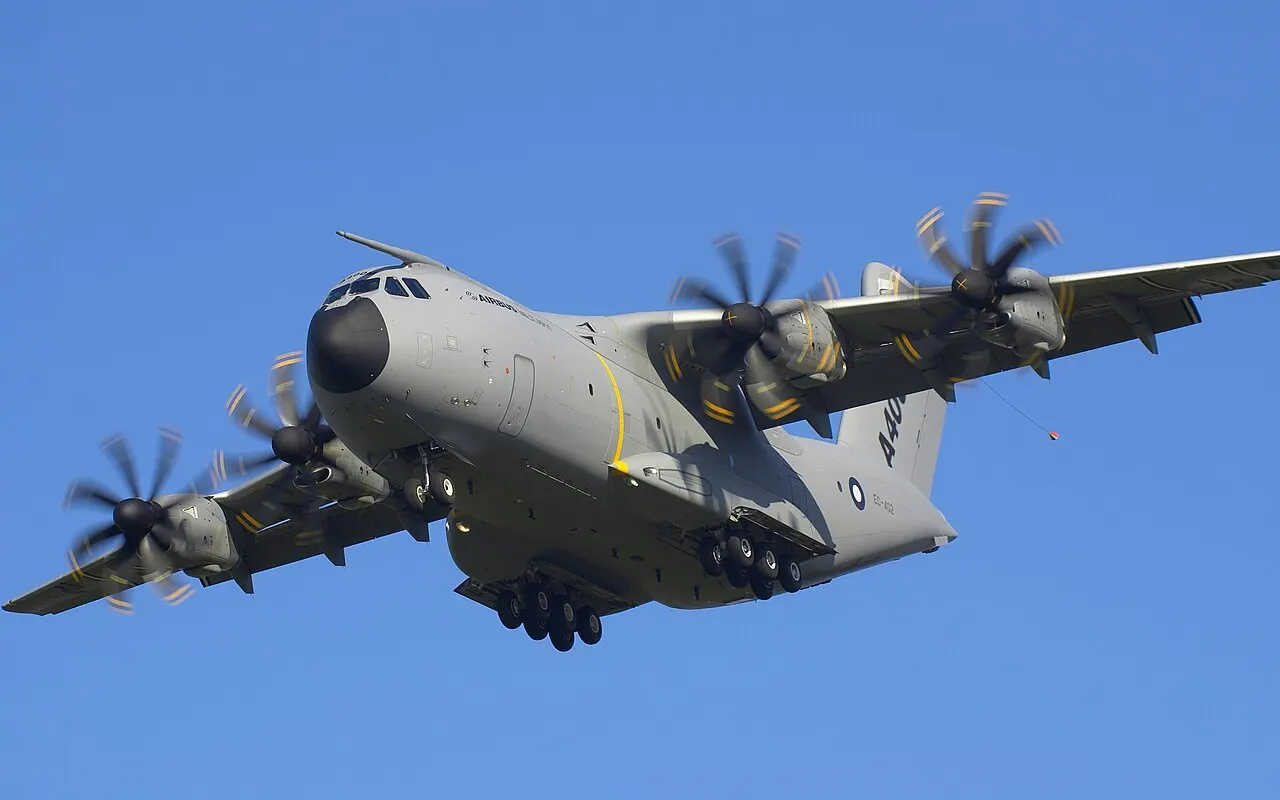
The Airbus A400M Atlas is a European four-engine turboprop military transport designed to combine tactical access with long-distance airlift. Its customer nations needed to replace ageing transports while moving larger loads directly to airfields with limited infrastructure. In size and capability the Atlas occupies a position between the C-130 Hercules and the heavier C-17 Globemaster III. This niche shaped the aircraft: it offers a large hold while aiming to reach locations closer to the operation than the biggest strategic freighters normally can.
Development was an international effort involving several European states. Reconciling their requirements and solving the technical problems took longer than planned, but the partners continued the programme. The A400M first flew on 11 December 2009 in Spain. France became the first operator in 2013, followed by other participating countries. Order and delivery totals change over time, so the aircraft's basic mission and design are more durable facts than a single snapshot of the fleet size.
The Atlas has a high wing, four turboprop engines and a rear cargo ramp. Its large propellers provide the thrust needed for heavy transport while supporting useful range and speed. The cabin accepts pallets, vehicles, personnel and unusually shaped freight. The rear ramp supports loading on the ground as well as airborne delivery of supplies or paratroops. With suitable equipment, the A400M can also perform aeromedical evacuation and air-to-air refueling. These roles depend on configuration; they should not be assumed to be available simultaneously on every individual aircraft.
The operational concept centers on direct delivery. Cargo flown over a long distance need not always be transferred to a smaller aircraft for the final leg. That can save time during relief efforts or rapid military deployment. Access to a short or unpaved strip is still conditional. Crews have to assess surface strength, obstacles, aircraft weight and weather before using it. Range with a heavy payload also differs from an unladen ferry flight, a distinction often lost when specifications are reduced to one number.
The Atlas illustrates an attempt to narrow the gap between strategic transport and tactical delivery. Its importance does not depend on claiming the largest payload. Route flexibility, reconfiguration and cooperation among several countries in building and supporting a common fleet are more central to the story. Equipment and limitations can vary by national operator, but the basic purpose is consistent: moving substantial loads and people to the place where they are needed without unnecessary intermediate handling.