
Military transport aircraft / CN-235
Airbus CN-235
The CASA/IPTN CN-235 is a Spanish-Indonesian turboprop transport used for tactical airlift, patrol and government missions.
Development
History
The CASA/IPTN CN-235 is a twin-turboprop transport jointly developed by Spain's CASA and Indonesia's IPTN. In the late 1970s the partners saw a market for an aircraft between very small utility types and larger military freighters. It would move modest loads and groups of people over medium-range routes while reaching airfields where a larger aircraft would be inefficient. The joint programme began in 1980, and the prototype made its first flight on 11 November 1983.
The CN-235's layout reflects its transport purpose. A high wing leaves useful space inside the cabin, two turboprops support economical operation, and a rear ramp simplifies loading. The aircraft can carry personnel, supplies and equipment. Its size limits the heaviest vehicles that can fit inside. In this class, operators often value frequent flights and quick movement of relatively small loads more than a spectacular maximum payload. Airborne delivery is possible in suitable configurations, but it also depends on crew training and the equipment installed on a particular aircraft.
Production aircraft began to appear during the second half of the 1980s. Early manufacturing was divided between the two partners, although development of some later versions followed separate paths. Several derivatives emerged from the common foundation, including the larger Spanish C295. The CN-235 and C295 should therefore not be treated as two names for the same model. The CN-235 has its own dimensions, variants and operating record. Some aircraft went to civil airlines, while most customers were military or government organizations.
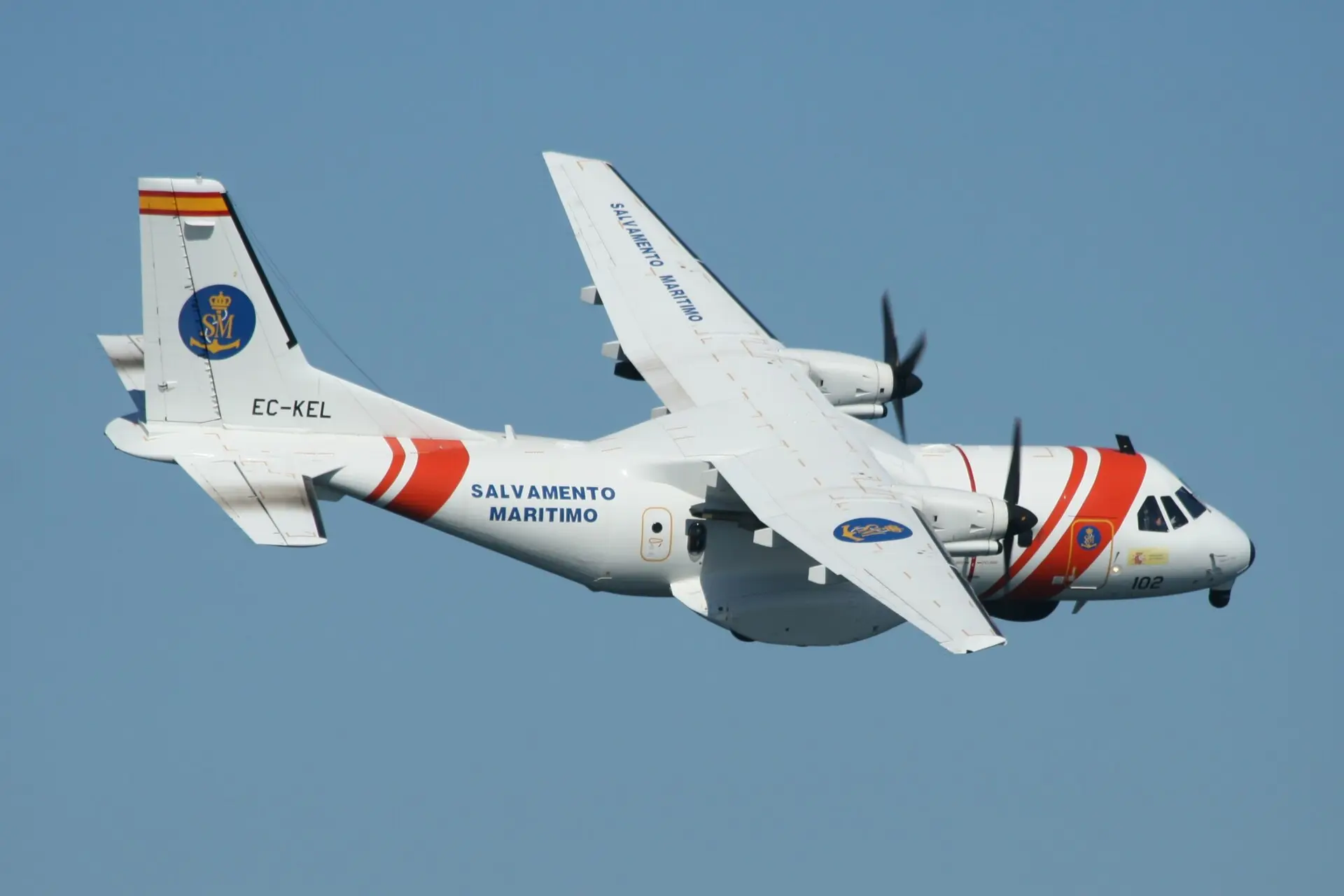
Beyond ordinary transport work, the CN-235 became a platform for maritime patrol and surveillance. Such an aircraft differs from a basic freighter in its sensors, communications and operator positions. On a sea patrol, endurance and observation may matter more than the maximum freight load. Another operator may prioritize routine delivery to remote communities or bases. The flexibility of the original design made these different applications possible within one family, but specifications for a specialist variant should not be applied to all CN-235 aircraft.
The CN-235's history illustrates the value of international cooperation in transport-aircraft development. Spanish and Indonesian partners shared industrial work and access to markets, while a versatile airframe found customers across different services. In a military aviation catalogue, the model belongs to the everyday side of tactical airlift rather than the class of giant strategic transports. It connects bases, coastal areas and smaller airfields where reliable delivery matters more than the size of an individual sortie.