
Military transport aircraft / Ан-22
Antonov An-22 Antei
The Antonov An-22 Antei was a heavy turboprop airlifter with an exceptionally large hold, used for outsized cargo and relief missions.
Development
History
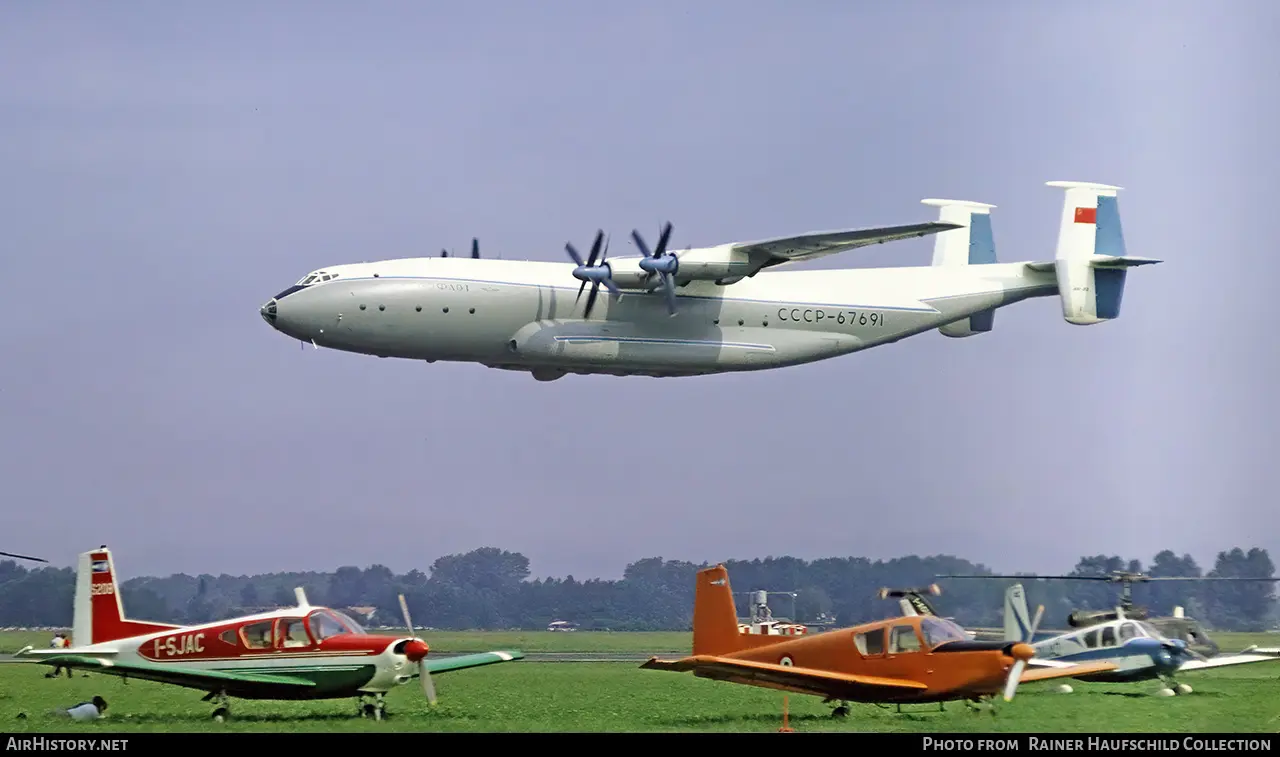
The Antonov An-22 Antei was a heavy turboprop transport developed by the Antonov design bureau in the 1960s. Soviet planners needed to move large equipment and military units over long distances without repeatedly breaking cargo into smaller loads. The aircraft became an early example of a wide cargo fuselage built around outsized freight. It offered a way to fly objects that had previously depended on lengthy surface transport. Another requirement was to operate beyond the best-equipped major air bases whenever runway conditions permitted.
The An-22 first flew on 27 February 1965 and appeared at an international air show later that year. Four powerful turboprop engines drove contra-rotating propellers. This propulsion arrangement provided the thrust needed for a very large aircraft while remaining suitable for the speeds of heavy transport work. A high wing left generous space inside the fuselage. The twin-fin tail and multiwheel landing gear became recognizable features of the type. Distributing weight across many wheels helped the aircraft use less developed airfields, although the suitability of any particular strip still depended on its surface and condition.
A rear cargo ramp supported the loading of equipment and supplies. The aircraft could also carry personnel and support airborne delivery. The dimensions of its hold were as significant as its maximum permitted payload: awkwardly shaped freight can be impossible to fly even when its mass is acceptable. An-22s transported military vehicles, industrial assemblies and equipment for major construction projects. Each unusual load required careful planning of restraints, balance and route. Carrying large aircraft components became one of the clearest demonstrations of what such a spacious transport could do.
The type served with Soviet military transport aviation and later also appeared in specialist civilian cargo operations. An-22 flights delivered relief after disasters, including support sent to Peru following the 1970 earthquake. In military service the aircraft moved people and materiel across long distances. Its value came from the combination of lifting ability, internal volume and access to airfields that might not accommodate every later jet transport. These characteristics made it useful even when the flying time was longer than that of a modern jet.
The introduction of the larger An-124 did not diminish the An-22's place in aviation history. The Antei showed that outsized air cargo could be a recurring part of logistics rather than an occasional exception. Operating and maintaining such an enormous turboprop aircraft remained demanding, however. The model marks a significant step between earlier heavy transports and the wide-body strategic airlifters that followed.