
Military transport aircraft / AW.660 Argosy
Armstrong Whitworth AW.660 Argosy
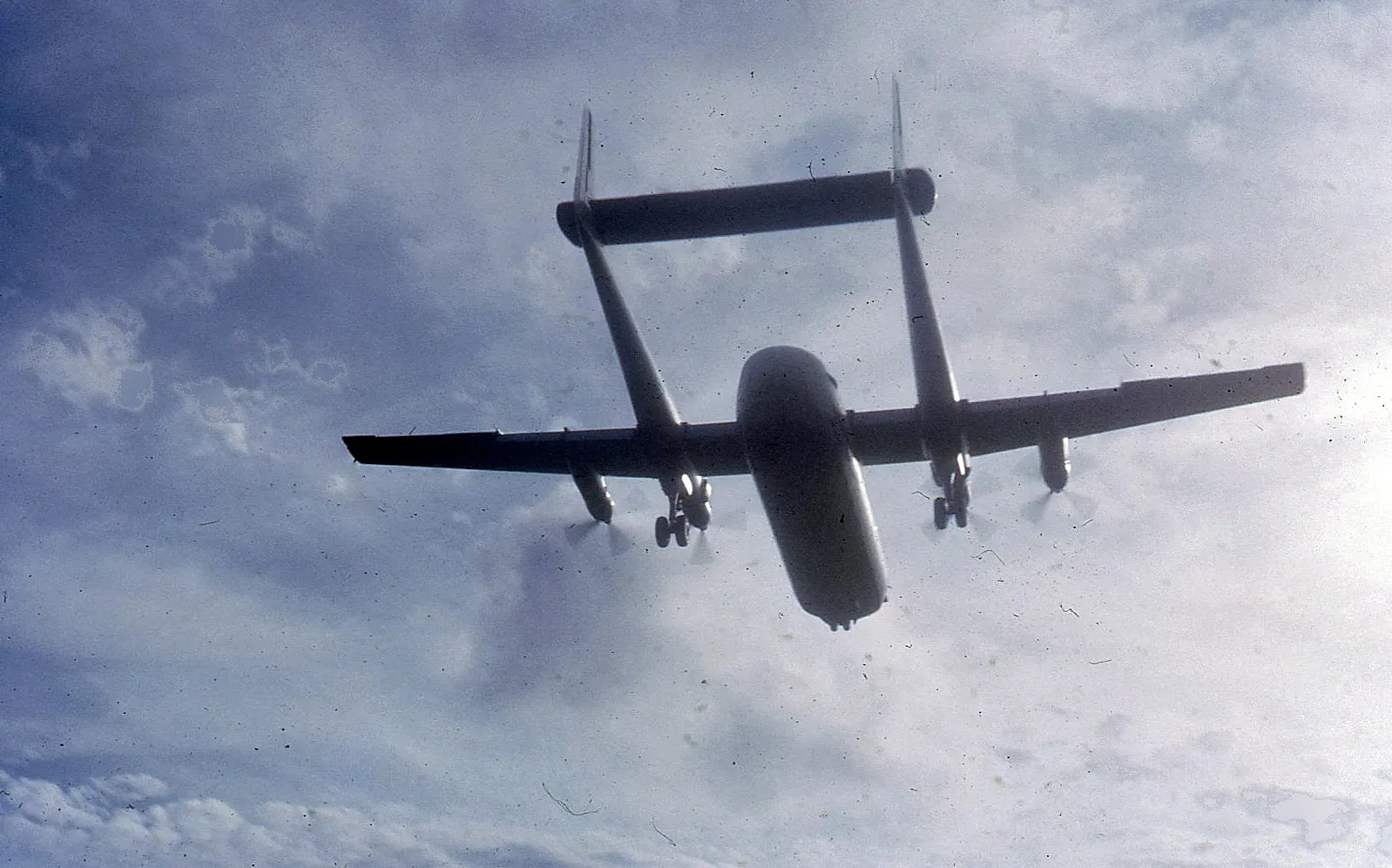
The Armstrong Whitworth AW.660 Argosy was a four-engine Royal Air Force transport derived from the civil AW.650. Its twin-boom layout provided access to the cargo cabin from both ends.
Development
History
The Armstrong Whitworth AW.660 Argosy was a British military transport of the Cold War era, developed for the Royal Air Force from the civil AW.650 freighter. Four turboprop engines, twin tail booms and a raised flight deck give it a distinctive outline. The form was a response to cargo-handling needs rather than an exercise in appearance: it left clear access to the central freight fuselage and helped crews deal with bulky loads. The AW.660 must also be kept separate from the Armstrong Whitworth Argosy airliner of the 1920s. The shared name belongs to two very different generations of aircraft. Within the later family, the civil AW.650 and military AW.660 need their own histories and specifications.
The post-war Argosy story began with a British requirement for a medium-range transport. Armstrong Whitworth studied a military proposal called the AW.66, but government funding for that initial project ended. Supported by the Hawker Siddeley group, the company then concentrated on the civil freight market. Cargo operators wanted easy loading, fast turnaround at an airport and useful performance on medium-length routes. Those requirements shaped the door arrangement and the size of the hold. The civil AW.650 preserved an idea that later became attractive to military planners again, although the path from the first requirement to the eventual RAF aircraft was indirect.
The first AW.650 flew on 8 January 1959. General references often attach that date to the Argosy name without identifying the version. The first military AW.660 C Mk 1 made its maiden flight on 4 March 1961. For a page about the RAF transport, the second date is the relevant first flight, while the earlier civil aircraft explains its ancestry. The distinction also matters when reading specification tables. Civil and military aircraft differed in their doors, installed equipment and operational tasks. An image of an AW.650 may show the family's basic shape, but it cannot establish the precise loading arrangement of an AW.660.
The defining structural feature is the twin-boom tail. Two booms extend rearwards from the region of the inner engines, leaving access to the central fuselage behind the wing. The pilots sit above the freight deck. This layout made it possible to carry large loads and reach the hold without a conventional tail blocking the cargo opening. The civil version was planned with openings at both ends to speed freight handling. The military version used a different arrangement: the forward opening was closed and occupied by a radar installation, while rear clamshell doors incorporated a ramp. The statement that an Argosy could be loaded from either end is therefore misleading unless the variant is identified.
The AW.660 received a strengthened cargo floor and side doors for paratroopers. Military planners expected it to move equipment between airfields and support the delivery of personnel and supplies during operations. Additional fuel and other changes broadened the military aircraft's capability compared with the early civil AW.650. Each mission still required a particular cabin arrangement. Parachute operations needed appropriate seating, equipment and exit procedures. Transporting a heavy object required checks of dimensions, local floor loading, restraint and balance. A large rear opening by itself did not guarantee that any piece of equipment could fit safely inside or be carried under the conditions of a specific flight.
Four Rolls-Royce Dart turboprops made the Argosy a recognisable transport of the period between older piston aircraft and the expanding jet age. On medium routes, that powerplant offered a practical combination of speed, payload and access to suitable airfields. It also gave the aircraft its characteristic sound. A transport should not be judged by cruise speed alone, however. Fuel, load, runway, ground support and unloading time all affect the completed mission. The designers gave considerable attention to moving pallets inside the fuselage and reducing the time spent on the ground. On a short route, saving time at each stop can be as useful as a modest difference in flight time.
The Royal Air Force acquired 56 AW.660 C.1 transports. They served with units in Britain and overseas, including operations associated with bases in Cyprus, Aden and the Far East. This geographical spread explains why a medium transport was useful: the RAF needed to supply dispersed units and move people without relying solely on the largest aircraft. Loads and routes changed as units received different assignments. Mentioning the overseas bases illustrates the scale of the programme; it does not prove that every individual Argosy visited every region. The history of a particular airframe has to be checked against its serial number and records rather than inferred from the service of the wider fleet.
New tasks and equipment appeared during the aircraft's career. Some Argosies were converted into the E.1 flight-inspection variant, used to check and calibrate airfield navigation facilities. This was not an ordinary freight mission; it required specialised equipment and a different pattern of flying. A version for navigator training was also considered, but far fewer conversions were completed than initially planned. The designations C.1, E.1 and T.2 therefore indicate different uses of the platform. It would be wrong to attach E.1 equipment to every transport Argosy or to describe every AW.660 as a training aircraft. The family relationship explains the shared airframe, not an identical set of systems.
During the 1970s the RAF's transport Argosies were progressively replaced by Lockheed Hercules aircraft. The change reflected evolving demands for airlift capability and the practical support of the fleet. It did not erase the Argosy's work. For years the aircraft met real transport needs and offered an alternative to older piston-powered freighters. The AW.660 left its main cargo role by the middle of the 1970s, while some specialised examples continued flying until 1978. A single retirement date for the entire family can consequently be misleading. The answer depends on whether the subject is a C.1 still carrying freight, an E.1 performing flight inspection or a specific aircraft after another conversion.
The civil AW.650 and military AW.660 share a design foundation, but their differences matter when interpreting photographs and performance data. The civil aircraft had its own series and operators, whereas the C.1 was built around RAF requirements. Nose radar, rear-door form and internal fittings help distinguish the military transport from a commercial freighter. An aircraft that once carried RAF markings might later pass to another owner, and a former freighter could acquire specialist equipment. A reliable model page should identify the particular variant and the provenance of its photograph rather than use the Argosy name as if it described one unchanging configuration.
The AW.660's place in aviation history rests on an attempt to make a medium transport especially convenient to load. The twin booms, raised flight deck and cargo ramp answered a practical operating problem. The military model grew from a civil project after the earlier military proposal lost support; it then served the RAF and provided a basis for specialist conversions. Its history shows how one airframe can move between roles while also illustrating the limits of family resemblance. Dates, doors, equipment and mission for the AW.650, C.1 and E.1 must be discussed separately if the aim is an accurate account of a specific aeroplane.