
Military transport aircraft / C-54
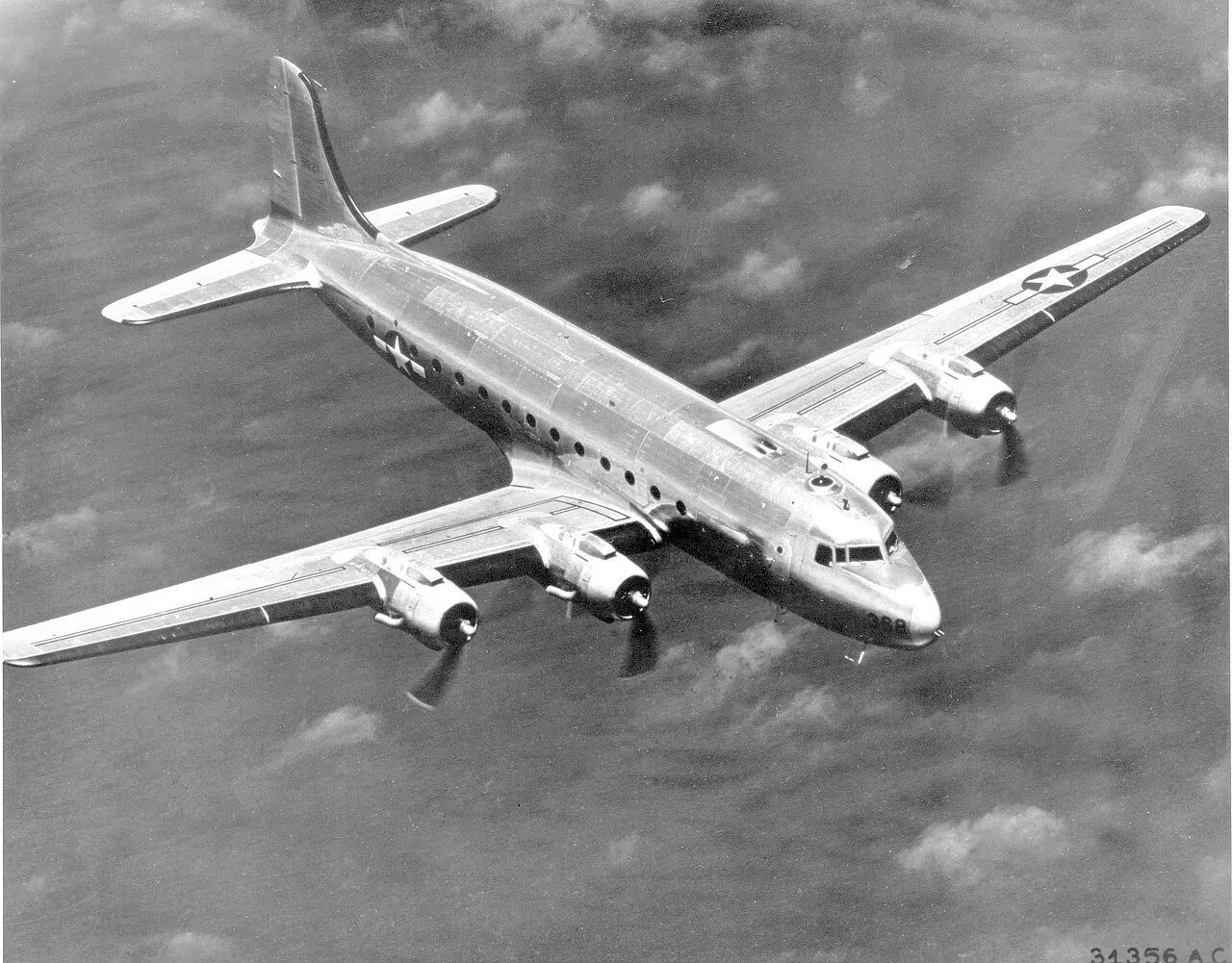
Douglas C-54 Skymaster
The Douglas C-54 Skymaster was a four-engine US transport central to long-range military airlift and the Berlin Airlift.
Development
History
The Douglas C-54 Skymaster was a four-engine American transport developed from the civil DC-4 family. It arrived when military aviation needed reliable long-distance routes across oceans. Compared with the smaller C-47, the Skymaster could move more people and freight on extended missions. It retained piston engines and conventional wings, while fitting into a growing network of established airfields. That combination made the type a valuable connection between military bases on different continents.
The first C-54 flew in 1942, during the Second World War. The original civil-airline concept gave way to wartime deliveries. Skymasters carried personnel, urgent supplies and senior officials; some versions supported medical transport. A long route depended on more than the aircraft's published range. Maintenance at intermediate stops, fuel planning, weather information and crew organization all mattered. The C-54 was not designed primarily for improvised short-field landings. Its strength was the steady movement of useful loads along strategic air corridors.
The aircraft remained important after the war. Its most famous assignment was the Berlin Airlift of 1948–1949. When land access to the western sectors of the city was blocked, transport aircraft brought in food, fuel and other essentials. A four-engine Skymaster could deliver more on each trip than the twin-engine C-47. Increasing the number of C-54 flights helped raise the total daily supply delivered to the city. The success of the operation depended not only on carrying capacity but also on closely managed schedules, rapid unloading, repairs and the ability to keep flying in difficult weather.
C-54s also served during the Korean War and in other postwar movements. The US Navy operated a related version under the R5D designation. Some aircraft later moved to civilian operators or took on specialized duties. This varied career reflects the close relationship between military transport design and commercial aviation in that period. A single basic airframe could be adapted for passengers, freight and government use, although the arrival of faster and more capable transports eventually exposed the limitations of piston-powered long-haul aircraft.
The Skymaster's lasting importance lies in the routine organization of large-scale air supply. It helped turn intercontinental flying from an exceptional undertaking into repeatable logistical work. The Berlin Airlift made this contribution visible to the world: the outcome depended on thousands of dependable flights rather than a single record-setting mission. The C-54 therefore represents a key stage between the smaller transports of the early war years and the much larger strategic airlifters that followed. Its service showed that aircraft, crews and ground systems had to operate as one network for air transport to make a decisive difference.