
Military transport aircraft / C-123
Fairchild C-123 Provider
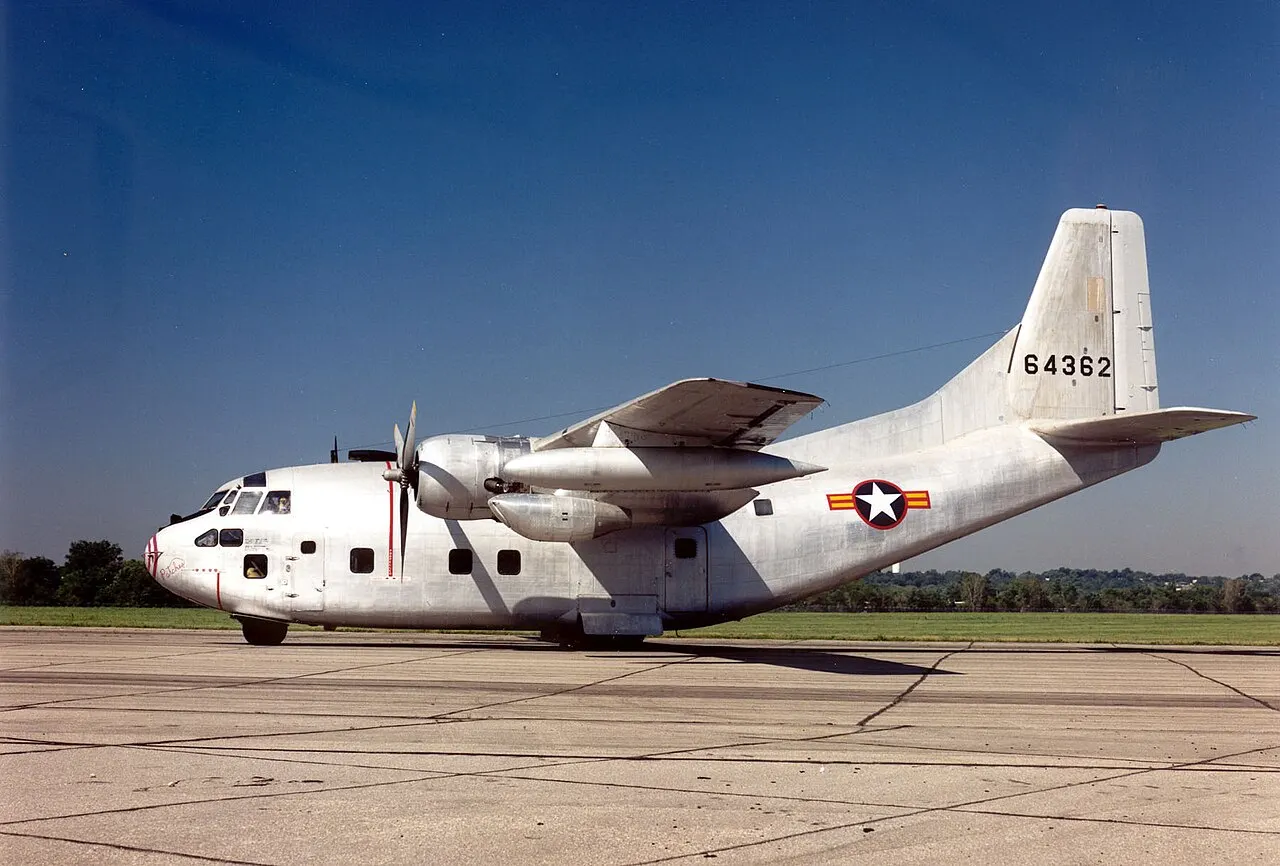
The C-123 Provider was a US transport designed for short airstrips. It evolved from a Chase assault-glider project, entered Fairchild production and later gained auxiliary jet engines in the C-123K version.
Development
History
The Fairchild C-123 Provider was an American military transport intended to move people and freight to short, lightly prepared airstrips. Its origins were unusual. The aircraft grew out of a large assault-glider project by Chase Aircraft. A powered XC-123 prototype with two piston engines flew in 1949, while substantial production later passed to Fairchild. Fairchild is therefore prominent in the aircraft's familiar name, but Chase carried out the early development. This is more than a matter of branding: it explains why histories of the Provider mention a glider, several experimental machines and later production aircraft with different designations.
The C-123 was meant to work closer to forward units than a large long-range freighter normally could. A roomy cabin and rear loading ramp made it possible to move equipment, pallets and personnel without treating the aircraft like a passenger airliner. Crews could bring useful loads to small fields serving scattered units. A short strip, however, does not eliminate performance limits. Its surface, length and obstacles must be assessed together with temperature, altitude and aircraft weight. Freight has to be distributed and secured correctly. The useful load for an actual flight depends on these conditions, not merely on a maximum figure printed in a general description.
The Provider's glider ancestry helps explain the attention paid to relatively slow approaches and access to a useful cabin. The powered XC-123 developed from an unpowered concept, but the production aircraft became a practical twin-engine transport. The US Air Force introduced the type in the mid-1950s, with the C-123B as the principal early production version. The original glider, experimental powered aircraft and series-built Provider should not be described as if they were one unchanged machine. They had different engines and belonged to different development stages. Their separate dates matter when recounting the first flight and entry into service.
The C-123 became particularly important in Southeast Asia. It carried troops and supplies to dispersed bases where larger transports were less convenient. In-theatre routes demanded repeated sorties, quick unloading and the ability to adjust to changing circumstances. Providers also dropped cargo to units that could not receive a landing aircraft. An airdrop required preparation of the load, its parachute or release system and the receiving area. The possibility of loss or damage had to be considered. Airlanding and airdrop were therefore different operational choices, each with its own advantages and costs, even when both were performed by the same aircraft type.
The aircraft could also move patients. For aeromedical evacuation the cabin was arranged for litters and the personnel caring for them. Published capacities for troops, patients and freight are alternatives, not amounts that can all be carried at once. The National Museum of the United States Air Force gives figures for a C-123K configuration, including 60 fully equipped troops, 50 litter patients or a specified freight load. Those figures belong to a later variant and the conditions of the museum's technical note. They should not automatically be assigned to every early C-123B. In practice the crew still checked a proposed load against the limits of its particular aircraft.
Development brought the C-123K variant. It retained the two main piston engines but added small jet engines beneath the wings. According to the US Air Force museum, this conversion improved short-field takeoff, climb and the safety margin after failure of a main engine. The added jets did not make the C-123K a conventional jet transport; the propeller-driven piston engines remained central to its operation. It is therefore misleading to combine performance claims for B and K aircraft without identifying which version is being discussed. Equipment fit and test conditions also affect any direct comparison.
Some Providers received equipment for missions beyond ordinary cargo transport. During the war in Vietnam, modified aircraft flew in the Ranch Hand defoliant-spraying programme. Others undertook night missions using illumination or additional observation equipment. This difficult aspect of the type's history should not be hidden under a broad label such as airlift. At the same time, not every C-123 carried spraying equipment. A specific variant and its service record determine what it actually did. The history of one museum aircraft is valuable evidence, but it cannot stand for the entire fleet.
As American operations in Southeast Asia declined, some Providers were transferred to allied air forces. Others continued in US reserve units. Their long use reflected maintenance effort and the suitability of the aircraft for missions that did not require a heavy transport. Changes in tactics, cargo demands and the introduction of newer aircraft eventually reduced its role. A date associated with the final Provider in one organisation is not necessarily the end of service everywhere. Different operators adopted replacements on different schedules, and individual airframes could move between roles before retirement.
The C-123 illustrates how a specialised assault-transport idea became a flexible platform. Its glider origins, broad fuselage and rear ramp shaped its strengths. Production service included carrying troops, supplying remote locations and evacuating patients; later modifications improved operation from short fields. Special-purpose aircraft added more complicated chapters, including chemical spraying. An accurate account must keep the period and variant in view. The Provider was not a universal solution for every load, but it was an effective aircraft when access to a small airfield and timely delivery mattered most.